Why the best smart thermostat under 100 is usually enough
For most homes, the best smart thermostat under 100 dollars already covers the essentials. You get app based control, reliable scheduling, and real energy savings without paying for a thermostat premium that adds flashy screens and niche automation. In practice, the gap between an 80 dollar smart thermostat and a 250 dollar learning thermostat is mostly about extras like room sensors and polished glass, not about core heating and cooling performance.
When reviewers rave about a flagship nest thermostat or an ecobee smart model, they often live in large multi zone houses with complex HVAC systems. A renter in a two bedroom apartment with a basic HVAC system and a single stage furnace simply does not need that level of sophistication, especially when a budget smart thermostat already supports WiFi, voice assistant integration, and setback scheduling that can unlock the same ENERGY STAR estimated 8 percent savings. The best smart thermostats under 100 dollars now handle temperature control, heating cooling modes, and simple energy reports just as competently as their premium cousins, as long as your wiring and system type are compatible.
Think about what you actually touch every week on a thermostat, not what looks impressive in a product video. You adjust the temperature a few degrees, you check whether the air conditioning is running, and you might glance at an energy summary once a month. For that routine, a compact smart thermostat from Amazon, Honeywell, or Google nest does the job perfectly well, and the extra 150 dollars you keep in your pocket will save more energy when you put it toward insulation or sealing air leaks than toward a glowing color display.
Key budget players: Amazon, Honeywell, and Google Nest
Three models define the current best smart thermostat under 100 dollars segment for most United States households. The Amazon Smart Thermostat, the Honeywell X2S smart thermostat, and the entry level Google Nest Thermostat all sit around the 80 dollar mark while offering WiFi control, app access, and integration with at least one major voice assistant. Each of these smart thermostats targets the same core promise, which is simple temperature control and energy savings without the complexity of a full nest learning thermostat or a high end ecobee smart thermostat premium bundle.
The Amazon Smart Thermostat leans heavily on Amazon Alexa and the broader amazon smart home ecosystem, making it a natural fit if you already use Echo speakers as your primary assistant. Honeywell’s X2S smart thermostat pushes compatibility instead, supporting up to 2H/2C conventional HVAC system setups and shipping with Matter certification and ENERGY STAR status at 79.99 dollars, which is rare in this price bracket. Google’s budget nest thermostat focuses on a clean interface and tight integration with Google Assistant and the Google Home app, giving you a streamlined way to manage heating, air conditioning, and basic energy reports without paying for the full nest learning experience.
If you want a deeper comparison of how these central heating cooling focused thermostats stack up, a detailed guide to top smart thermostats for central heating and cooling can help frame the trade offs. In short, the best smart options under 100 dollars skip room sensors, advanced learning algorithms, and built in air quality monitors, but they still deliver reliable control over your HVAC system and support for common wire configurations. For a renter or first time buyer who just wants a smart thermostat that works with existing wiring and a single zone system, these three thermostats are usually the best smart starting point.
What you actually get for under 100 dollars
When you buy the best smart thermostat under 100 dollars, you are paying for a focused feature set that targets everyday use rather than edge cases. Every model in this range offers WiFi connectivity, app based control, and at least one major assistant integration, whether that is Amazon Alexa, Google Assistant, or in some cases both through alexa google compatible platforms. You also get reliable scheduling, basic energy reports, and auto away or eco modes that trim heating and cooling when nobody is home, which is where most of the real energy savings come from.
On the app side, the Amazon Smart Thermostat uses the Alexa app, the Honeywell X2S uses the Resideo or Honeywell Home app, and the Google nest thermostat uses the Google Home app, all of which allow you to adjust temperature, switch between heating and air conditioning, and monitor your HVAC system from anywhere. These smart thermostats support simple routines, such as lowering the temperature at night or turning off heating when your phone leaves a geofenced area, and they can respond to voice commands through an Echo, Nest speaker, or other assistant enabled device. If you care about app experience in detail, a focused overview of top smart thermostats with app control can show how budget interfaces compare with premium ones.
What you do not get at this price are extras like room sensors for per room balancing, built in air quality monitoring, or the kind of adaptive learning that a full nest learning thermostat or ecobee smart thermostat premium model offers. You also will not see support for every exotic HVAC system configuration, such as multi stage heat pumps with electric backup and complex dual fuel setups, although the Honeywell X2S covers more of that ground than most cheap thermostats. For a straightforward single zone forced air system with a standard wire bundle, though, the best smart thermostat under 100 dollars already gives you the best smart mix of features and simplicity.
What budget models skip, and when that matters
Budget smart thermostats under 100 dollars make deliberate trade offs that matter only for certain homes. They usually skip room sensors, which means they read temperature only at the thermostat location, so if your bedroom runs several degrees cooler than the hallway, a premium ecobee smart thermostat with room sensors will handle that imbalance better. They also omit advanced learning features, so you will not get the full nest learning behavior that automatically adjusts schedules based on your habits, although you can still program schedules manually or use simple adaptive modes.
Another missing piece is integrated air quality monitoring, which appears in some thermostat premium models that track volatile organic compounds or humidity in more detail, but those sensors rarely change how your HVAC system actually runs day to day. Budget smart thermostats also tend to have simpler displays and fewer on device controls, relying more on the app and voice assistant, which can be a drawback if you have guests who prefer physical buttons. For some households, especially those with multiple floors, complex HVAC system zoning, or sensitive occupants who need tight temperature control in specific rooms, these omissions justify stepping up to a higher end thermostat.
For everyone else, the skipped features are mostly nice to have rather than must have, and the core heating cooling performance remains the same as long as the thermostat is correctly wired and configured. If you are curious about how much more you really gain from advanced features like dynamic pricing response or granular occupancy detection, an in depth analysis of why your thermostat should know when electricity costs spike shows that software and utility programs often matter more than hardware tiers. The key is matching the thermostat to your actual system and lifestyle, not chasing every feature that looks impressive on an amazon product page.
Compatibility, wiring, and installation for renters and first timers
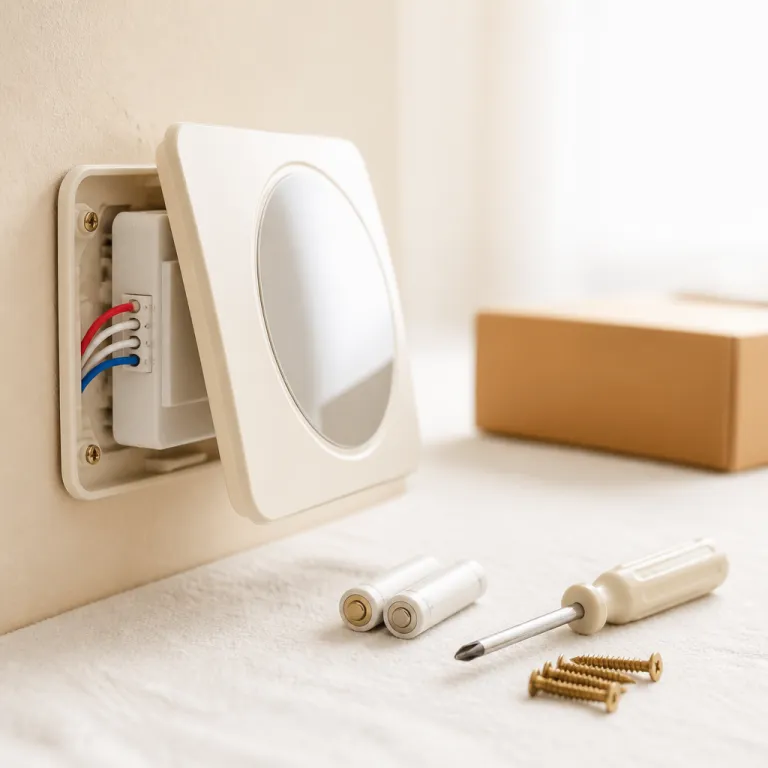
Before you pick the best smart thermostat under 100 dollars, you need to confirm that your HVAC system and wiring will cooperate. Most budget smart thermostats expect a standard low voltage forced air system with a C wire for power, and while some can work with adapters, that adds complexity for renters who cannot modify their walls freely. The safest path is to remove your existing thermostat faceplate, photograph the wire labels, and compare them with the compatibility tools offered by Amazon, Honeywell, and Google nest.
If you see thick high voltage wires or wire nuts behind your old thermostat, you likely have a line voltage system that these smart thermostats do not support, and you should not attempt a DIY swap without consulting an HVAC professional. For typical low voltage systems, installation usually involves labeling each wire, transferring it to the matching terminal on the new thermostat, and then walking through an app based setup that identifies your heating and air conditioning equipment. Renters should also check with landlords before replacing thermostats, but many property owners welcome a reversible upgrade that can reduce energy bills and improve temperature control without altering the HVAC system itself.
Voice assistant compatibility is another subtle compatibility layer, especially if you already rely on Amazon Alexa, Google Assistant, or even Apple HomeKit for other devices. The Amazon Smart Thermostat naturally favors Alexa and amazon alexa routines, while the Google nest thermostat leans into Google Assistant and the broader Google ecosystem, and some Honeywell thermostats bridge both worlds through alexa google integrations. If you are deep into Apple HomeKit, you may need to look carefully at which budget thermostats support that ecosystem directly or through Matter, because not every thermostat amazon listing makes that clear, and you want your smart thermostat to feel like part of one coherent system rather than a separate island.
When paying more is actually worth it
There are clear cases where the best smart thermostat under 100 dollars is not the right answer, even if you love the price. If you own a large multi zone home where different floors fight over temperature, a premium ecobee smart thermostat with room sensors in bedrooms and living areas can smooth out comfort in a way a single hallway sensor never will. Households with sophisticated heat pumps, dual fuel systems, or multi stage HVAC system setups also benefit from the advanced staging logic and broader compatibility lists found in higher end nest learning or thermostat premium models.
Families with very specific comfort needs, such as infants, elderly relatives, or people with respiratory conditions, may also appreciate the extra data from built in air quality sensors and humidity tracking that some premium thermostats offer. In those cases, the ability to fine tune heating cooling based on room by room readings and to integrate with whole home ventilation or filtration systems can justify the extra cost. You are not just paying for a nicer screen, you are paying for more granular control over how your HVAC system moves air and maintains temperature across different spaces.
For everyone else, though, the math is simple and stubborn, because the ENERGY STAR estimated 8 percent savings from smart scheduling applies whether you use a budget smart thermostat or a flagship learning thermostat. If you are a renter or first time homeowner with a single zone forced air system, the best smart thermostat under 100 dollars will usually deliver the best smart balance of comfort, control, and energy savings. The real test of a thermostat’s value is not the app interface, but the February gas bill.
Key figures on smart thermostats and energy savings
- ENERGY STAR estimates that smart thermostats can reduce heating and cooling costs by about 8 percent on average for typical United States households, and this figure applies equally to budget and premium models as long as setback scheduling is used consistently.
- Residential heating and air conditioning account for roughly 40 to 50 percent of total household energy use in many United States homes, which means that even a modest efficiency gain from a smart thermostat can have an outsized impact on overall energy bills.
- Many utility rebate programs in the United States offer incentives of 50 to 100 dollars for installing qualifying smart thermostats, which can effectively bring the net cost of an 80 dollar thermostat down close to zero for eligible customers.
- Field studies have shown that households that actively use scheduling and eco modes on their smart thermostats achieve significantly higher savings than those that leave thermostats in manual mode, underscoring that user behavior matters as much as hardware capabilities.
- Adoption of smart thermostats in the United States has grown steadily, with millions of units installed across diverse HVAC system types, and budget models now represent a substantial share of new installations as prices have fallen below the 100 dollar threshold.
FAQ about the best smart thermostat under 100 dollars
Can a smart thermostat under 100 dollars really save energy ?
Yes, a smart thermostat under 100 dollars can deliver the same percentage energy savings as a premium model if you use scheduling, eco modes, and away settings consistently. The key factor is setback behavior, meaning how often the thermostat allows the temperature to drift when you are asleep or away, not the price of the device. As long as your HVAC system is compatible and the thermostat is configured correctly, the budget option can cut heating and cooling costs effectively.
Do I need a C wire for an 80 dollar smart thermostat ?
Most budget smart thermostats, including the Amazon Smart Thermostat and many Honeywell models, work best with a dedicated C wire that provides continuous power. Some devices offer power adapters or battery assist modes, but those can complicate installation and are less ideal for long term reliability. Checking for an existing C wire behind your old thermostat before buying is the safest way to avoid surprises.
Will a budget smart thermostat work with my heat pump system ?
Many smart thermostats under 100 dollars support common single stage heat pump systems, but compatibility with multi stage or dual fuel heat pumps is more limited. The Honeywell X2S smart thermostat, for example, supports up to 2H/2C conventional systems and certain heat pump configurations, while some other budget models focus mainly on basic forced air setups. Always use the manufacturer’s compatibility checker and compare your existing wire labels to confirm support for your specific HVAC system.
Can I use a smart thermostat in a rental apartment ?
In many rentals, you can install a smart thermostat as long as you do not damage walls or wiring and you restore the original thermostat when you move out. It is essential to get your landlord’s permission first and to confirm that your system is low voltage, not high voltage baseboard heating, which requires different hardware. Budget smart thermostats are often ideal for renters because they are affordable, reversible upgrades that improve comfort and energy control without permanent changes.
Is it worth paying more for a learning thermostat like Nest Learning or Ecobee Smart Premium ?
Paying more for a learning thermostat such as Nest Learning or Ecobee Smart Premium makes sense if you have a complex multi zone home, advanced heat pump equipment, or a strong desire for room by room control and integrated air quality monitoring. These premium thermostats add features like automatic schedule learning, room sensors, and more sophisticated staging logic that can fine tune comfort in demanding setups. For a typical single zone forced air system in a smaller home or apartment, though, the best smart thermostat under 100 dollars usually offers all the control and savings you will realistically use.