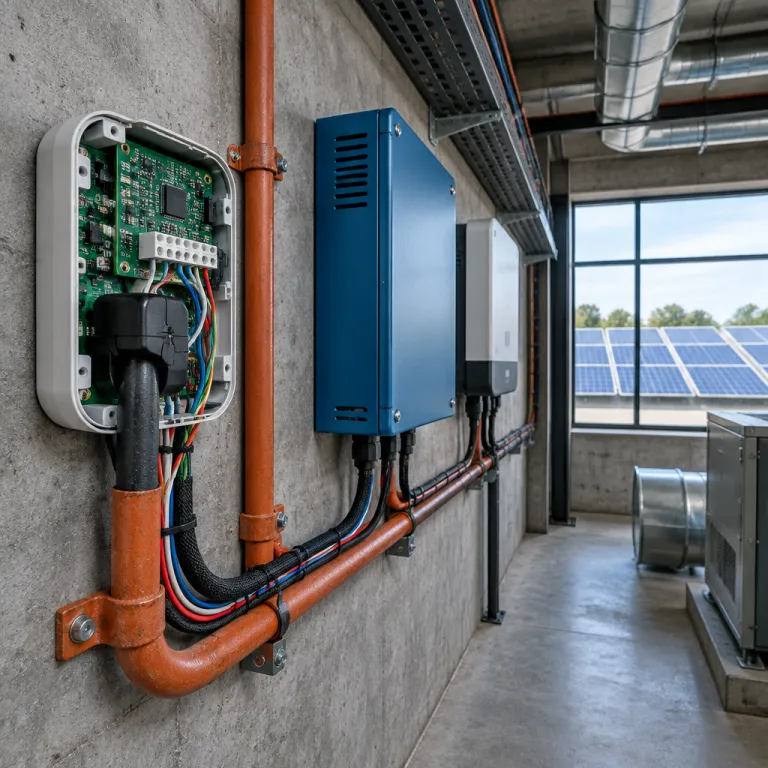
From wall gadget to home energy traffic cop
Most people still think of thermostats as simple temperature knobs at home. The new reality is that smart thermostats are quietly turning into the brain of solar thermostat home energy management, orchestrating energy, power, and comfort across every room. Once you connect solar panels, a battery, and a few smart devices, that little screen on the wall becomes a strategic control point for your whole smart home.
Enphase IQ Air is the clearest signal of this shift in systems so far. It blends traditional heating cooling control with live solar energy and battery status, showing real time home energy flows instead of just a number on a dial, and that makes it feel less like a thermostat and more like a compact energy management system. When you can see solar power production, battery capacity, and HVAC demand on one interface, you start thinking about energy consumption as something you actively manage, not a bill that arrives later.
This is where home energy management stops being abstract and becomes tactile. A thermostat that understands solar panels, grid prices, and backup battery limits can help you time your appliances and smart plugs so that big loads run when solar energy is abundant. In practice, that means your management system can pre heat or pre cool, then coast through peak hours when electricity costs spike and demand on the grid is highest.
Traditional smart thermostats like Google Nest and Ecobee already use algorithms to trim energy consumption. They learn your schedule, tweak heating cooling cycles, and chase incremental savings, but they mostly ignore whether your solar panel array is flooding the house with free power at midday. The next wave, led by Enphase IQ Air and similar smart devices, treats solar monitoring and energy monitoring as first class features, not bolt ons. That is a fundamental change in how energy management and comfort interact.
Think of the thermostat as a traffic cop for smart energy flows. It can slow HVAC demand when clouds roll in and solar panels sag, then ramp back up when the sun returns and battery capacity climbs again. In a mature system HEMS, the thermostat becomes the user friendly face of a complex management system that juggles devices, appliances, and backup power without asking you to babysit graphs all day.
How solar aware thermostats actually cut bills, not comfort
Marketing promises around smart thermostats and energy efficiency are everywhere, but the real savings live in timing. A thermostat that understands solar thermostat home energy management does not just lower the setpoint, it shifts when your home pulls power from the grid versus your own solar panels. That timing difference is what turns a smart home into a genuinely smart energy home.
Time of use rates and peak hours are the first battlefield. With a solar aware management system, your thermostat can pre cool the house in the late morning while solar energy production is high and grid prices are low, then ease off the compressor as peak hours arrive and demand charges climb. You feel the same comfort, but your energy consumption curve flattens, and that is where long term savings quietly accumulate.
Enphase IQ Air leans into this by surfacing real time solar monitoring and battery status on the thermostat itself. You see when your solar panel array is exporting power, when the battery is charging, and when the home is drawing from the grid, which makes it easier to schedule appliances and smart plugs around those windows. Pair that with a quick seasonal tune up using a practical checklist such as a 20 minute thermostat summer readiness routine, and your heating cooling system stops wasting capacity on clogged filters and bad schedules.
Older smart thermostats focused on Energy Star style setbacks and occupancy detection. Those features still matter, but in a house with solar panels and a battery, the bigger lever is aligning HVAC demand with solar power supply and backup constraints. When your thermostat knows both your comfort preferences and your system HEMS limits, it can help you avoid running the heat pump hard when the battery is nearly empty and grid prices are punishing.
For a tech savvy homeowner, the playbook is straightforward. Use smart devices like connected vents and smart plugs to shift non critical appliances into solar heavy hours, then let the thermostat automate the heavy lifting on HVAC demand. Over a year, that orchestration can turn modest per day savings into serious reductions in home energy costs, and the proof shows up not in the app interface, but in the February gas bill.
Virtual power plants, grid signals, and the new thermostat politics
Once your thermostat speaks the language of solar thermostat home energy management, it also starts speaking the language of the grid. Utilities are rolling out demand response programs that pay you to let them nudge your thermostats during stress events, and solar aware systems can play that game far more intelligently. The thermostat becomes a negotiator between your comfort, your battery, and the utility’s need to shave peak hours.
Virtual power plants aggregate thousands of homes into one flexible resource. A thermostat that sees real time solar energy production, battery capacity, and HVAC demand can decide how much flexibility your home can safely offer without sacrificing comfort, then respond to grid signals accordingly. If your solar panels are cranking and the battery is near full, your management system can afford to pre cool more aggressively before a demand event and coast later with minimal impact.
The economics here are subtle, and they rarely match the glossy brochure. For a grounded breakdown of why the headline savings numbers from smart thermostats often miss reality, a detailed analysis such as where smart thermostat math really lives is worth reading. The short version is that energy consumption patterns, local rates, and your specific systems matter more than any generic Energy Star percentage, and a thermostat that understands your solar panel output and backup limits will always beat a one size fits all schedule.
There is also a privacy and data angle that smart home enthusiasts cannot ignore. When your thermostat participates in a virtual power plant, it shares detailed energy monitoring data about your home energy use, HVAC cycles, and sometimes even specific appliances controlled through smart plugs or other smart devices. Before you enroll, you should understand exactly what data your management system sends upstream and how that affects your long term smart energy profile.
From a comfort perspective, the best setups use the thermostat as a buffer. They let the utility adjust setpoints within a narrow band while the home’s own battery and solar panels quietly absorb most of the shock, keeping indoor temperatures stable. That is the promise of a mature system HEMS approach to energy management, where your thermostats, panels, and backup systems work together so that grid events feel like background noise rather than household emergencies.
Walled gardens, Enphase IQ Air, and what Nest and Ecobee must do next
The Enphase IQ Air thermostat is impressive, but it also exposes a risk. It works best when your home energy setup already lives inside the Enphase ecosystem, from solar panels to battery to inverters and monitoring systems. That tight integration is great for usability, yet it raises hard questions about how open the future of solar thermostat home energy management will really be.
Walled gardens are not new in the smart home world. Nest leans into Google’s ecosystem, Ecobee plays nicely with multiple platforms but still has preferred partners, and Honeywell Home targets broad compatibility with traditional HVAC systems while moving more slowly on deep solar monitoring. The difference with Enphase IQ Air is that the thermostat is no longer just another smart device, it is the front end of a vertically integrated management system that spans power generation, storage, and demand.
For homeowners, the trade off is clear. A tightly coupled system HEMS can offer slick dashboards, accurate real time energy monitoring, and seamless coordination between thermostats, appliances, and backup battery capacity, but it may lock you into one vendor for future panels or smart devices. An open approach might let you mix a Tesla Powerwall, third party solar panel hardware, and a favorite brand of smart thermostats, yet you will probably sacrifice some of the polished energy management features that Enphase can deliver.
Competitors will have to respond. Nest and Ecobee cannot stay focused only on heating cooling schedules while Enphase turns the thermostat into a full blown home energy command center, and Honeywell will need to push beyond basic Energy Star checkboxes into richer smart energy orchestration. Expect the next generation of thermostats from these brands to show deeper awareness of solar energy flows, battery state, and peak hours pricing, even if they rely on partnerships rather than owning the whole stack.
As you plan your own smart home roadmap, treat the thermostat like a long term infrastructure choice. Check how well it talks to your existing solar panels, whether it can integrate with a future battery, and how its management system handles data sharing in demand response programs, which you can explore in depth through analyses such as inside demand response data deals. The thermostat that manages energy, not just temperature, will be the one that respects your comfort, your bill, and your freedom to swap devices as your home energy ambitions grow.
Key figures on smart thermostats and solar aware energy management
- According to the U.S. Energy Information Administration, heating and cooling account for roughly 40 % of residential energy consumption in American homes, which makes thermostats and HVAC controls the single most powerful lever for household energy savings.
- Data from the Lawrence Berkeley National Laboratory shows that well designed demand response programs can reduce peak electricity demand by 10 to 15 % in participating regions, especially when smart thermostats and automated controls coordinate with solar panels and batteries.
- ENERGY STAR estimates that qualified smart thermostats can deliver average heating and cooling savings of about 8 %, but field studies on homes with solar energy systems suggest that aligning HVAC schedules with solar production can push total bill reductions into the 10 to 20 % range when time of use rates apply.
- Research from the National Renewable Energy Laboratory indicates that residential solar plus battery systems can cover 40 to 60 % of a typical home’s annual electricity consumption, and thermostats that optimize HVAC demand around that local generation significantly increase the effective value of each kilowatt hour produced.
- Utility pilot programs in several U.S. states report that households enrolled in virtual power plant schemes, using smart thermostats and connected devices, can earn between 50 and 200 dollars per year in bill credits, depending on local peak hours pricing and the flexibility of their home energy systems.