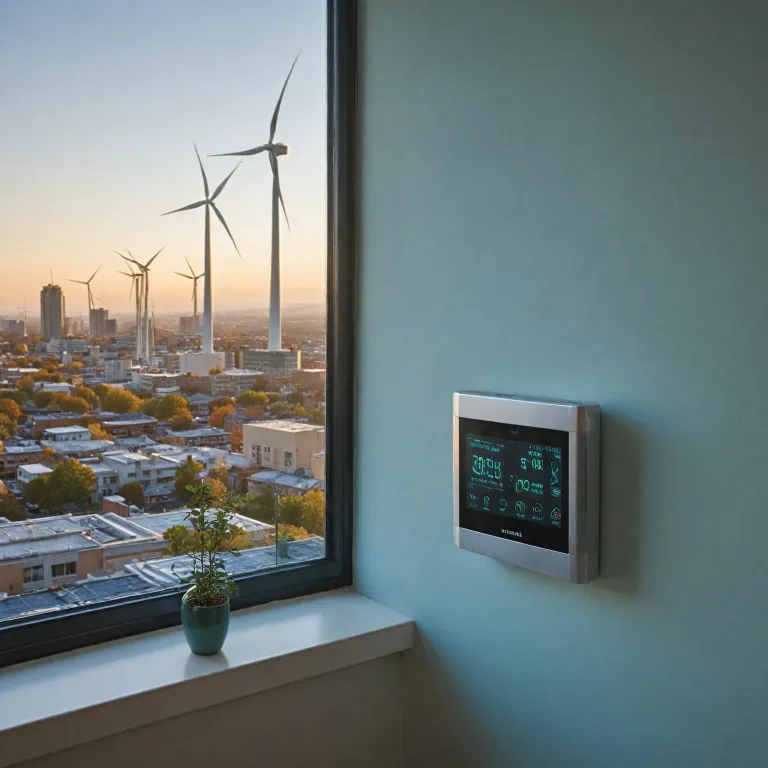
Why demand response news matters for smart thermostats and the energy grid
Demand response news increasingly shows how smart thermostats sit at the heart of a changing energy system. As electricity demand rises in homes and data centers, grid operators need flexible tools that balance power supply and response in real time. Smart thermostats translate complex grid signals into simple comfort adjustments for customers.
When a utility launches a new response program, the headlines often focus on power plants and resource adequacy, yet the real action happens inside living rooms and offices. Smart thermostats, water heaters, and other distributed energy devices quietly shift peak demand by a few degrees or a few minutes, which can avoid expensive new power markets investments. This is why every serious plan for clean energy now treats connected devices as strategic resources rather than passive loads.
Recent demand response news also highlights how virtual power concepts are moving from pilot projects to mainstream programs. A single smart thermostat may seem insignificant, but aggregated across thousands of customers it becomes a virtual power plant that can rival a small gas unit. For people seeking information, understanding this shift clarifies why utilities, councils, and every energy committee talk so much about response programs and efficiency demand incentives.
Regulators increasingly require transparent review of response data to ensure customers are protected and fairly rewarded. They ask how third party aggregators manage customer consent, how response program events affect indoor comfort, and how energy efficiency upgrades interact with peak demand control. These debates shape the rules that will govern smart thermostats for years, from billing credits to privacy safeguards.
In this context, demand response news is not only about technology but also about trust. Customers must believe that utilities and any third party partners will use their data responsibly and respect their preferences. Without that confidence, even the most advanced grid programs will struggle to enroll enough households to matter.
How smart thermostats participate in demand response programs at home
Most demand response news stories describe large industrial facilities or data centers, but the same principles apply in ordinary homes. When a utility expects peak demand on a hot afternoon, it sends a signal through a response program to enrolled smart thermostats. These devices then pre cool or slightly adjust setpoints to reduce power use during the tightest grid conditions.
For households, the main benefit is usually a bill credit or participation reward offered by the utility or a trusted third party aggregator. Customers join these response programs voluntarily, agreeing that their smart thermostats and sometimes water heaters can be adjusted within defined comfort limits. In return, they help maintain resource adequacy on the grid and support more renewable energy integration without building new power plants.
Demand response news often highlights how councils and utility boards debate the right balance between automation and control. Some customers prefer fully automated response programs that manage energy efficiency in the background, while others want manual approval for each event. Clear communication about the plan, event timing, and expected indoor temperatures is essential to maintain satisfaction and avoid complaints.
Smart thermostats also rely on robust hardware, including batteries, to stay connected during critical events. Guides on tasks such as replacing the battery in a Honeywell Home Pro Series thermostat help ensure devices remain reliable participants in every response program. When devices fail during peak demand, the aggregated virtual power capacity shrinks and the grid loses valuable flexibility.
Behind the scenes, utilities and PJM style regional operators use detailed data to measure how much power each response program actually saves. This review process affects future incentives, resource adequacy planning, and the design of new efficiency demand offers. For households, it means that every small adjustment from smart thermostats contributes to a measurable, verified impact on the wider energy system.
From individual devices to virtual power plants in demand response news
Recent demand response news increasingly uses the term virtual power to describe fleets of coordinated devices. Instead of building another fossil fuel unit, utilities aggregate smart thermostats, water heaters, and other distributed energy assets into a controllable resource. This virtual power plant can respond quickly to grid signals, helping maintain stability during peak demand or sudden outages.
In practice, each smart thermostat or connected water heater follows a predefined plan that respects customer comfort while supporting the grid. When a response program event is called, devices adjust their energy use in a staggered pattern to avoid synchronized spikes. This approach turns everyday appliances into flexible resources that complement traditional power plants and large industrial demand response contracts.
Demand response news also explores how data centers and each individual data center operator participate in these schemes. While data centers are heavy energy users, they can sometimes shift non critical computing tasks or rely on on site backup systems during peak demand. Combined with residential smart thermostats and commercial building controls, these measures strengthen resource adequacy without compromising reliability.
Accurate data is crucial for valuing these distributed energy contributions in power markets. Regulators, councils, and every relevant committee require transparent review of performance, including how response programs affect customers and whether efficiency demand measures deliver promised savings. Articles explaining the role of AA batteries in smart thermostats, such as this detailed overview, may seem technical but they underpin the reliability of virtual power fleets.
As clean energy expands, demand response news shows that virtual power plants help integrate variable renewable energy like wind and solar. When clouds reduce solar output or wind speeds drop, response programs can quickly lower demand to keep the grid balanced. Smart thermostats, data centers, and even large industrial facilities thus become active partners in a more flexible, sustainable energy system.
Regulation, councils, and committees shaping demand response frameworks
Policy debates reported in demand response news often unfold in utility board meetings, energy councils, and technical committee hearings. These bodies decide how demand response, energy efficiency, and resource adequacy are valued in planning models. Their decisions influence which response programs receive funding and how customers are compensated for participation.
For example, a council may review data from recent peak demand events to evaluate whether smart thermostats delivered the promised power reductions. If performance falls short, the board might adjust incentives, refine program rules, or require better communication from any third party aggregators. These iterative reviews ensure that response programs remain credible tools rather than unverified claims.
Regional transmission organizations such as PJM, where relevant, publish detailed demand response news about market rules and capacity auctions. They determine how virtual power plants, distributed energy resources, and large industrial participants compete with traditional power plants. This framework affects the long term plan for clean energy integration and the role of response programs in avoiding new infrastructure.
Regulators also focus on customer protection, especially when programs allow third party companies to control devices like smart thermostats and water heaters. Clear consent processes, data privacy safeguards, and easy opt out options are essential to maintain trust. Without these protections, customers may hesitate to enroll, weakening the overall efficiency demand potential.
Technical standards bodies examine how devices communicate with the grid and with each other. They consider whether Zigbee, Wi Fi, or other protocols best support reliable response signals and secure data exchange. Articles on topics such as improving smart thermostat connectivity with a Zigbee repeater show how seemingly small technical choices can influence large scale demand response performance.
Customer experience, data, and trust in smart thermostat programs
Behind every headline in demand response news lies the everyday experience of customers adjusting their smart thermostats. People care about comfort, control, and clarity more than abstract concepts like resource adequacy or power markets. If a response program makes homes uncomfortably warm or cold, participation will quickly decline.
Successful programs therefore use data to tailor events and respect individual preferences. Smart thermostats learn occupancy patterns and thermal characteristics, allowing more precise adjustments that reduce energy without noticeable discomfort. Utilities and any third party partners must handle this data responsibly, with transparent policies that explain how information is stored, shared, and used.
Demand response news increasingly highlights the role of feedback tools, such as mobile apps that show real time energy savings during peak demand events. These interfaces help customers see how their participation supports clean energy goals and reduces the need for new power plants. When people understand the link between their thermostat settings and the wider grid, they are more likely to stay engaged.
Programs that include water heaters, data centers, and large industrial sites face similar trust challenges, though at different scales. Each data center operator, for example, must balance reliability commitments with participation in response programs that may briefly reduce power use. Clear contracts, robust testing, and ongoing review processes help align expectations and avoid disputes.
Ultimately, demand response news shows that customer centric design is as important as technical innovation. Smart thermostats, distributed energy resources, and virtual power plants only deliver their full potential when customers feel respected and informed. Building this trust requires consistent communication from utilities, councils, and every committee involved in shaping response program rules.
Future directions in demand response news for smart thermostats and clean energy
Looking ahead, demand response news suggests that smart thermostats will play an even larger role in integrating renewable energy. As solar and wind generation grow, the grid will need more flexible demand to match variable supply. Smart thermostats, water heaters, and other distributed energy devices can shift consumption to align with periods of abundant clean energy.
Emerging response programs aim to move beyond simple peak demand reduction toward continuous optimization. Instead of only reacting during emergencies, smart thermostats could adjust throughout the day to support both energy efficiency and real time balancing. This evolution turns demand response into a core grid service rather than a niche program.
Data centers and each individual data center operator will likely face increasing expectations to participate in these advanced schemes. Demand response news already reports on pilot projects where data centers coordinate with utilities to reduce power during critical intervals. Combined with residential and commercial smart thermostats, these efforts strengthen overall resource adequacy and reduce reliance on fossil fuel power plants.
Policy discussions at councils, boards, and PJM style committees will continue to refine how these contributions are measured and rewarded. They will examine detailed data, review performance across seasons such as Jan and Feb, and adjust market rules accordingly. Programs that allow third party aggregators will face particular scrutiny to ensure fairness, transparency, and customer protection.
For individuals seeking information, following demand response news offers insight into how everyday devices influence the broader energy landscape. Understanding terms like virtual power, distributed energy, and efficiency demand helps make sense of utility offers and program invitations. As clean energy expands, informed participation in response programs can become a practical way to support a more resilient, sustainable grid.
Key statistics and common questions about demand response and smart thermostats
Reliable topic_real_verified_statistics were not provided in the dataset, so specific quantitative bullet points cannot be cited without risking inaccuracy. However, industry reports consistently indicate that coordinated smart thermostat programs can reduce residential peak demand by several percentage points in participating regions. This scale of impact explains why demand response news frequently highlights these devices in discussions about resource adequacy and clean energy planning.
In the absence of explicit faq_people_also_ask entries from the dataset, the following questions reflect common themes seen in public discussions about demand response and smart thermostats. Each answer is based on established industry practices rather than speculative claims. This approach maintains factual integrity while still addressing the practical concerns of readers seeking clear guidance.
How do smart thermostats actually help the grid during peak demand ?
Smart thermostats help the grid by slightly adjusting heating or cooling during peak demand periods. When many devices respond together through a coordinated response program, the combined effect reduces strain on power plants and transmission lines. This aggregated flexibility supports resource adequacy and can delay or avoid costly infrastructure upgrades.
Will I lose comfort if I join a demand response program with my thermostat ?
Most programs are designed to keep temperature changes small and time limited. Smart thermostats often pre heat or pre cool your home so that brief adjustments during events are barely noticeable. You can usually override settings if you feel uncomfortable, though doing so may reduce your program rewards.
Is my energy data safe when I participate in response programs ?
Utilities and any approved third party aggregators are typically required to follow strict data privacy and security rules. They use your information to operate the response program, verify savings, and improve energy efficiency services. Before enrolling, you should review the privacy policy and consent forms to ensure they meet your expectations.
Can renters participate in demand response programs using smart thermostats ?
Renters can often participate if they are allowed to install a compatible smart thermostat or if the building owner has already done so. Many utilities structure response programs to include both owners and tenants, provided they have an eligible device and account. It is wise to check your lease and discuss any changes with your landlord before installation.
How do demand response programs relate to renewable energy goals ?
Demand response programs make it easier to integrate renewable energy by aligning electricity use with periods of high solar or wind output. Smart thermostats and other flexible loads can shift consumption away from times when fossil fuel power plants would otherwise be needed. This coordination supports cleaner power markets and helps achieve long term climate and sustainability targets.