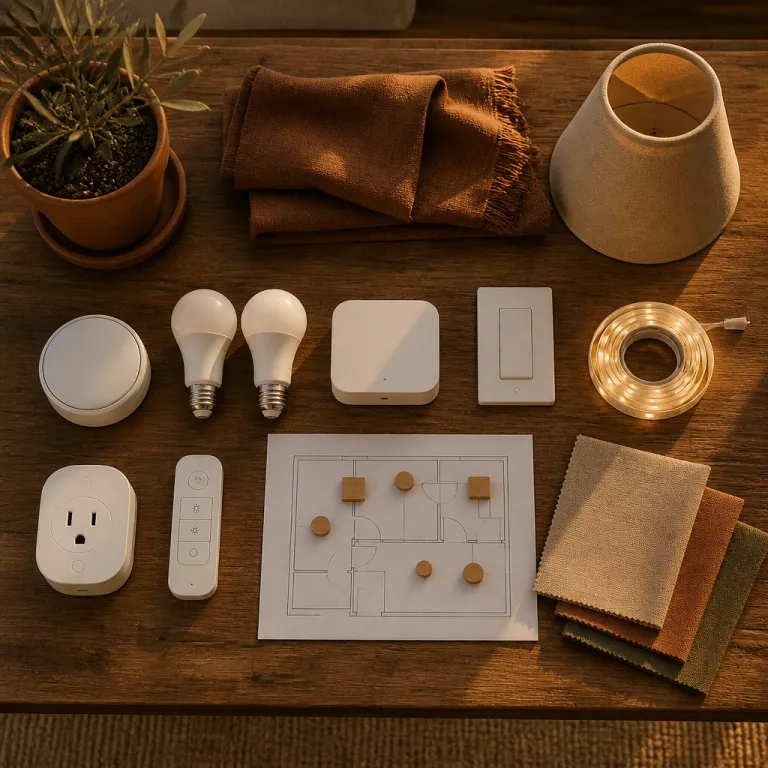
How smart house lighting control supports remote comfort and energy goals
Smart house lighting control gives you precise command of every light in your home. By pairing your smart thermostat with connected lighting and a coordinated control system, you can align temperature and lighting scenes to match how you actually live. This combination lets you manage illumination and comfort together, so rooms feel naturally balanced without wasting energy.
When your thermostat switches to an energy-saving setback, the same smart system can dim LED light sources and reduce brightness on floor lamps to lower heat gain. In practice, that means your smart LED bulbs and smart plug adapters can turn off nonessential lights automatically when the house is empty, while the thermostat shifts to an efficient schedule. Used well, this kind of integrated control can cut both heating and cooling demand because fewer lights mean less indoor heat for your HVAC system to remove.
Remote access is central to this approach, since app control for both temperature and lighting lets you react to real-life changes. If you leave work late, you can use a single control app to keep the thermostat in eco mode and delay turning on lights until you are actually on your way home. In a typical three-bedroom home, this simple habit can trim several kilowatt-hours per week, so you still arrive to a bright, comfortable space but avoid hours of unnecessary energy use from lights and climate control running together.
Using apps, voice control and automation scenes for daily comfort
Most people start with a thermostat app and then add an app for smart lighting, but the real comfort gains appear when these apps work as one smart system. Many platforms now let a single control app manage both the thermostat and the lights, so a goodnight scene can lower the temperature, dim the bedroom light and switch off hallway lights in one tap. This unified app control reduces friction, which makes you more likely to use energy-saving scenes every day.
Voice control adds another layer of convenience, especially when your hands are full or you wake during the night. With assistants such as Google Assistant or combined ecosystems like Alexa- and Google-enabled speakers, you can say a single command to adjust the thermostat and control lights in the same room. For example, a phrase like “set the bedroom to sleep mode” can lower the setpoint, dim LED light strips behind the headboard and turn off bright ceiling lights to create a calmer ambiance.
Automation scenes can also respond to sensors rather than manual commands, which is powerful for both comfort and savings. Motion sensors can trigger smart lighting to a low brightness level during late hours, while the thermostat stays in a setback mode until sustained movement indicates you are truly awake. To understand how advanced schedules work on the heating and cooling side, it is worth reading a detailed guide on programming a thermostat around when your house actually empties, then mirroring similar logic in your lighting control rules.
Pairing smart lighting with occupancy and demand response features
Smart thermostats often include occupancy detection, and pairing that with smart house lighting control creates a more accurate picture of when spaces are truly in use. If the thermostat senses no movement and your smart lighting system also reports that all lights are off, the control system can safely assume the room is empty and reduce both heating and cooling. When either the thermostat or the lights detect activity again, comfort and brightness can ramp up together in seconds.
Demand response programs from utilities reward you for allowing temporary thermostat adjustments during peak events, and lighting can support this strategy. When your thermostat participates in a demand response event, you can automatically dim nonessential lights, reduce the brightness of decorative LED light fixtures and switch off accent colors to cut internal heat. A detailed explanation of how these programs work is often available in utility program materials on thermostat demand response enrollment, and the same principles apply when you coordinate lighting control to ease grid stress.
Occupancy-based automation also helps at the room level, especially in larger homes where some areas sit unused for long periods. A smart plug on floor lamps in a guest room can turn off automatically when the thermostat registers no motion for a set duration, while a smart dimmer in the hallway can drop to a low level during quiet hours. This fine-grained smart control keeps comfort where you need it and avoids wasting energy on empty spaces that neither need light nor conditioned air.
Choosing smart products, msrp considerations and system compatibility
When you start linking a smart thermostat with smart lighting, product choice matters as much as price. Many buyers focus only on MSRP for bulbs and switches, but long-term value depends on whether these products integrate cleanly with your preferred thermostat platform. A slightly higher MSRP for a smart dimmer or smart plug that supports your existing control app and voice control ecosystem can pay off in fewer headaches and better automation.
Look for smart products that clearly list compatibility with Google Assistant, Alexa or your thermostat brand, and check independent reviews for reliability. For instance, a Wi-Fi smart LED bulb from a major brand such as Philips Hue, TP-Link Kasa or LIFX that frequently drops offline will break your carefully crafted scenes, leaving you with inconsistent lighting control and frustration. Reading a mix of professional reviews and user reviews helps you understand how well the lighting control features work in real homes, not just in marketing material.
Color temperature and color options also influence comfort, especially when coordinated with thermostat schedules. Warm white smart bulbs in living areas can make a slightly cooler air temperature feel cozy, while cooler white light in a home office can keep you alert without overheating the room. Choosing LED products with adjustable colors and high brightness gives you flexibility to tune both light and temperature for each activity, from focused work to relaxed evenings.
Designing scenes, brightness levels and ambiance for different rooms
Thoughtful scene design lets your smart house lighting control support how each room is used. In living rooms, pairing a modest thermostat setpoint with layered lighting control can create a comfortable ambiance without relying solely on heating or cooling. For example, you might use a smart dimmer on ceiling lights, a smart plug on floor lamps and a smart LED strip behind a media unit to shift brightness and colors throughout the evening.
Bedrooms benefit from gentle transitions that align with your body clock and temperature preferences. A wake-up scene can slowly raise the thermostat setpoint while LED light bulbs shift from warm white to a brighter white color, helping you feel alert without a harsh jolt. At night, a wind-down scene can lower both brightness and temperature, using soft colors and minimal light to signal rest while keeping the room slightly cooler for better sleep.
Kitchens and home offices often need higher brightness and more precise lighting control options. In these spaces, smart lighting products with strong lumen output and accurate white and color control can reduce eye strain, which may let you keep the thermostat a degree higher in summer without feeling sluggish. By tuning both light and temperature for tasks, you rely less on extreme cooling or heating and more on a balanced mix of visual comfort and efficient climate control.
Privacy, data and building trust in your smart system
Any time you connect a smart thermostat and smart lighting system to the internet, you create data about how and when you use your home. That data can include when lights turn on, which rooms stay occupied and how your thermostat setpoints change over the day. Understanding what information is collected and how it is used is essential if you want to enjoy smart control without sacrificing privacy.
Major thermostat and lighting brands publish privacy policies that explain what data they gather, such as temperature readings, device status and sometimes motion events. A clear breakdown of thermostat data practices is often available in independent analyses of what Nest, Ecobee and utilities collect, and similar principles apply when you connect smart lighting products to cloud services. When evaluating new products, look for options that offer local lighting control features, strong encryption and transparent settings for data sharing with utilities or third parties.
Trust also depends on how reliably the system behaves in daily life, not just on privacy statements. If your control system frequently fails to respond, misreads occupancy or leaves lights on when the thermostat says a room is empty, you will stop relying on automation and lose potential savings. Taking time to test scenes, adjust sensor placement and review app control logs helps you refine the system until it feels both intuitive and dependable, supporting comfort without constant manual corrections.
Key statistics on smart thermostats, lighting and energy use
- According to the U.S. Environmental Protection Agency’s ENERGY STAR program, properly programmed smart thermostats can reduce heating and cooling energy use by about 8% compared with manual settings, which becomes even more effective when paired with coordinated smart lighting control that reduces internal heat from lights. This estimate is summarized in the ENERGY STAR smart thermostat product criteria and related consumer fact sheets.
- Data from the International Energy Agency indicates that lighting accounts for roughly 15% of global residential electricity consumption, so shifting to efficient LED light products and using smart control to turn off unnecessary lights can significantly cut household demand. The IEA’s energy efficiency reports on buildings and lighting provide the underlying figures for this share.
- Studies from utilities running demand response programs report that homes with both smart thermostats and smart lighting automation can reduce peak load by roughly 10–20%, because coordinated lighting and temperature adjustments lower strain on the grid during critical hours. These findings typically appear in utility pilot evaluations and demand response program summaries that track average household load reductions.
- Market research from firms such as Statista shows that smart lighting products, including smart plug adapters, smart dimmer switches and smart LED bulbs, are among the fastest-growing smart product categories, reflecting strong consumer interest in integrated comfort and energy management. Statista’s smart home market outlooks and category breakdowns highlight this rapid growth in connected lighting.
FAQ about smart house lighting control and thermostats
How does smart house lighting control actually save energy with a thermostat
Smart house lighting control saves energy with a thermostat by reducing unnecessary lighting when rooms are unoccupied and by lowering internal heat from lights, which reduces cooling demand. When occupancy sensors and schedules align, the control system can dim or switch off lights as the thermostat moves into an energy-saving mode. This combined approach cuts both electricity for lighting and the energy needed to maintain comfortable temperatures.
Do I need the same brand for my thermostat and smart lighting products
You do not always need the same brand, but you do need compatible ecosystems. Many smart thermostats work well with third-party smart lighting products through platforms that support Google Assistant, Amazon Alexa and other hubs. Before buying, check that your chosen control app can manage both the thermostat and the lights reliably.
Can smart lighting improve comfort even if I rarely change my thermostat
Yes, smart lighting can significantly improve comfort by adjusting brightness, white balance and colors to match your activities and time of day. Warmer light in the evening and cooler light during focused work can make a room feel more pleasant without large thermostat changes. This means you may feel comfortable at slightly more efficient temperature settings.
Is voice control necessary for effective smart house lighting control
Voice control is not strictly necessary, but it makes using scenes and quick adjustments much easier. With voice control through assistants like Google Assistant or Amazon Alexa, you are more likely to use energy-saving modes because they require almost no effort. The easier it is to control lights and temperature, the more consistently you will apply efficient settings.
What should I check in reviews before buying smart lighting for my thermostat setup
When reading reviews, focus on reliability, app stability and integration with your thermostat platform or preferred control app. Look for comments about how well the smart dimmer, smart plug or smart LED bulbs maintain connections and respond to scenes. Consistent performance matters more than extra features, because a stable system delivers both comfort and energy savings over time.