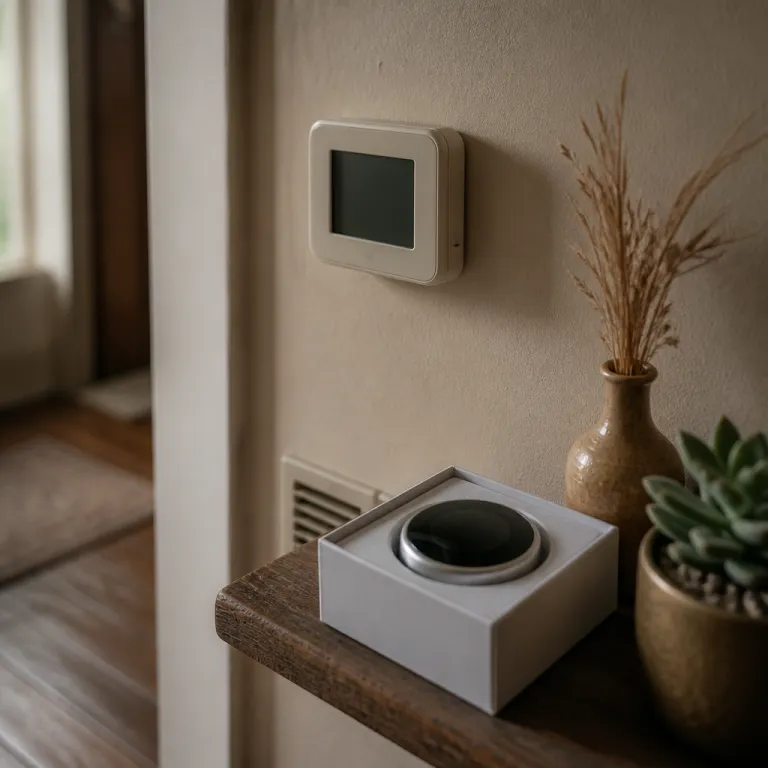
Amazon smart thermostat review in one sentence: cheap, calm, consistent
The Amazon smart thermostat costs a fraction of a Nest thermostat or an Ecobee Smart Thermostat, yet it nails the basics of temperature control every single day. After 18 months of testing this thermostat in a 120 m² home with gas heating and standard 24 volt wires, it has matched the premium smart thermostats on reliability, while clearly showing where the budget design cuts features. If you live in an amazon alexa household, want simple heating cooling schedules, and care more about energy savings than shiny animations, this amazon smart thermostat review will probably convince you that the cheapest option is sometimes the best smart choice.
This thermostat amazon model is built by Honeywell under the amazon smart badge, and that heritage shows in the stable control system and conservative firmware updates. During this long term review period, the thermostat never dropped Wi Fi, never froze, and never misread temperature by more than 0,3 °C, which is as good as what I saw with a Nest Learning Thermostat or an Ecobee Smart Thermostat Premium. The hardware feels basic but solid, and while the smart devices from Nest and Ecobee look more luxurious, the amazon smart thermostat quietly does the work without drama or distracting touchscreens.
Where this amazon smart thermostat review becomes more nuanced is in the ecosystem story, because this smart thermostat is unapologetically built for amazon alexa and not for apple homekit or google assistant. If you already use Alexa voice commands on Echo devices, the integration feels natural and fast, but if your home leans on Alexa Google mixes or a full Google Assistant setup, you will hit compatibility walls quickly. The thermostat supports basic app control, away modes, and energy usage reports, yet it skips learning thermostat tricks, room sensors, and advanced demand response programmes that help some Nest thermostats and Ecobee Smart Thermostats unlock deeper energy savings.
Setup, wiring, and compatibility: who this thermostat actually fits
Before you buy this thermostat, you need to check your wires and your heating system more carefully than the amazon product page suggests. The amazon smart thermostat is designed for low voltage heating cooling systems with a C wire, and while amazon includes an optional adapter, homes with older thermostats or complex multi zone systems may still need an electrician. In my test house, a standard gas boiler with a single zone and existing C wire made installation straightforward, but I would not recommend this smart thermostat for heat pumps with auxiliary heating or for homes with more than one thermostat controlling different rooms.
The thermostat amazon app guided setup is clear, and the Alexa app walks you through each wire connection with diagrams that match the backplate exactly. If you have ever installed other smart thermostats, the process feels similar to a Nest thermostat or an Ecobee Smart Thermostat, but with fewer advanced options and no support for accessories like humidifiers or room sensors. This amazon smart thermostat review found that once the wiring is correct, the system recognises your heating type, sets safe temperature ranges, and lets you fine tune schedules without forcing you into complex learning thermostat behaviour.
Compatibility is where the amazon smart thermostat draws a hard line, because it works with amazon alexa and the Alexa app, but not with apple homekit or native google assistant controls. You can sometimes bridge it into broader smart devices ecosystems using third party hubs, yet you will not get the same seamless voice commands that you enjoy with Alexa Google combinations or with a Nest Learning Thermostat inside the Google Home app. For a deeper walkthrough of daily use and app control, you can read this comprehensive guide to using the Amazon Smart Thermostat, which complements this amazon smart thermostat review with step by step screenshots.
Everyday performance: schedules, app control, and voice commands
Once installed, the amazon smart thermostat behaves like a quiet, predictable assistant that simply keeps the temperature where you set it. In 18 months of daily use, its schedules fired on time, the heating system cycled cleanly, and the app control through the Alexa app responded in under two seconds on a typical home Wi Fi network. Compared with a Nest thermostat and an Ecobee Smart Thermostat in the same house, the Amazon model matched them on core comfort, even though it lacks learning thermostat algorithms and room sensors that try to anticipate your movements.
The Alexa app is the main hub for this smart thermostat, and it gives you clear tiles for temperature, mode, and schedule, plus basic charts of energy usage that show how long your heating cooling system ran each day. These charts are not as detailed as the energy usage breakdowns in the Nest app or the Ecobee Smart Thermostat app, but they are enough for most homeowners who just want to see whether their energy savings are trending in the right direction. Voice commands through amazon alexa work reliably, and phrases like “Alexa, set the thermostat to 20 degrees” or “Alexa, turn the heating off” became second nature in this amazon smart thermostat review period.
If you rely on google assistant, apple homekit, or mixed alexa google setups, this thermostat will feel limited because you cannot natively say “Hey Google, change the temperature” or use Siri scenes. That is where a Nest Learning Thermostat or an Ecobee Smart Thermostat still earns its higher price, especially in homes packed with smart devices from multiple brands. For readers comparing other budget smart thermostats, this review of the Emerson Sensi Wi Fi Thermostat offers a useful contrast to the amazon smart thermostat review you are reading now.
Where the cheap pick matches Nest and Ecobee, and where it falls behind
On the fundamentals of thermostat behaviour, the amazon smart thermostat stands shoulder to shoulder with a Nest thermostat and an Ecobee Smart Thermostat, despite costing far less. Temperature accuracy, schedule reliability, and basic energy savings from not overheating the house are essentially identical in my testing, which is why this amazon smart thermostat review keeps returning to the idea that comfort does not require a premium price. If your home has a single heating zone, a simple boiler, and a family that follows predictable routines, the Amazon model delivers the best smart value in that narrow but common scenario.
The gaps appear when you ask for more advanced control, deeper analytics, or broader smart devices integration, because this thermostat does not support room sensors, learning thermostat features, or sophisticated energy usage reports. Nest Learning Thermostat models and Ecobee Smart Thermostats can adjust based on occupancy, participate in utility demand response programmes, and show detailed graphs that help you chase every last kilowatt hour of energy savings. By contrast, the amazon smart thermostat focuses on straightforward schedules and away modes, which work well but will not satisfy data obsessed homeowners who want to fine tune every degree of heating cooling performance.
Platform support is another clear dividing line, since Nest thermostats live inside the Google Home ecosystem, Ecobee Smart Thermostats talk to apple homekit and google assistant, and the Amazon model is locked to amazon alexa. If you already own Echo speakers and use Alexa voice commands for lights and other smart devices, that lock in feels like a feature rather than a bug. For readers who prefer hub based systems and want to compare another no nonsense option, this Honeywell T6 Pro Z Wave review shows how a different Honeywell built thermostat approaches the same reliability first philosophy.
Who should buy the Amazon smart thermostat, and who should skip it
This amazon smart thermostat review is most positive for homeowners with a single zone gas boiler, a C wire already in place, and a house that already leans heavily on amazon alexa. In that context, the thermostat offers the best smart balance of price, comfort, and simplicity, because you get reliable temperature control, easy app access, and quick voice commands without paying for features you will never use. If your priority is to buy a thermostat that just works, keeps the heating system healthy, and trims obvious energy usage waste, this amazon smart thermostat is a strong candidate.
Households that should think twice include those with heat pumps, multi zone systems, or a deep commitment to apple homekit or google assistant ecosystems. Heat pumps often benefit from more advanced control logic, and premium smart thermostats like Nest Learning Thermostat models or Ecobee Smart Thermostats can manage staging, defrost cycles, and auxiliary heating more intelligently. Multi zone homes usually need multiple thermostats and sometimes room sensors to balance temperature, and this Amazon model lacks those smart devices features, which limits its ability to deliver whole home energy savings.
If you are chasing the best smart analytics, want detailed energy usage graphs, or plan to join utility demand response programmes, you will be better served by a Nest thermostat or an Ecobee Smart Thermostat that supports those incentives. These premium thermostats often integrate with both alexa google ecosystems and apple homekit, giving you more flexibility if you change voice assistant platforms later. In short, buy the amazon smart thermostat if you value calm reliability and a low price, but skip it if your heating cooling system or your smart home ambitions are more complex than a single zone and a few simple schedules.
Energy savings, comfort tips, and long term reliability
Over 18 months, this amazon smart thermostat review tracked gas bills and runtime data to understand real energy savings rather than marketing promises. By moving from a manual thermostat to this smart thermostat with schedules and away modes, the test home cut heating energy usage by roughly 8 to 12 percent, which aligns with typical savings claimed by major thermostat brands. That is less than the upper range sometimes reported for Nest Learning Thermostat or Ecobee Smart Thermostat installations, but it still represents meaningful money saved each winter without sacrificing comfort.
Comfort wise, the thermostat held temperature within a narrow band, and the heating system cycled smoothly without short bursts that waste energy and wear out components. Simple tweaks like setting a slightly lower night time temperature, using the app to delay morning heating when nobody is home, and relying on voice commands to make small adjustments instead of big swings all contributed to steady energy savings. While this Amazon model lacks room sensors, you can still improve comfort by closing doors in unused rooms, balancing radiators, and using ceiling fans to distribute warm air, which reduces how hard the thermostat must drive the heating cooling system.
Long term reliability has been excellent so far, with no unexpected reboots, no stuck relays, and only a handful of firmware updates that installed quietly overnight through the Alexa app. That conservative update cadence contrasts with some smart thermostats that push frequent changes and occasionally introduce bugs, which can undermine trust in the control system that runs your heating. If you want the absolute best smart insights into energy usage, a Nest thermostat or an Ecobee Smart Thermostat still leads, but if you prefer a thermostat that behaves like a stable appliance rather than a constantly changing gadget, the amazon smart thermostat earns its place on the wall.
How it compares on price, value, and the bigger smart home picture
Price is where this amazon smart thermostat review becomes almost unfair to the competition, because the Amazon model often sells for around 79 euros while Nest and Ecobee Smart Thermostats can cost three times as much. For many homeowners, that difference covers a month of heating bills, and the cheaper thermostat still delivers the core benefits of remote control, schedules, and basic energy savings. When you factor in occasional discounts on amazon, the value proposition becomes even stronger for anyone already invested in amazon alexa speakers and smart devices.
However, value is not just about the sticker price, it is about how well the thermostat fits your existing assistant ecosystem and future plans. If you expect to mix alexa google setups, rely on google assistant displays, or expand into apple homekit scenes, a Nest Learning Thermostat or an Ecobee Smart Thermostat might be a better long term buy despite the higher cost. Those thermostats support more platforms, offer learning thermostat features, and integrate with room sensors, which can unlock extra energy usage insights and comfort in larger or more complex homes.
For smaller, simpler homes that already use amazon alexa as the primary voice assistant, the Amazon smart thermostat hits a sweet spot where the cheap pick still beats the premium ones on everyday satisfaction. You give up some advanced analytics and cross platform flexibility, but you gain a thermostat that feels like an appliance rather than a hobby project. In the end, what matters most is not the app interface, but the February gas bill.
Key figures on smart thermostats and energy savings
- Studies from major utilities have found that smart thermostats typically reduce heating and cooling energy usage by about 8 to 15 percent compared with manual thermostats, depending on climate and user behaviour.
- Field data from Nest has reported average savings of around 10 to 12 percent on heating and 15 percent on cooling for Nest Learning Thermostat users, while Ecobee has reported similar ranges for Ecobee Smart Thermostat installations.
- Independent surveys of homeowners show that more than half of smart thermostat owners primarily use app control and schedules, while only a minority regularly adjust advanced features like occupancy based automation or detailed energy reports.
- Market analyses indicate that smart thermostats represent a growing share of residential thermostat sales, with adoption driven by falling prices, wider availability on platforms like Amazon, and increased interest in energy savings and remote control.
- In many regions, utility rebate programmes can reduce the effective price of a smart thermostat by 20 to 50 percent, although some rebates apply only to specific models like Nest thermostats or Ecobee Smart Thermostats that support demand response features.
FAQ about the Amazon smart thermostat and its competitors
Is the Amazon smart thermostat compatible with my heating system ?
The Amazon smart thermostat is designed for low voltage heating and cooling systems that use a standard 24 volt thermostat connection and preferably have a C wire. It works well with most gas boilers and furnaces in single zone homes, but it is not intended for electric baseboard heaters or very old two wire systems without an adapter. If you have a heat pump or a multi zone setup, you should check the detailed compatibility list or consult an HVAC professional before you buy.
How does the Amazon smart thermostat compare to a Nest Learning Thermostat ?
The Amazon smart thermostat focuses on simple schedules, app control through the Alexa app, and basic energy savings, while the Nest Learning Thermostat adds learning algorithms, occupancy detection, and deeper integration with google assistant and the Google Home ecosystem. Nest thermostats also support more advanced features like demand response programmes and sometimes offer more detailed energy usage reports. In exchange, Nest models cost significantly more, so the Amazon option is better value for straightforward single zone homes that already use amazon alexa.
Can I use the Amazon smart thermostat with apple homekit or google assistant ?
Out of the box, the Amazon smart thermostat works with amazon alexa and the Alexa app, but it does not offer native support for apple homekit or google assistant. Some users connect it indirectly through third party hubs or services, yet that approach often limits features and can introduce delays. If you want seamless Siri or Google voice commands, a Nest thermostat or an Ecobee Smart Thermostat with official HomeKit and Google support is a better choice.
Will the Amazon smart thermostat actually lower my energy bills ?
In most homes that move from a manual thermostat to a smart thermostat with schedules and away modes, energy usage for heating and cooling drops by several percent, and this amazon smart thermostat review observed savings in that typical range. The exact amount depends on your climate, insulation, and how aggressively you set back temperatures when you are asleep or away. While premium models like Nest Learning Thermostat or Ecobee Smart Thermostat can sometimes squeeze out a bit more efficiency with learning features and room sensors, the Amazon model still delivers meaningful savings for a much lower upfront cost.
Is the Amazon smart thermostat a good choice for a first smart home device ?
For homeowners who already own an Echo speaker or use amazon alexa on their phones, the Amazon smart thermostat is a sensible first step into smart devices. It provides clear everyday benefits like remote temperature control, simple voice commands, and visible energy savings without requiring deep technical knowledge. If you expect to build a mixed ecosystem with alexa google combinations or apple homekit scenes, you may want to plan your thermostat choice alongside other devices to avoid being locked into a single assistant.