
Summary
Editor's rating
Value for Money
Design and Aesthetics
Battery and Power
Effectiveness and Features
Pros
- Smart learning algorithms
- Easy integration with smart home systems
- Polished design with large display
Cons
- High initial cost
- Occasional sensitivity issues with display lighting

Specifications
View full product page →| Brand |
Smart Savings with Nest
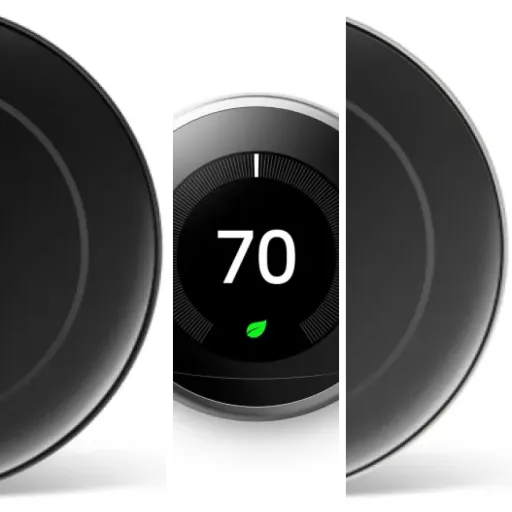
The Nest Learning Thermostat (4th Gen) is Google’s latest attempt at making home temperature control more intelligent and energy-efficient. Released in 2024, this thermostat is advertised as a device that not only manages your home’s heating and cooling systems but also learns from your habits to optimize energy use. After spending a couple of weeks with it, I have some thoughts to share.
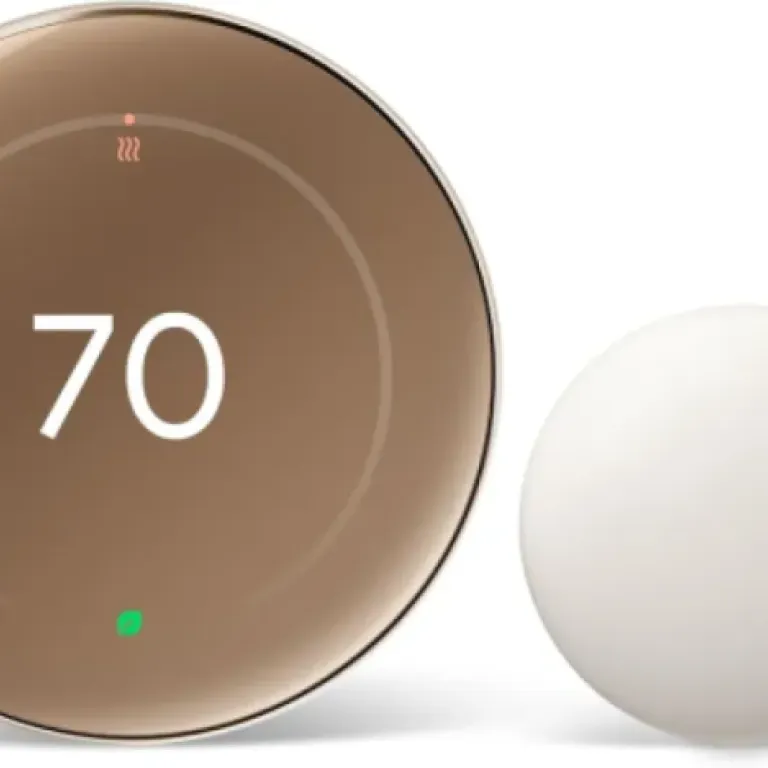
On first impression, the thermostat is sleek, with a polished gold finish that stands out. It looks more like a piece of modern art than a utility device. But aesthetics aside, how does it perform in everyday life?
After setting it up, which took about 30 minutes (not bad for someone who's not very DIY savvy), it immediately started learning my schedule. This meant adjusting temperatures based on when I was home or away. It's a neat feature, though it did take a few days to get it tuned correctly.
In terms of energy savings, Google claims it can save an average of 12% on heating and 15% on cooling bills. During my short testing period, I didn't see such dramatic savings, but any reduction in energy consumption is a win in my book.

Value for Money
At its price point, the Nest Learning Thermostat (4th Gen) isn't the cheapest option on the market, but it does aim to justify the cost with a suite of smart features and energy savings. Google claims it can save 12% on heating and 15% on cooling, but personal experiences may vary based on your home's specifics and energy usage habits.
When compared to other smart thermostats, it stands out with its learning algorithms and ability to integrate with a wide range of home automation systems like Alexa, Apple HomeKit, and Google Home. This makes it a versatile choice for those already invested in smart home ecosystems.
However, if you're on a tight budget, there are other thermostats out there that, while maybe not as feature-rich, offer good basic functionality at a lower price. The Nest is more of a long-term investment, appealing to those who value both the convenience of smart technology and the potential for reducing energy costs.
In conclusion, the Nest Learning Thermostat offers good value for those looking to modernize their home heating and cooling system while also having the willingness to pay a premium for the additional smart features.
Design and Aesthetics
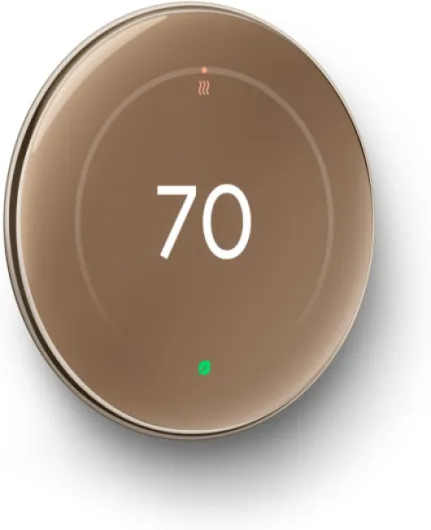
When it comes to design, Google has nailed it with the Nest Learning Thermostat (4th Gen). The polished gold finish gives it a premium look that fits well with modern home decor. It's not just about looks, though; the thermostat features a 60% larger display than previous models, making it easy to read from a distance.
The display uses Dynamic Farsight technology, which automatically adjusts brightness and can show info like time or weather when it senses you're nearby. This feature is convenient, but I found it a bit too sensitive at times, lighting up even with the slightest movement in the room.
Installation was straightforward, as advertised. The unit is designed to be compatible with most 24V systems, and for many homes, no C wire is required, which is a bonus. However, I did have to use the Nest Compatibility Checker to make sure it would work with my setup.
Overall, the design is a strong point for this thermostat. It’s not just good-looking; it’s also practical and user-friendly, which counts for a lot in daily use.

Battery and Power
The Nest Learning Thermostat (4th Gen) is battery-powered and comes with a CR2 lithium battery included. During my test period, the battery life was acceptable, but it's worth noting that the longevity of the battery may vary depending on how often the display is activated and how regularly the thermostat is adjusted.
One thing I appreciated was that it alerts you through the Google Home app when the battery is running low. This is useful since the last thing you want is for the thermostat to die in the middle of winter or a heatwave.
No C wire is required for installation in most homes, which is a relief for those not wanting to mess with electrical wiring. However, I would recommend checking your system’s compatibility just to be sure.
Overall, the battery setup is straightforward and user-friendly, though I do wonder about the long-term sustainability of using lithium batteries. It would be interesting to see future models offer a rechargeable option to address this concern.
Effectiveness and Features
The main selling point of the Nest Learning Thermostat is its ability to learn your routine and adjust temperatures accordingly. Over my testing period, it did a decent job of adapting to my schedule. Initially, it required some manual adjustments, but it soon got the hang of when I was out, lowering the heating to save energy.
The addition of the Nest Temperature Sensor is a nice touch. You can place it in a room that tends to get too hot or too cold and let the thermostat balance things out. This is particularly useful for homes with multiple levels or odd layouts where certain areas don’t get heated or cooled effectively.
Another feature I liked was the ability to control the thermostat via the Google Home app or through voice commands using Alexa, Siri, or Google Assistant. It’s handy to adjust the temperature right from your phone or by simply asking your smart speaker.
That said, it’s not perfect. There were moments when the adjustments felt a bit off, especially during rapid weather changes. But for the most part, it handled the job well and offered a good balance of comfort and energy savings.
Pros
- Smart learning algorithms
- Easy integration with smart home systems
- Polished design with large display
Cons
- High initial cost
- Occasional sensitivity issues with display lighting
Conclusion
Editor's rating
The Nest Learning Thermostat (4th Gen) is a solid option for those looking to incorporate smart technology into their home. It offers a nice balance of aesthetics, functionality, and smart features, making it a good fit for tech-savvy homeowners who appreciate convenience and potential energy savings.
However, if budget is a concern, or if your home already functions well with a less expensive thermostat, you might not find the additional features worth the extra cost. It’s well-suited for those who enjoy the integration with smart home systems and are keen on the energy-saving aspect.
Overall, it’s a worthwhile investment for those who want their home to be as smart as possible, but it may not be necessary for everyone. If you value the combination of style, technology, and potential savings, the Nest Learning Thermostat (4th Gen) is worth considering.