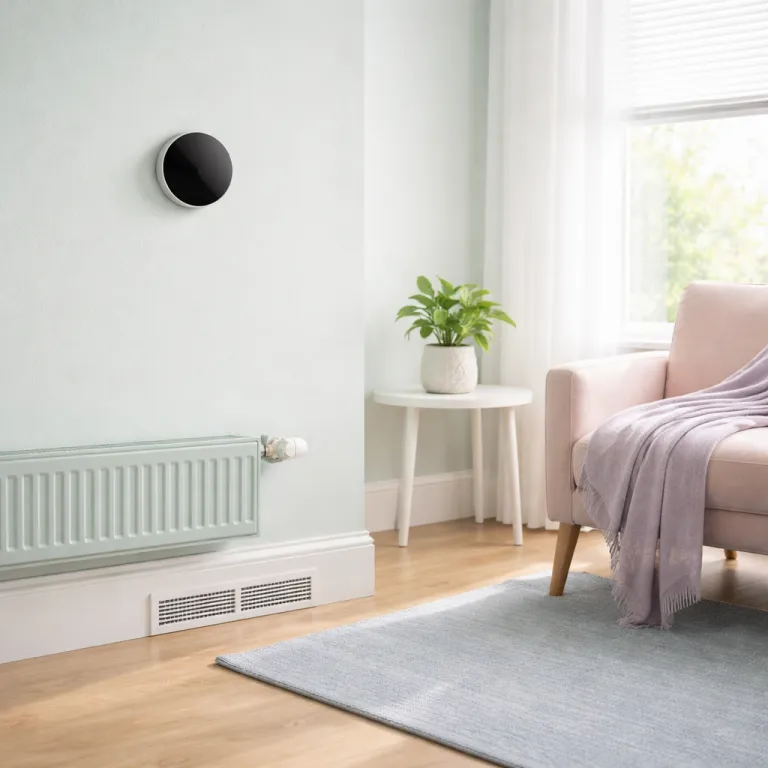
What “AI” really does in today’s smart thermostats
Walk down the thermostat aisle or scroll through Amazon and every box now whispers about an AI-powered smart thermostat promising an effortless, 2026-style era of comfort. Behind the glossy packaging, most of these connected thermostats still juggle a familiar trio of schedule, temperature and occupancy data rather than any mysterious intelligence. The label sounds futuristic, but the real work is closer to refined automation than to science fiction, which is why many experts now talk about smart thermostat AI limits rather than limitless potential.
Take the classic Nest Learning Thermostat and its newer Nest Thermostat cousins, which helped define the modern market for learning thermostats. Nest’s learning algorithms watch when you adjust heating or cooling during the first weeks, then build a schedule that mimics your habits with small tweaks over time. That is genuine machine learning, but it still lives inside clear boundaries of room comfort, energy savings and basic HVAC protection, rather than open-ended artificial intelligence.
Ecobee smart thermostats such as the Ecobee Smart Thermostat Premium lean on a different style of adaptive control. They combine motion and occupancy sensor data from multiple rooms with weather forecasts and utility rate information to nudge heating and cooling runtimes toward lower energy use. The system feels smart because it quietly shifts set points when rooms sit empty, yet the underlying logic is still a structured optimization problem rather than free-roaming artificial intelligence.
Most other connected thermostat brands use the AI label for features that are really rule based. Geofencing that turns the temperature down when your phone leaves home, vacation modes that protect pipes, and preheating before you wake up are all examples of thermostats following if-this-then-that style rules. Those rules are useful, but they are not learning in the way a data scientist would use the term learning thermostat, and they rarely adapt in unexpected ways.
Voice platforms add another layer of confusion to what feels smart in a thermostat. When you say “set the room to 20 degrees” to a smart speaker with Amazon Alexa, Google Assistant or Siri, the intelligence mostly lives in the cloud assistant, not in the thermostat itself. The thermostat simply receives a new control command, adjusts the HVAC system and reports back the updated temperature, while the assistant handles speech recognition and intent, so the apparent AI lives off the wall rather than inside it.
Marketing around the latest generation of AI-enabled climate controls also blurs the line between connectivity and intelligence. A thermostat app that lets you remote control heating from a train platform is convenient, but it is not inherently smarter than a well designed programmable thermostat from a decade ago. The difference is that the app makes it easier to stick with energy saving choices because you can fix mistakes from anywhere and avoid leaving the heating on all day by accident.
Some of the most praised products highlight how little raw algorithmic novelty you actually need. The Lennox L40, for example, won a major smart thermostat of the year award from the 2024 AHR Expo Innovation Awards largely for usability, interface clarity and reliable HVAC integration rather than for exotic neural networks. That should be a signal to homeowners that the best smart thermostat for their house may be the one that makes everyday control simple instead of the one shouting loudest about AI.
When you compare Nest, Ecobee, Amazon Smart Thermostat and Google Nest models, the smartest choice is often about wiring and compatibility. Multi stage HVAC systems, heat pumps with auxiliary electric baseboard backup and older boilers all impose different limits on what a thermostat can safely do. No amount of artificial intelligence branding will help if the thermostat cannot talk cleanly to your specific heating system or respect its safety constraints.
Where learning stops and rules begin in Nest and Ecobee
For a homeowner weighing a next-generation smart thermostat purchase, the Nest and Ecobee families are the clearest case studies in real learning versus polished rules. Google Nest positions the Nest Learning Thermostat as the brainy option, while the simpler Nest Thermostat leans more on presets and the Google Home app. Ecobee counters with the Ecobee Smart Thermostat Premium and its Eco+ features, which quietly reshape your schedule around comfort and energy prices using a blend of algorithms and predefined behaviors.
True learning shows up when the thermostat changes behavior in ways you did not explicitly program. Nest learning models watch how often you override the schedule in each room and gradually adjust the default temperature bands, sometimes shaving a degree or two without you noticing. Over a season, that can trim heating or cooling energy use, especially in well insulated homes where small changes accumulate into measurable savings.
Ecobee smart thermostats take a more sensor heavy path to similar goals. Each Ecobee room sensor reports motion and temperature, allowing the thermostat to prioritize occupied rooms during the evening while relaxing control in unused spaces. The result feels like a smart integration of occupancy and comfort, even though the underlying logic is still a structured set of rules tuned by data rather than a thermostat that truly understands context.
Weather aware optimization is another area where marketing often outruns reality. Both Nest and Ecobee pull local forecasts through their cloud systems, then adjust preheating or precooling so the HVAC system runs at more efficient times. That is helpful, but it is closer to a sophisticated timer than to a thermostat that truly reasons about future energy markets or grid constraints, and it remains bounded by simple models of how your home heats and cools.
Voice and platform support add yet another layer of AI confusion. When a Nest thermostat responds to a command from Alexa or from a smart speaker running Google Assistant, the intelligence of speech recognition and intent parsing lives in the assistant. The thermostat simply exposes an API for temperature control, fan settings and mode changes, then executes whatever the assistant sends, so the perceived smart thermostat AI limits are shaped by the platform as much as by the device.
HomeKit, Amazon Alexa and Google Home compatibility also shape how smart a thermostat feels day to day. A Nest learning thermostat that integrates cleanly with a Google Nest smart speaker may feel more responsive than a more advanced learning thermostat that forces you into a clunky third party app. In practice, the best smart thermostat is often the one that slots neatly into the voice and app ecosystem you already use and that your household will actually control.
One detailed hands on test of the Nest Learning Thermostat with a Nest temperature sensor and multiple platforms such as Alexa, Apple HomeKit and Google Home shows how these integrations matter more than buzzwords. A polished gold Nest unit that responds instantly to a Google Nest hub, an Amazon Alexa smart speaker and the Nest app gives you the sense of an AI-driven thermostat experience, even though the algorithms are mostly incremental. The magic is not that the thermostat thinks, but that it listens reliably to every system in your home and coordinates them without drama.
When you strip away the branding, Nest and Ecobee both rely on a blend of learned schedules, rule based geofencing and remote app control. That mix is powerful enough to cut real energy use if you let the thermostats run with slightly wider temperature bands. The lesson for buyers is simple, pay for the learning thermostat features you will actually leave enabled, not for the most dramatic AI label or the most speculative automation claims.
AI promises that overreach: occupancy, prediction and savings claims
Once you understand what Nest and Ecobee really learn, the bolder artificial intelligence thermostat promises start to look shaky. Many newer models on Amazon or in big box stores boast about predictive occupancy, self tuning comfort and guaranteed savings that sound almost magical. The reality is that most of these thermostats still rely on a handful of motion sensors, phone locations and simple rules about time of day, rather than deep predictive models of your household.
Occupancy prediction is the most common overreach. A thermostat can watch when motion sensors see activity in a room and when your phone leaves the geofence, then guess whether the home is empty, but it cannot reliably know that you are napping on the sofa without moving. That is why even the best smart thermostats still fall back to conservative heating and cooling when they are unsure, which limits both energy savings and comfort gains and exposes the practical smart thermostat AI limits.
Some brands also lean hard on savings forecasts that look precise but rest on shaky assumptions. A thermostat app might show that your AI-enhanced setup will cut 20 percent from your heating bill, yet that number often assumes perfect insulation, disciplined use of eco modes and no manual overrides. In real homes with kids, pets and guests, those neat projections usually erode quickly and end up closer to the modest savings reported in independent field trials.
Weather aware control is another area where the marketing language outruns the math. Thermostats that claim to learn how your specific HVAC system responds to outdoor temperature shifts are mostly building a simple model of how long it takes to heat or cool your home. That model helps with preheating before you wake up or precooling before a heat wave, but it is not the same as a thermostat reasoning about complex climate data or optimizing against real-time grid signals.
Even basic room thermostats without Wi Fi can sometimes match the comfort of more advanced smart thermostats when paired with well designed zoning. A traditional electronic room thermostat that accurately measures temperature and controls a single zone can keep that space comfortable with minimal fuss. The difference with a connected, AI-branded device is that you gain remote control, app based scheduling and integration with platforms such as Alexa or Google Assistant.
For homeowners with electric baseboard heating, the gap between promise and reality can be even wider. Many AI marketed thermostats simply cannot handle the high voltage wiring of electric baseboard systems without extra relays or specialist models. In those cases, a robust electronic room thermostat designed for baseboard loads may be safer and more reliable than a flashy smart thermostat that was never meant for that job.
Older but well engineered products such as the Horstmann HRT4 ZW electronic room thermostat show how much value still lives in clear control rather than in AI claims. A Z Wave capable room thermostat that integrates with a hub can deliver remote temperature control and basic automation without pretending to learn your every move. When paired with a modern Z Wave hub, that kind of system can sit alongside a newer smart thermostat and still hold its own on reliability.
The core lesson is that rules, sensors and connectivity already solve most comfort problems in typical homes. You do not need a thermostat premium badge or a grand AI narrative to get steady temperatures and lower energy use. What you need is honest information about what the thermostat actually decides for you and what still depends on your own habits, plus a realistic sense of the smart thermostat AI limits in your particular house.
Features that really matter on your bill, AI or not
When you strip away the AI marketing, a handful of features consistently move the needle on comfort and energy. Accurate temperature sensing, reliable HVAC control and easy scheduling matter more than any buzzword on the box. If a thermostat nails those basics, the learning and automation layers become a bonus rather than a crutch and can operate within sensible smart thermostat AI limits.
Start with sensors, because they shape everything the thermostat decides. A single wall mounted sensor in a hallway can misrepresent how warm a living room or bedroom actually feels, especially in multi storey homes with uneven heating. Smart thermostats that support multiple remote sensors, such as Ecobee Smart Thermostat Premium or Nest models with add on sensors, can average or prioritize rooms in ways that better match real comfort.
Next comes compatibility with your HVAC system, which is where many buyers stumble. Multi stage furnaces, variable speed heat pumps and electric baseboard heaters all impose different wiring and control requirements that not every thermostat can handle. Before you fall for a thermostat premium label, check whether your system uses a C wire, whether it has multi stage heating or cooling and whether any accessories such as humidifiers need control.
Integration with your existing smart ecosystem is another practical filter. If your home already leans on Amazon Alexa, a Google Nest smart speaker or a mix of Apple HomeKit devices, you want a thermostat that plays nicely with those systems. A smart integration that lets you say “set the room to 19 degrees” from any speaker is worth more than a rarely used AI optimization mode buried in the app.
Connectivity beyond voice also matters, especially if you plan to expand your smart home. A Z Wave hub or similar controller can coordinate thermostats, sensors and other devices in ways that no single app can match. If you are curious about this route, a detailed guide on how a Z Wave hub can transform your smart thermostat experience shows how even a modest learning thermostat becomes more capable when it joins a broader network.
Energy reporting is another area where substance beats style. Some thermostats provide clear monthly breakdowns of heating and cooling runtimes, helping you see whether schedule tweaks actually reduce energy use. Others bury this data behind vague eco scores that look impressive but do not help you change behavior or compare different thermostats in a meaningful way.
Finally, think about everyday reliability rather than edge case cleverness. A thermostat that always reconnects to Wi Fi, responds quickly to app commands and keeps your HVAC system within safe limits will quietly earn its place on the wall. The real test of a smart thermostat purchase is not the launch day demo, but how it behaves on the coldest night of winter when you simply need the heating to work.
In the end, the smartest thermostats are the ones that make good choices easy and bad choices slightly harder. They nudge you toward wider temperature bands, shorter heating schedules and more realistic comfort expectations without constant nagging. What changes your bill is not the app interface, but the February gas bill and the habits you actually maintain.
Key figures on smart thermostats and energy impact
- Studies from major utilities and independent researchers show that smart thermostats typically reduce heating and cooling energy use by around 8 to 15 percent compared with manual thermostats, with savings depending heavily on insulation quality and user behavior; for example, field data from U.S. utility pilot programs consistently falls in this range.
- Independent field trials have found that learning thermostats such as Nest and Ecobee can achieve similar average savings to well programmed traditional thermostats, highlighting that automation mainly helps households that never used schedules before and that behavior remains the dominant factor.
- Market analyses report that the global thermostat market has grown rapidly in recent years, with smart thermostats representing a steadily increasing share as more homes adopt Wi Fi connected HVAC control and as utilities promote demand response programs.
- Surveys of homeowners indicate that remote app control and voice integration with platforms such as Amazon Alexa and Google Assistant rank higher in satisfaction than advanced AI features, suggesting that convenience often outweighs algorithmic sophistication in real-world use.
- Data from grid operators show that coordinated thermostat programs, where utilities briefly adjust thousands of thermostats during peak demand, can reduce strain on the grid by several percentage points without noticeable comfort loss for most participants, illustrating how even simple control at scale can matter more than individual AI features.