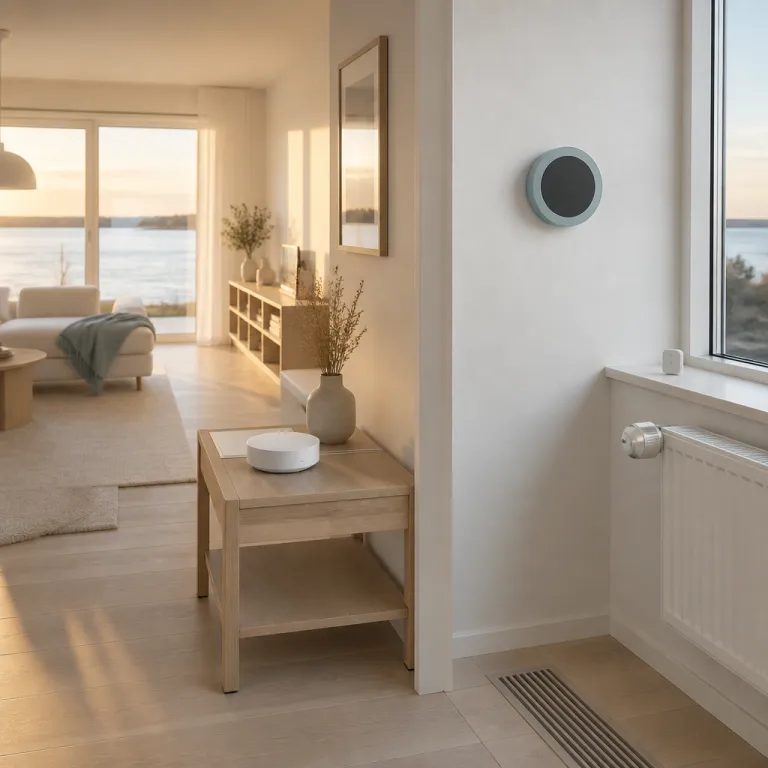
Why a home automation controller matters for smart thermostat users
A modern home automation controller acts as the central brain that links your smart thermostat with other home devices. When this controller unifies heating, cooling, lighting, and security systems, your smart home stops being a collection of gadgets and becomes a coordinated automation system. That shift gives you precise control, better energy efficiency, and a more comfortable home without constant manual adjustments.
For a person seeking information, the key question is simple yet crucial. How does a central automation controller change the way you use a smart thermostat compared with a basic standalone app or remote control on your phone? The answer lies in how the controller connects sensors, voice assistants, and security systems into one responsive system that can learn from your habits in real time.
Instead of treating the thermostat as an isolated device, a home automation controller links it to motion sensors, door contacts, and even a security camera. When the security system arms as you leave home, the controller can lower the temperature automatically and adjust smart lighting to simulate presence. When you return home, the same hub can raise the temperature, switch on the best home lighting scene, and disarm home security in a single automated routine.
Touchscreen smart thermostats and voice control with alexa, google, and apple
Touchscreen smart thermostats have become the user friendly face of the broader home automation system. Their bright displays show temperature, humidity, and sometimes air quality data from integrated sensors, while the underlying automation controller coordinates everything behind the scenes. When combined with voice control through Amazon Alexa, Google Home, or Apple HomeKit, the thermostat becomes part of a seamless smart home experience rather than just a wall mounted gadget.
Voice assistants such as Alexa, Google Assistant, and the Apple Siri assistant let you adjust heating with simple commands. You can say to Amazon Alexa or to a Google Home speaker that you want the living room at 21 °C, and the home automation controller translates that request into precise control of the thermostat and other connected devices. This works even better when the automation controller links multiple systems, so one voice command can change temperature, smart lighting, and security settings together.
Many readers want to understand how voice control and touchscreen interfaces work together in practice. A touchscreen thermostat lets you fine tune schedules and scenes, while the home assistant platform or dedicated app gives deeper access to automation rules. For a detailed look at how Alexa and smart thermostats interact inside a smart home, you can read this guide on enhancing home comfort with Alexa and smart thermostats, which explains how a central automation controller orchestrates these interactions.
From single thermostat to integrated automation controller and hub
Many households start with a single smart thermostat and later realise they need a full automation controller or hub. A dedicated home automation controller manages not only heating but also home devices such as smart lighting, blinds, and security systems from one interface. This controller can run complex routines, for example lowering the temperature when windows are open or when the security system detects that nobody is home.
Popular platforms such as Home Assistant, Apple HomeKit, and various proprietary hubs from brands like Tapo or Amazon integrate thermostats with other devices. A Tapo pack of sensors, plugs, and smart lighting can be coordinated by the same automation system that manages your heating, giving you consistent control across the entire home. When the controller receives data from motion sensors or door sensors, it can adjust the thermostat in real time to avoid heating empty rooms.
Touchscreen programmable thermostats gain even more value when they are part of such a hub based automation controller. Instead of programming each device separately, you define scenes like “night mode” or “away mode” once in the central system and apply them across all systems. To explore how advanced touchscreen models fit into this ecosystem, you can consult this overview of top touchscreen programmable thermostats, which shows how they interact with a home automation controller and other smart home devices.
Security, privacy, and reliability in a connected smart home
When a home automation controller links thermostats, security systems, and cameras, questions about security and privacy become central. A compromised automation system could theoretically affect heating, lighting, and even home security, so robust protection is not optional. You should always treat the controller as critical infrastructure for your home, just as important as the router that connects your devices to the internet.
Look for controllers and hubs that support strong encryption, regular firmware updates, and clear privacy policies from vendors such as Amazon, Google, or Apple. When a controller integrates a security camera, door sensors, and a smart thermostat, it must handle sensitive data responsibly and provide transparent options to control what is stored in the cloud. Local processing on a Home Assistant style hub can reduce exposure by keeping most automation logic inside the home rather than on remote servers.
Reliability matters as much as security, especially when heating and cooling depend on the automation controller. If the internet connection fails, the thermostat should still operate safely, and the hub should maintain basic schedules without cloud access. Choosing a best home setup often means balancing convenience from cloud based voice control with the resilience of local control, so that your smart home remains functional even when external systems are unavailable.
Choosing the best home automation controller for smart thermostats
Selecting the best home automation controller for a smart thermostat depends on your existing devices and preferred ecosystem. If you already use Amazon Alexa speakers, a controller that integrates tightly with Amazon services and supports Alexa Google style voice commands will feel natural. For users invested in Apple devices, an Apple HomeKit compatible hub may provide smoother control through the Apple Home app and Siri assistant.
Google Home users often prefer controllers that integrate well with Google voice services and Nest style thermostats. A flexible automation system that supports multiple ecosystems, including Alexa, Google, and Apple HomeKit, can protect you from vendor lock in and let you mix brands such as Tapo, Amazon, and other home devices. When comparing options, check whether the controller supports your specific thermostat model, your preferred security system, and any smart lighting or sensors you plan to add later.
Some hubs focus on ease of use, while others such as Home Assistant prioritise deep customisation and local control. If you want simple routines like “turn down heating when I leave home”, a user friendly app may be enough, but advanced users might prefer an automation controller that exposes detailed rule engines and real time data. Before buying, map your current systems, list desired features such as remote control, voice control, and integration with security systems, then choose the controller that aligns with your long term smart home plans.
Practical scenarios: linking smart thermostats, lighting, and security in real time
Real value from a home automation controller appears in everyday scenarios where multiple systems interact. Imagine a winter evening when your security system detects that you have arrived home and disarms automatically as you unlock the door. The controller can raise the thermostat, switch on smart lighting in the hallway, and start a cosy scene in the living room without you touching a single button.
In another scenario, window sensors and motion sensors feed data to the automation system throughout the day. When no movement is detected for a set period and the security system arms in away mode, the controller lowers heating, turns off unnecessary home devices, and activates a security camera at the front door. If you return earlier than expected, a quick voice control command to Alexa Google or Google Home can override the schedule and warm the home before you step inside.
For underfloor heating or more complex HVAC setups, a specialised thermostat that supports dual sensors and Wi Fi control can integrate with a hubless Alexa compatible system. A detailed example is described in this review of a smart thermostat for electric underfloor heating with app control, which shows how a thermostat, an automation controller, and voice assistants work together. In each case, the goal is the same, to use real time information from sensors and systems so that your smart home feels responsive, secure, and comfortable without constant manual control.
Key statistics about smart thermostats and home automation controllers
- According to the International Energy Agency, smart thermostats can reduce heating and cooling energy use by around 10 %, which becomes more significant when a home automation controller coordinates multiple devices and systems. The IEA’s 2018 report on digitalisation and energy efficiency discusses these savings in the context of connected heating controls (International Energy Agency, “Digitalization and Energy Efficiency”, 2018).
- Data from Statista shows that the global smart home market has grown to hundreds of millions of connected devices, with smart thermostats and security systems among the fastest growing categories in home automation. Statista’s 2023 smart home outlook highlights strong adoption of climate control and security products in particular (Statista, “Smart Home Report”, 2023).
- Research by the American Council for an Energy Efficient Economy reports that households using programmable or smart thermostats effectively can cut annual energy bills by up to 8 %, especially when combined with automation systems that respond in real time to occupancy. ACEEE’s 2015 analysis of residential energy savings from smart controls provides these estimates (American Council for an Energy Efficient Economy, “Energy Impacts of Smart Home Technologies”, 2015).
- Consumer surveys from major brands such as Amazon and Google indicate that voice control is now one of the top reasons people adopt smart home devices, with thermostats, smart lighting, and security cameras among the most frequently controlled products. Recent surveys published in 2022 and 2023 by these companies emphasise the role of voice assistants in everyday smart home use (for example, Amazon and Google smart home adoption surveys, 2022–2023).
FAQ: smart thermostats, voice control, and home automation controllers
How does a home automation controller improve a smart thermostat
A home automation controller links the smart thermostat with other home devices such as sensors, smart lighting, and security systems. This integration lets the system adjust temperature automatically based on occupancy, time of day, or security status. As a result, you gain better comfort, lower energy use, and less need for manual control.
Can I use alexa, google, or apple voice control with any smart thermostat
Not every smart thermostat supports all voice assistants, so you must check compatibility with Amazon Alexa, Google Home, or Apple HomeKit before buying. Many popular models work with at least one major assistant and can be integrated into a broader automation system through a compatible hub. When the thermostat and controller both support your chosen assistant, you can use voice control for temperature changes, scenes, and routines.
Is it safe to connect my thermostat to security systems and cameras
Connecting a thermostat to security systems and cameras can be safe if you choose reputable brands, enable strong passwords, and keep firmware updated. A secure home automation controller should use encryption and allow you to manage data sharing between devices. Treat the controller like critical infrastructure and review privacy settings regularly to maintain strong home security.
Do I need a hub or can I rely on the thermostat app alone
A standalone thermostat app can handle basic scheduling and remote control, but a dedicated hub or automation controller unlocks more advanced scenarios. With a hub, the thermostat can respond to motion sensors, door sensors, and security system states in real time. If you plan to expand your smart home beyond heating, a controller becomes a practical long term investment.
What is the benefit of real time data in smart home automation
Real time data from sensors and devices lets the automation system react instantly to changes in occupancy, weather, or security events. For example, the controller can lower heating when windows open or when the security system arms, instead of waiting for a fixed schedule. This responsiveness improves comfort, reduces energy waste, and makes the smart home feel more intuitive and reliable.