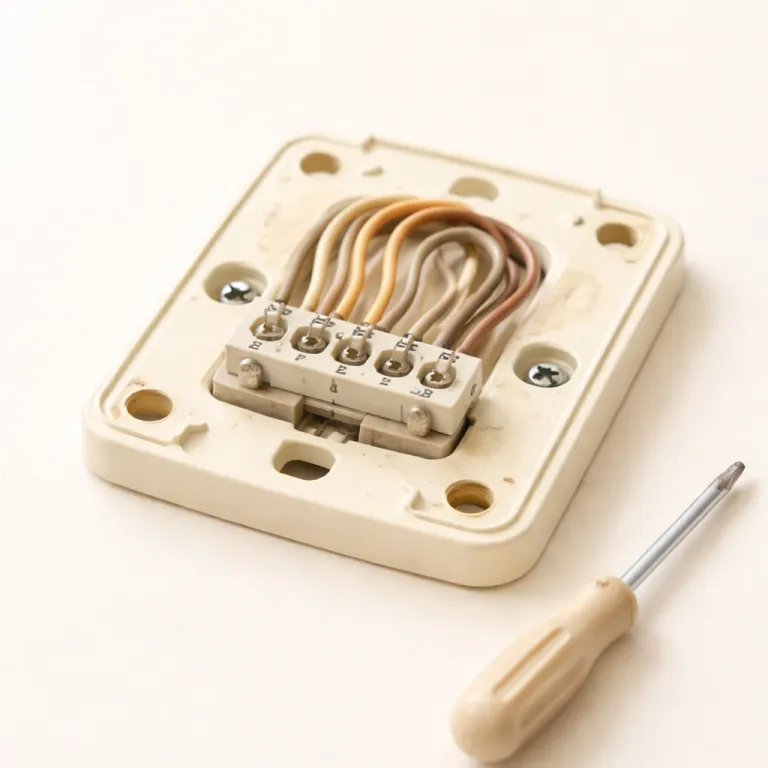
Why thermostat wiring diagnosis matters before you buy smart
Thermostat wiring diagnosis is the five minute check that prevents expensive regret. When you understand how each thermostat wire relates to your heating and cooling system, you can tell in advance whether a Nest, Ecobee, or Honeywell smart thermostat will actually work on your wall. That small bit of wiring knowledge protects your indoor air comfort, your hvac system, and your budget.
Most homeowners see a tangle of thermostat connections and assume only a professional can decode them. In reality, the labels on each terminal and the total number of thermostat wires tell a clear story about your heating cooling setup, including whether you have a heat pump, a simple furnace, or a multi stage air conditioning system. Once you learn how each conductor lands on a specific wire terminal, the low voltage wiring stops feeling mysterious and starts feeling like a practical home skill.
Think of your thermostat as the control brain and each wire as a nerve running to the hvac system. The red thermostat wire usually brings power from the control board, while white, yellow, green, and blue wires handle heat, cooling, fan, and common wire duties. When you correctly map those labeled terminals, your smart thermostats can manage heat and air conditioning efficiently instead of leaving you with problems like no cooling or a fan that never shuts off.
Safety first: how to expose and read your thermostat wires
Start any thermostat wiring check by shutting off power to the hvac system at the breaker panel. Cutting power before you pull the thermostat off the wall protects the control board, the air handler, and you from short circuits that can turn a simple wiring problem into a costly service call. Once the breaker is off, remove the thermostat faceplate gently so the wires and each connected terminal stay intact.
Behind most thermostats you will see a small terminal strip with screws or spring clips, each next to a letter like R, C, W, Y, G, O, or B. Every wire labeled at that strip runs to a matching wire terminal on the furnace, air handler, or heat pump outdoor unit, and those letters describe the function rather than the color. Take a clear photo of the thermostat wiring layout, including any jumper between Rh and Rc, because that image becomes your wiring map when you install a new thermostat hvac control later.
Count how many thermostat wires are actually landed on a connected terminal and how many are tucked unused in the wall. A two wire setup almost always means heat only, a four wire layout usually signals heating and cooling, and a five wire configuration with a common wire supports most Wi Fi smart thermostats without adapters. If you see six or more wires on the terminal strip, you are probably looking at a heat pump or multi stage hvac system that needs a more advanced model such as a Honeywell VisionPRO WiFi, which is often recommended in detailed Honeywell 8000 VisionPRO WiFi thermostat for precise home comfort guides.
Wire counts decoded: from simple heat to complex heat pumps
Thermostat wiring diagnosis really pays off when you match wire counts to system types. A two wire thermostat with only R and W terminals used almost always controls a basic heating system, where the thermostat simply calls for heat and the furnace handles the fan and air flow on its own. In that case, upgrading to many smart thermostats is tricky because they expect more wires for full control and stable power.
With three or four wires on the terminal strip, you usually have heating and cooling with fan control, using R for power, W for heat, Y for air conditioning, and G for the blower fan. A five wire thermostat setup adds the common wire on C, which gives the smart thermostat a steady power supply and avoids relying on power stealing tricks that can cause problems like short cycling or a chattering relay on the control board. When your wiring inspection reveals a five wire configuration, you can confidently choose most mainstream smart thermostats without needing a separate power kit or extra service visit.
Six or more wires change the story because they often indicate a heat pump system or multi stage heating cooling equipment. Look for an O or B wire on a dedicated terminal, which usually controls the reversing valve that switches the heat pump between heating and cooling modes. If you also see W2 or Y2 terminals with thermostat wires attached, your hvac system likely has multi stage heat or air conditioning, and you must pick a thermostat that supports those extra stages and the specific heat pump wiring logic described in advanced how to change Wi Fi channel for a more stable smart thermostat network troubleshooting guides.
Key terminals and what each thermostat wire actually does
Once you have a clear photo, thermostat wiring diagnosis shifts from counting wires to understanding roles. The R, Rh, or Rc terminal usually carries 24 volt power from the hvac system transformer, and that single red thermostat wire may feed both heating and cooling through a factory jumper between Rh and Rc. The C terminal hosts the common wire return path, closing the low voltage circuit so smart thermostats can power their screens, Wi Fi radios, and control logic without draining batteries.
The W terminal handles heat calls, sending a signal from the thermostat to the furnace or air handler whenever room temperature drops below the set point. Y controls cooling, telling the outdoor air conditioning compressor and sometimes the indoor air handler to start moving air and refrigerant, while G directly switches the indoor fan on for circulation or continuous indoor air mixing. When your wiring check confirms that W, Y, and G wires connect cleanly to their matching wire terminal positions, you reduce the risk of problems like a fan that runs without heat or cooling that never engages.
Heat pump systems add more complexity with O or B terminals that manage the reversing valve, which flips refrigerant flow between heating and cooling modes. In many setups, the O wire connects to energize the reversing valve in cooling, while a B wire labeled terminal energizes it in heating, and mixing those up can leave you with cold air when you expect heat. Careful mapping of every wire thermostat connection from the wall plate to the control board ensures your thermostat hvac commands match the actual hvac system behavior, rather than creating confusing problems that look like equipment failure but are really wiring mistakes.
For quick reference, most conventional systems follow this common pattern: R (often red) supplies 24 volt power, C (often blue or brown) is the common return, W (typically white) calls for heat, Y (usually yellow) starts cooling, G (often green) runs the indoor fan, and O/B (commonly orange or dark blue) controls the heat pump reversing valve. Always trust the terminal letters over insulation color, because installers sometimes reuse whatever conductor is available.
From wiring map to compatibility: choosing the right smart thermostat
After thermostat wiring diagnosis, you should have a simple list like R, C, W, Y, G, and maybe O or B, W2, or Y2. That list is your compatibility key, because every serious thermostat manufacturer publishes a support matrix that shows which combinations of heating, cooling, and heat pump terminals their thermostats can handle. Instead of guessing, you match your wire labeled map to that matrix and immediately see whether a given model will run your hvac system without extra hardware.
If your thermostat wires include a common wire on C and no heat pump terminals, almost any mainstream smart thermostat will work, from Ecobee Smart Thermostat Premium to Google Nest Learning Thermostat. When the common wire is missing, many homes face a choice between using a power extender kit, repurposing an unused wire in the wall, or calling a professional for a new cable installation from the air handler or furnace. A quick thermostat wiring diagnosis also reveals unused wires thermostat conductors tucked behind the wall plate, which can often be moved to the C terminal at both ends to create a proper common wire without opening walls.
Heat pump owners need to be more selective, especially when a reversing valve wire connects to O or B and when extra stages like W2 or Y2 appear. Some budget thermostats only support single stage heating cooling and no dedicated heat pump logic, so they cannot correctly manage defrost cycles, auxiliary heat, or complex indoor air comfort strategies. Before you buy, compare your wiring map to independent analyses of smart thermostat savings and limitations, such as detailed breakdowns of the famous 140 savings claim where Nest’s number holds up and where it breaks, so you balance promised efficiency with real world thermostat wiring constraints and everyday reliability.
When to call a professional and how to talk their language
Thermostat wiring diagnosis is safe for most homeowners as long as power is off and you do not open the furnace or air handler cabinet. The moment you feel unsure about which wire connects where on the control board, or if you see brittle insulation, corroded terminals, or mystery splices, it is time to schedule a service visit. A qualified professional can trace each thermostat wire from the wall to the connected terminal strip, verify voltages, and correct hidden problems that a simple wall plate inspection cannot reveal.
Going into that appointment with your own thermostat wiring notes changes the conversation. Instead of saying the thermostat has problems, you can say you have R, C, W, Y, G, and O wires on the terminal strip, with a suspected heat pump and no spare conductors for a new common wire. That level of detail helps the hvac service technician estimate the scope of the installation, decide whether to pull new wiring, and choose a thermostat hvac model that matches your system without guesswork.
There is also a comfort and energy angle that goes beyond pure wiring. A correctly wired thermostat gives precise control over heating, cooling, and fan operation, which stabilizes indoor air temperature swings and can trim energy use without sacrificing comfort. In the end, the smartest upgrade is not the shiniest app interface but the thermostat wiring diagnosis that keeps your heating cooling system running efficiently, quietly, and predictably, because what really matters is not the app interface, but the February gas bill.
FAQ
How do I know if my system is a heat pump from the thermostat wires ?
Look at the thermostat wiring and check for an O or B terminal with a wire connected. When an O or B wire connects alongside R, C, Y, G, and often W, that usually signals a heat pump system rather than a simple furnace with separate air conditioning. A quick thermostat wiring diagnosis using those labels is more reliable than guessing based on outdoor unit shape or age.
Can I install a smart thermostat without a common wire ?
Many smart thermostats can technically run without a common wire by power stealing from the heating or cooling circuit, but that approach sometimes causes problems like short cycling or relay chatter. If your thermostat wiring diagnosis shows unused wires in the wall, a professional can often repurpose one as a proper common wire between the thermostat and the control board. When no spare thermostat wires exist, a power extender kit or new cable installation from the air handler or furnace is usually the most stable long term fix.
What does the G wire do on my thermostat ?
The G terminal on a thermostat controls the indoor fan relay in the hvac system. When the thermostat calls for fan only or for heating and cooling, the G wire sends a low voltage signal to the air handler or furnace control board to start moving air. During thermostat wiring diagnosis, confirming that the G wire is secure at both the thermostat and equipment ends helps prevent issues like a blower that never starts or runs constantly.
Why are there extra unused wires behind my thermostat ?
Extra thermostat wires coiled behind the wall plate usually mean the installer pulled a multi conductor cable but only needed some of the conductors for the original system. Those unused wires can be valuable later when you add a smart thermostat that needs a common wire or when you upgrade to a more complex heating cooling system. A careful thermostat wiring diagnosis can identify which spare wire can safely be moved to a new terminal, but any changes at the furnace or air handler end should be done with power off and preferably checked by a professional.
When should I stop troubleshooting and call an hvac technician ?
If power is off and you still feel unsure about which wire connects to which terminal, or if your system trips breakers, blows fuses, or fails to start after a thermostat change, stop and call a professional. Those symptoms often indicate deeper problems at the control board, the air handler, or the outdoor unit that go beyond simple thermostat wiring diagnosis. An experienced hvac technician can test voltages, verify correct reversing valve operation on heat pumps, and ensure your thermostat and hvac system work together safely.