
Summary
Editor's rating
Value for money: where Hive sits in the smart thermostat crowd
Design and usability: looks modern, a bit fiddly up close
Power, connectivity and the small tech quirks
Build quality and long-term feel
Performance and features: does the smart stuff mostly right
What you actually get and how it fits into your setup
Does it actually save energy and make life easier?
Pros
- Reliable app control with useful scheduling, holiday mode and frost protection
- Geolocation and remote access help avoid heating an empty house
- Looks modern on the wall and works with Alexa/Google Assistant
Cons
- Setup and pairing can be confusing, with weak official help pages
- No backlight on the thermostat screen and glossy finish shows fingerprints
- May need pro install if you’re not comfortable with boiler wiring, adding to cost

Specifications
View full product page →| Brand | Hive |
A straight-talking look at the Hive thermostat
I’ve been using the Hive Thermostat for Heating (Combi Boiler) with the Hive Hub for a little while now, in a pretty standard UK house with a combi boiler. I swapped it in myself to replace a basic dial thermostat, so this review is from someone who’s reasonably handy, but not an electrician or a smart-home geek. In short: it does what it promises, but there are a few quirks you should know before you click “buy”.
What pushed me to try Hive was the mix of app control, geolocation and the idea of not heating an empty house. Gas prices being what they are, I wanted something smarter than a dumb wall stat, without going all-in on a super complex system. Hive sits in that middle ground: more flexible than an old-school timer, but not as fancy or as pricey as some of the big-name rivals.
In day-to-day use, I’d say it’s been mostly smooth. I can fire up the heating from my phone, check if it’s on while I’m at work, and tweak schedules without fiddling with tiny plastic buttons on the boiler. But the setup and the way the hub, receiver and thermostat talk to each other isn’t always obvious, and Hive’s help pages are a bit light if you get stuck. I had one annoying afternoon sorting that out.
If you’ve got a combi boiler and you’re comfortable with basic wiring or happy to pay someone to fit it, Hive is a pretty solid option. If you hate troubleshooting Wi‑Fi or dealing with hubs and pairing modes, you might find the first setup a bit of a pain. I’ll walk through what’s good, what’s just okay, and what bugged me in real use.
Value for money: where Hive sits in the smart thermostat crowd
Price-wise, this Hive kit usually sits in the mid-range of smart thermostats. It’s not the cheapest basic programmable stat, but it’s also not as pricey as some of the bigger-name systems once you add hubs and extra bits. For the money, you’re getting: app control, geolocation, schedules, holiday mode, frost protection, voice assistant support and the ability to expand into multi-zone or add more Hive devices later. That’s a decent feature set for what you pay.
Compared to a really cheap non-smart thermostat, you are paying a clear premium. If all you want is to set one temperature and never touch it, then honestly, you don’t need this. But if you actually use the app, remote control and smart features, the extra cost starts to make sense – especially if it helps you cut down wasted heating over a winter or two. I’d say the value depends heavily on whether you’re going to engage with the schedules and remote control, or just leave it on “manual” all the time.
Compared to other smart thermostats like Nest or Tado, Hive usually comes out a bit cheaper or on par, and it’s good enough for most people. It doesn’t have some of the fancy auto-learning features of Nest, but it also doesn’t lock you into subscription fees like some systems are starting to push. The main downside for value is that if you need pro install, that’s an extra cost on top, and the documentation isn’t clear enough for everyone to feel confident doing it themselves.
For me, the balance is acceptable: I got better control, a more comfortable house and likely some savings, without feeling like I’d overspent on flashy features I’d never use. If you can grab it at a discount and you’re okay with a bit of setup effort, it’s good value for money. If you hate tinkering and will pay someone else to install and fix it, the overall cost creeps up and you might want to compare carefully with other brands that include pro install options.
Design and usability: looks modern, a bit fiddly up close
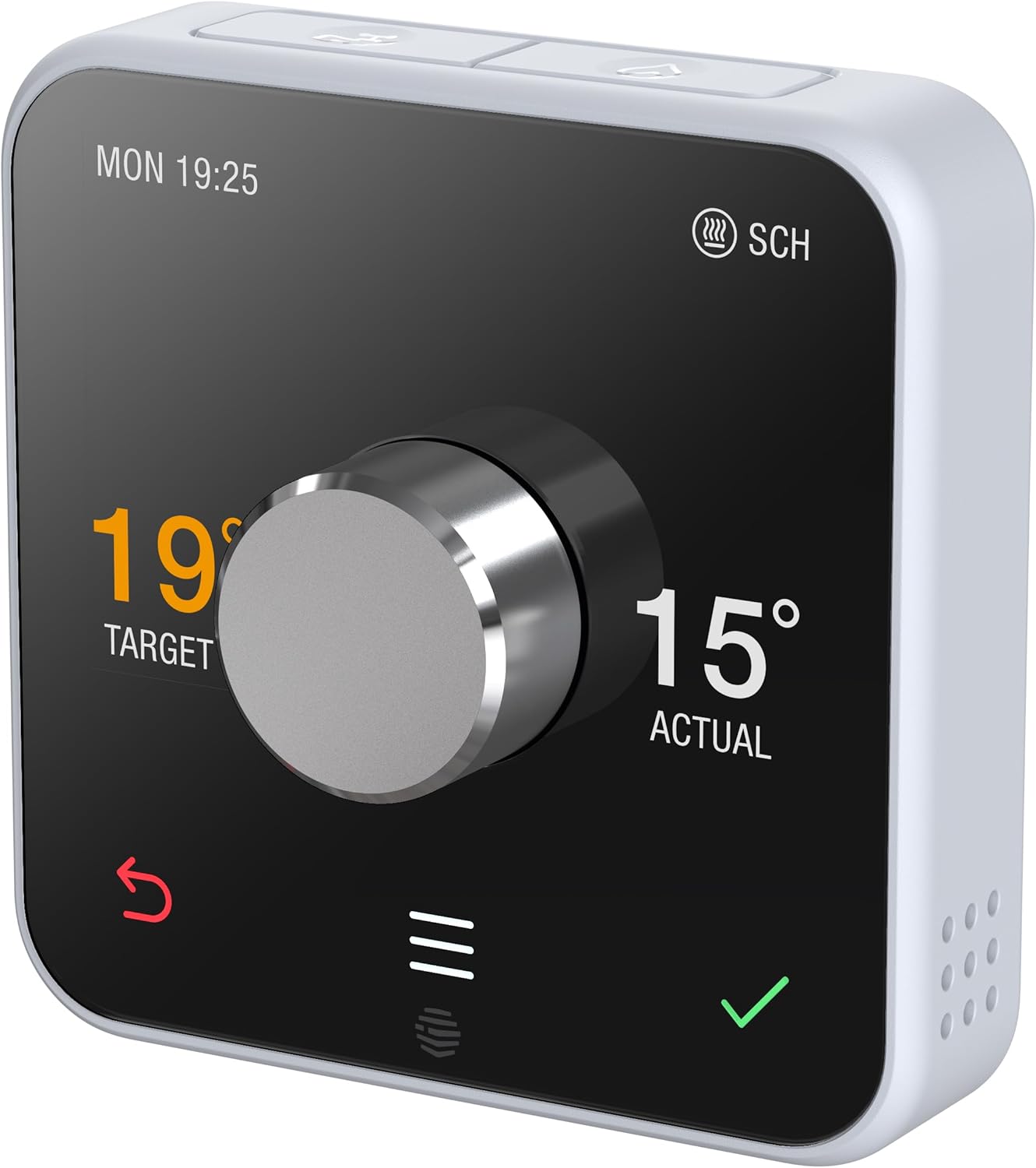
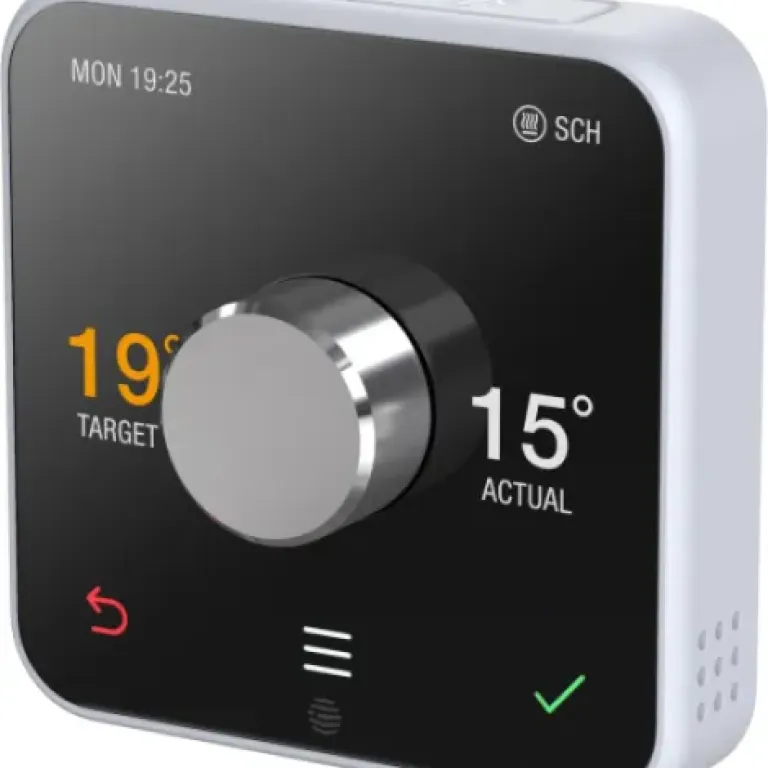
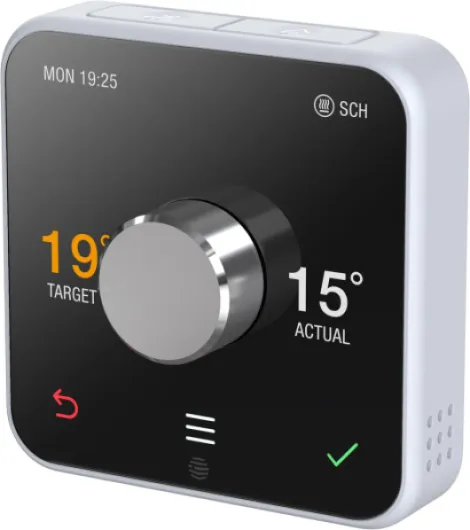
The thermostat itself looks pretty decent on the wall. The black and chrome glossy finish gives it a modern look that’s nicer than the beige plastic bricks a lot of us still have. It’s square, compact and doesn’t scream “tech toy” when you walk into the room. If you’re a bit fussy about how things look in your living room or hallway, this won’t ruin your decor.
On the flip side, the glossy surface is a fingerprint magnet. After a few days of turning the dial and poking the buttons, you can see smudges pretty clearly, especially in daylight. Not a big deal, but it does mean you end up wiping it more than you’d think. Also, there’s no backlight, which was a surprise. In low light or at night, the screen isn’t as easy to read as, say, some Nest or Tado models. You can still make it out, but you need a bit of ambient light – not ideal if it’s in a darker hallway.
The interface is mostly a dial with a simple digital display. Turning the dial to change the temperature feels natural enough, but the small buttons for menu/back can be a bit fiddly, especially if you’ve got bigger fingers. I found myself using the app way more than the physical controls after the first week, simply because it’s easier to see everything clearly on the phone screen.
One thing I liked is that the design looks solid and doesn’t feel like it’s going to fall apart if you twist the dial a bit firmly. The receiver and hub are basic white boxes – nothing special, but they’ll likely live in a cupboard or by the router, so who cares. Overall, design-wise, it’s good enough: smart-looking main unit, slightly cheap-looking support boxes, and some small usability compromises like the lack of backlight.
Power, connectivity and the small tech quirks
The system has a couple of different power setups. The thermostat runs on AA lithium batteries (included), the hub is powered via USB and mains plug, and the receiver is wired into the mains/boiler. In my use, the thermostat batteries have held up fine so far. Other users report they last many months; I haven’t had to change mine yet. Using lithium instead of cheap alkaline helps, and the thermostat doesn’t seem to drain much as it only talks to the hub occasionally.
The hub connects via Ethernet, but here’s the thing: it doesn’t absolutely need to be plugged straight into your main router. I’ve had mine hanging off a Wi‑Fi extender with an Ethernet port, and it works fine. Official guides make it sound like it must be on the router itself, which is misleading. The main point is that the hub needs a solid network connection and needs to be physically placed where it can talk reliably to both the thermostat and the receiver. That placement part is more important than Hive makes clear.
I did hit one annoying issue: after a couple of hours on my second install (different house), the hub lost connection and nothing worked. The green light was on, but it wasn’t talking to the Hive servers properly. I ended up fixing it by doing a full reset: power-cycling the hub, pulling the thermostat batteries, putting the receiver into pairing mode (long press on the manual override until it double-flashes amber), then factory resetting the thermostat and pairing everything again. It worked, but I had to piece that fix together by trial and error because the support pages don’t lay it out clearly.
So from a power and connectivity angle, I’d say it’s stable once you’ve got it right, but the first time you hit a problem it can be frustrating. If you’re comfortable with basic networking and not scared of resets and pairing modes, you’ll manage. If you’re the type who panics when a Wi‑Fi light blinks, factor in either some patience or the cost of a pro install.
Build quality and long-term feel
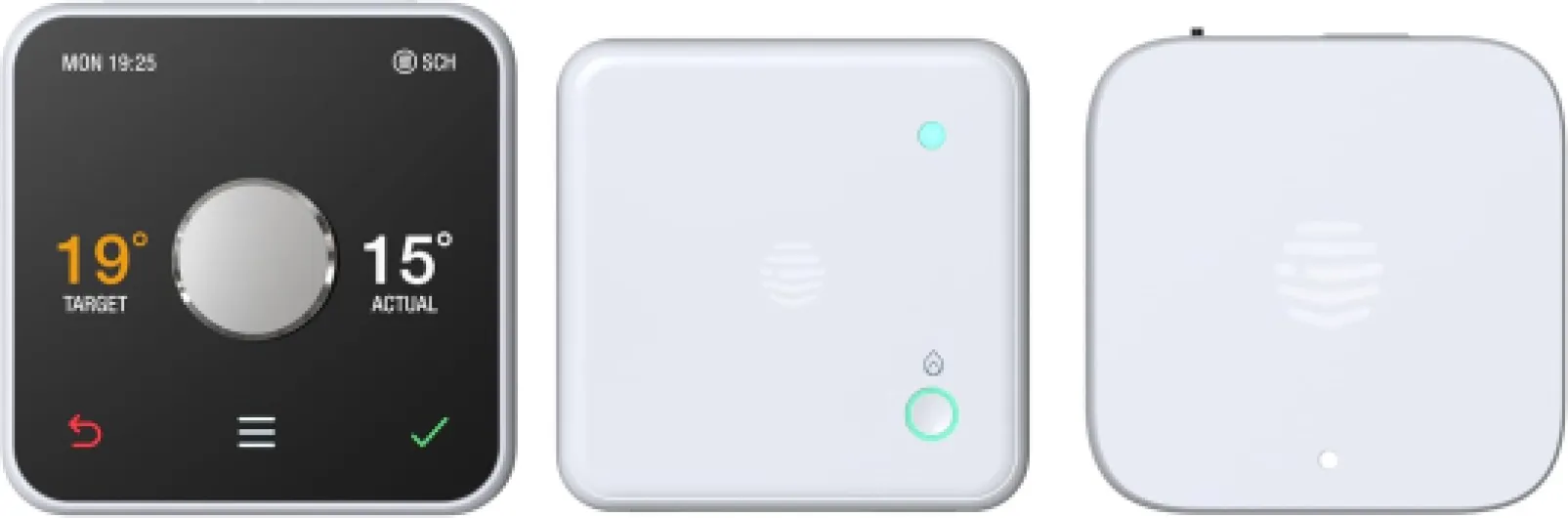
In terms of build, the Hive thermostat is mostly plastic with a glossy chrome-style ring. It doesn’t feel premium in a heavy, metal way, but it also doesn’t feel cheap like it’s going to crack if you twist the dial. The dial turns smoothly, with enough resistance that you don’t overshoot your temperature every time you touch it. The buttons click properly and don’t feel mushy.
The receiver is a basic white box that mounts by the boiler. Again, not fancy, but it feels solid enough and once it’s screwed to the wall you’ll probably never touch it again except in an emergency. The hub is a small plastic brick that just sits by your networking gear. Mine has been powered on constantly and doesn’t get worryingly hot or make any noise. It’s the kind of thing you forget about, which is exactly what you want.
From other users’ comments and my own feel, I’d expect this setup to last several years easily. There are no moving parts apart from the thermostat dial, and that feels sturdy. The main long-term concerns are more likely to be software and support than physical failure: will the app keep getting updates, will Hive keep the servers running smoothly, and will it stay compatible with newer phones and assistants. So far, Hive seems active enough as a platform, but it’s something to keep in mind with any cloud-connected thermostat.
Overall, on durability I’d call it pretty solid and reassuring. It doesn’t scream high-end, but nothing about it feels flimsy. If you’re gentle with your gadgets, I don’t see a reason it wouldn’t keep doing its job for a long while. The only ongoing thing is keeping an eye on thermostat batteries every now and then, which is normal for a wireless unit.
Performance and features: does the smart stuff mostly right
Day to day, the heating control works reliably. When I tweak the temperature on the app, the boiler kicks in within a few seconds. The room reaches the set temperature and holds it reasonably well, and the thermostat doesn’t seem to overshoot wildly. Compared to my old dumb stat, the house feels more consistent – not swinging between too hot and too cold as much.
The scheduling is where it earns its keep. You can set up to six time slots per day, so for example: warm in the morning, cooler while you’re at work, warm again in the evening, and lower overnight. The app makes it easy enough to copy schedules between days and tweak them without standing in front of the boiler. It’s not rocket science, but it’s practical and saves faffing with mechanical timers. I’d say this is one of the main advantages over a basic thermostat.
The geolocation feature is useful when it behaves. It uses your phone’s location to nudge you if you’ve left the house with the heating still high, or to warm things up when you’re heading back. In practice, I found it handy but not perfect. Sometimes it was a bit slow to react, or notifications arrived late. It’s a nice backup, but I wouldn’t rely on it 100% – I still manually tweak the heating when I know I’ll be home late.
Integration with Alexa and Google Assistant works as advertised. I can say “turn the heating to 20 degrees” and it does it. It’s not life-changing, but it’s convenient when you’re on the sofa under a blanket. The only weak spot performance-wise for me was the occasional communication issue between hub, receiver and thermostat. Once, everything lost sync and I had to reset devices and repair them. It’s not hard if you know the trick, but Hive’s help pages don’t explain it clearly. After I moved the hub to a spot where it could “see” both receiver and thermostat better (via a Wi‑Fi extender), things have been stable.
What you actually get and how it fits into your setup
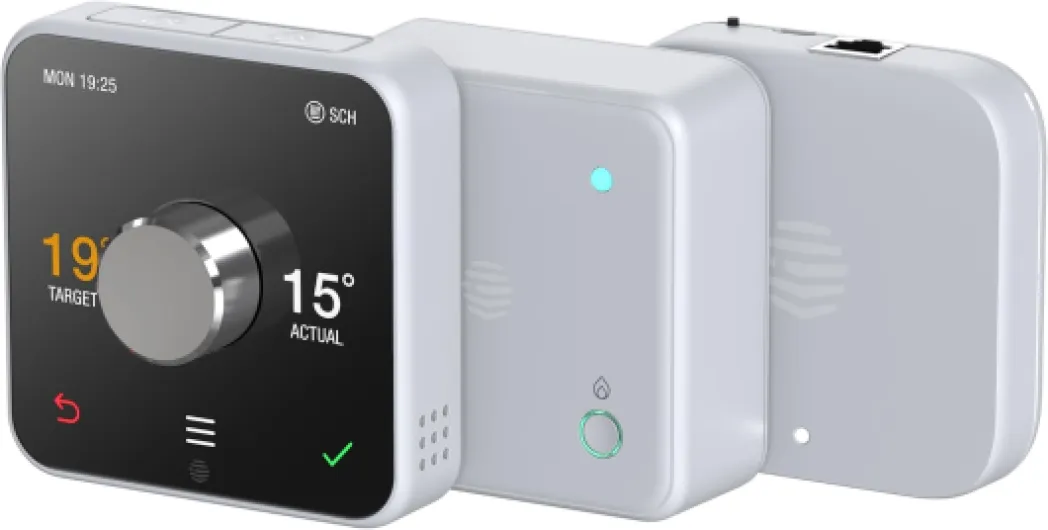
Out of the box, you get three main pieces: the thermostat (the bit you see and touch), the receiver (this wires into your boiler), and the Hive Hub (this plugs into your router or a network point). Plus the usual bits: wall plugs, screws, power plug, USB lead, Ethernet cable and batteries. So it’s not just one gadget; it’s a small system you’re installing.
The thermostat in this version is for heating only with a combi boiler, so no separate hot water control. If you don’t know what boiler you have, check first, because this is aimed at combi setups. In my case, replacement was basically: old thermostat off, Hive receiver wired in by the boiler, hub into the network, then pairing everything. It took me about an hour including swearing and double-checking diagrams. If you’ve never touched boiler wiring, I’d strongly consider getting someone who knows what they’re doing.
Once it’s up and running, the app becomes your main control centre. The receiver is mostly “fit and forget”; you might press its buttons only if something loses connection. The hub just sits by your router or a Wi‑Fi extender and has a couple of LEDs. It’s not pretty, but you don’t really look at it after day one. The thermostat can be wall-mounted or put on a stand (stand not in my box, that’s an extra), so think about where you want your main temperature reading to be.
In practice, the whole system feels like a small smart-home platform rather than a simple thermostat. That’s good if you want to add more Hive kit later (smart plugs, extra zones, etc.), but slightly overkill if you just want to set 21°C at 7am and forget it. Personally, I like having the flexibility, but if you hate hubs and extra boxes, that might bother you.
Does it actually save energy and make life easier?
Let’s talk about the bit that actually matters: comfort and bills. After a few weeks of using Hive properly – with schedules set and geolocation on – I noticed I wasn’t leaving the heating running pointlessly as much. Before, I’d often forget to turn the old thermostat down when I went out. Now, between the app and the alerts, it’s harder to waste heat without noticing. I can’t give exact numbers because everyone’s house and usage is different, but my gas usage graphs did nudge down compared to the previous year for the same month.
Where it really helps is avoiding those “heating an empty house” hours. For example, if I leave for the weekend and forget to change the schedule, I can just kill the heating from my phone once I remember. On the way back, I usually fire it up 30–45 minutes before I get home and walk into a house that’s already warm. That’s a genuine quality-of-life improvement compared to coming back to a cold place and then waiting for it to catch up.
The frost protection and holiday mode are more about peace of mind. Frost protection keeps the system from dropping too low and risking pipes in a cold snap. Holiday mode lets you set a lower background temperature while you’re away and a return date. I used this on a week away and it did exactly what it said – house wasn’t toasty, but not freezing either, and it warmed up again in time for my return.
Is it perfect? No. If you’re already very disciplined with a manual thermostat and timers, the savings might be smaller. And if you only tweak the heating once in a blue moon, you might not use half the smart features. But for a typical household that forgets to adjust things and has a bit of a random schedule, Hive helps keep control and likely shaves a bit off the bill over time. I’d call it effective and practical, not magic.
Pros
- Reliable app control with useful scheduling, holiday mode and frost protection
- Geolocation and remote access help avoid heating an empty house
- Looks modern on the wall and works with Alexa/Google Assistant
Cons
- Setup and pairing can be confusing, with weak official help pages
- No backlight on the thermostat screen and glossy finish shows fingerprints
- May need pro install if you’re not comfortable with boiler wiring, adding to cost
Conclusion
Editor's rating
The Hive Thermostat for Heating (Combi Boiler) with Hub is a solid, no-nonsense smart upgrade for a typical combi-boiler home. It looks decent on the wall, the app control works well, and features like scheduling, geolocation, frost protection and holiday mode actually help in real life rather than just ticking marketing boxes. Once it’s set up properly and the hub is in a good spot, it runs quietly in the background and you mostly forget about it – apart from the convenience of tweaking the heating from your phone or with your voice.
It’s not perfect. The lack of a backlight on the thermostat is a bit cheap at this price, the setup can be confusing if you’re not comfortable with wiring and basic networking, and Hive’s online help is weaker than it should be when things go wrong. You need to be ready to reset and repair devices if the hub throws a wobbly, or pay someone to handle all that. But in terms of day-to-day comfort and likely energy savings, it gets the job done and feels like a sensible middle-ground choice.
I’d recommend it to people with a combi boiler who want practical smart control without going overboard, and who don’t mind a bit of tech tinkering during setup. If you’re completely allergic to tech issues, or you want the fanciest learning features and slickest design, you might be happier with a higher-end rival or a bundle that includes professional installation. For most average users though, Hive is a pretty fair balance of features, reliability and price.