
Summary
Editor's rating
Is it worth the money compared to other smart thermostats?
Compact, modern look… maybe a bit too minimal at times
Build quality and long-term feel (plus the Nest replacement angle)
Heating and hot water control: solid once set up, but fussy with signal and app
What you actually get in the box and what it’s meant for
Does it actually save money and make life easier?
Pros
- Proper control of both heating and hot water for conventional boiler systems
- Compact, modern thermostat and Wi‑Fi Nano 3 Hub with simple installation for DIYers
- Useful everyday features like Boost, Holiday Mode, geolocation alerts, and frost protection
Cons
- Android app can be unreliable and some features are locked behind a subscription
- Wireless signal between hub, thermostat, and receiver can be fussy in houses with thick walls or boiler cupboards

Specifications
View full product page →| Brand | Hive |
A small smart thermostat that actually made me touch the boiler less
I’ve been using the Hive Thermostat Mini with the Nano 3 Hub on a regular old conventional boiler (tank + cylinder setup) for a few weeks now. Before this, I had a basic 1990s-style programmer with separate heating and hot water timers and a dumb wall thermostat. It worked, but changing anything meant walking to the hallway box and pressing the same three buttons like it was 1998. I wanted app control, basic schedules, and ideally something my partner could use without asking me every time.
The Hive Mini is basically the cheaper, stripped-down version of the main Hive thermostat. Same idea: a receiver by the boiler, a hub near your router, and a small thermostat you can put somewhere sensible in the house. The big promise is: control heating and hot water from your phone, get alerts when you leave the house, and avoid frozen pipes with frost protection. On paper, it ticks pretty much all the boxes for a normal UK home with a conventional boiler.
In day-to-day use, it does what it says. I can turn heating and hot water on and off from the app, set up to six time slots per day, and hit Boost when I want a quick blast. I’ve already stopped using the old programmer completely. It’s not perfect though. The app can be a bit clunky, some features sit behind a subscription, and the wireless signal between the bits can be fussy if your boiler is buried in a cupboard with thick walls or tiles.
Overall, if you’re moving from an old manual controller to this, you’ll probably feel like your heating just got a decent upgrade. If you’re coming from something like Nest or Tado, this feels more basic, and the software side is clearly where Hive still has work to do. But the core idea — remote control and simple scheduling for both heating and hot water — is there and it works.
Is it worth the money compared to other smart thermostats?
On value, I’d put the Hive Thermostat Mini in the “good but not bargain” category. It’s not the cheapest way to control a boiler, but you’re getting proper smart control for both heating and hot water on a conventional system, which a lot of cheaper thermostats don’t handle as cleanly. In the UK market, it sits in a similar price zone to entry-level Nest or Tado setups, but Hive often ends up a bit cheaper, especially when discounted or bundled.
If you’re moving from a very basic wall programmer with no app control, the jump in convenience alone is worth quite a bit. You get: app control, schedules, Boost, geolocation alerts, Holiday Mode, and frost protection. For most households, that’s enough to justify the price, especially if it helps shave some money off the heating bill over a couple of winters. One reviewer said it was already saving them money, and that lines up with my experience: when it’s easier to control heating, you naturally waste less.
Where the value feels weaker is the subscription angle. Some more advanced features and analytics are paywalled, and that’s a bit annoying when you’ve already bought the hardware. Also, the Android app not being very polished doesn’t help the feeling that you’re getting top value. Another user said the 35-year-old controller they replaced actually had some functions that Hive only offers if you pay extra. That’s not great optics, and it makes the whole thing feel slightly nickel-and-dime at times.
Still, if you look at the overall package — decent hardware, proper support for conventional boilers, modern hub with Wi‑Fi, and an ecosystem that works with other Hive devices and even Home Assistant — it’s pretty solid value for an average home. If you’re on a tight budget and just want a programmable thermostat with no app, you can pay a lot less and skip the smart stuff. If you want the most advanced, polished smart heating system on the market, you might pay more and go Nest or Tado. This Hive Mini sits comfortably in the middle: not the cheapest, not the fanciest, but fair for what it does.
Compact, modern look… maybe a bit too minimal at times
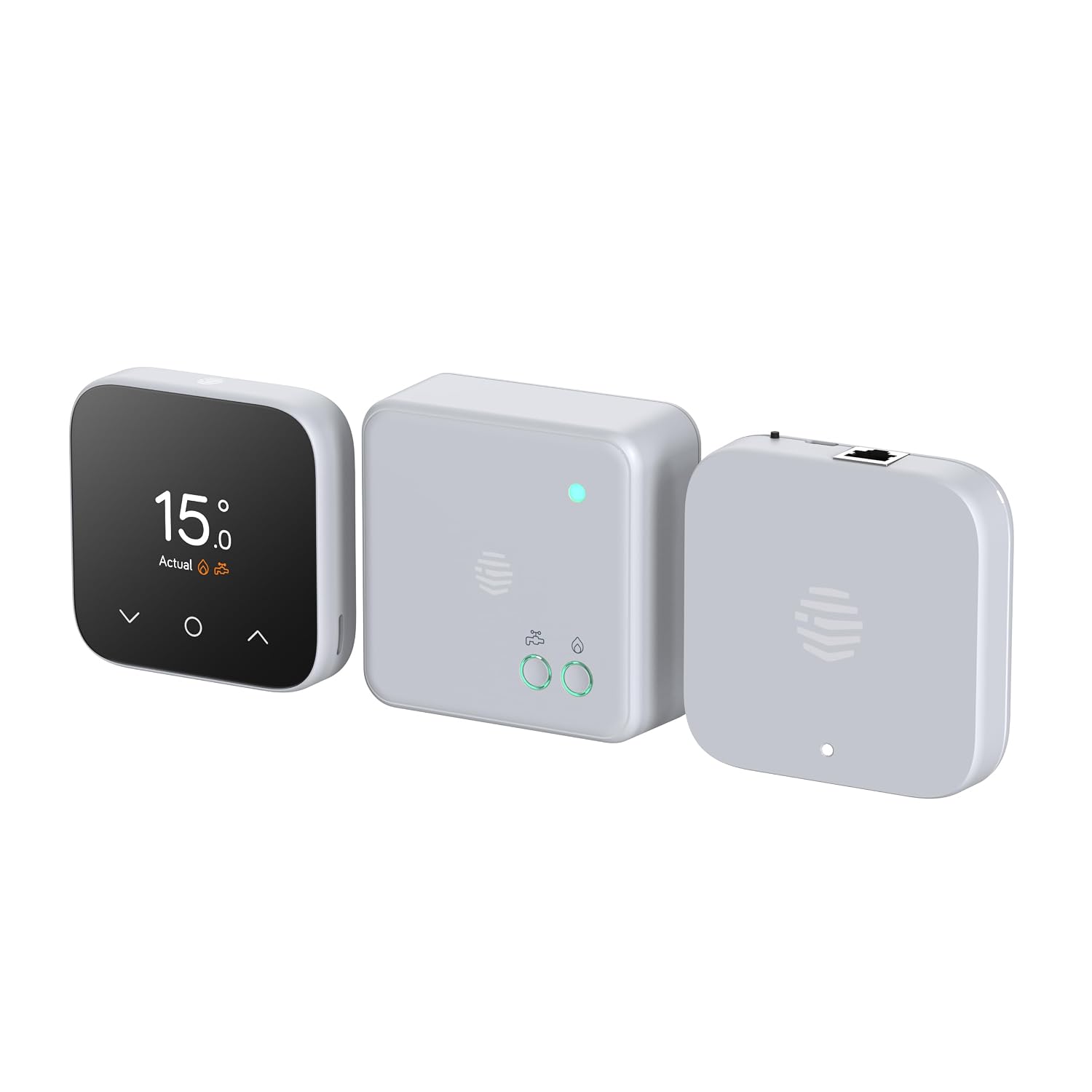
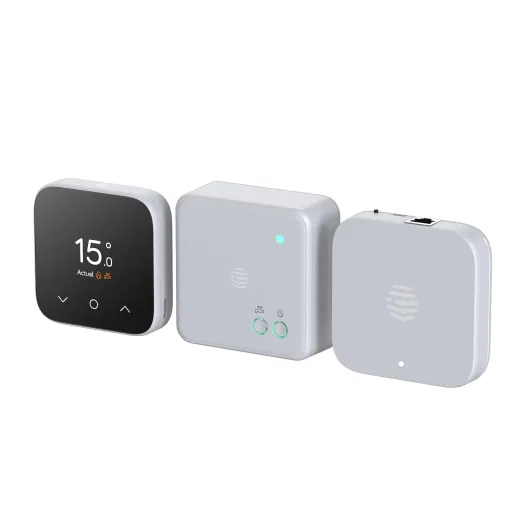
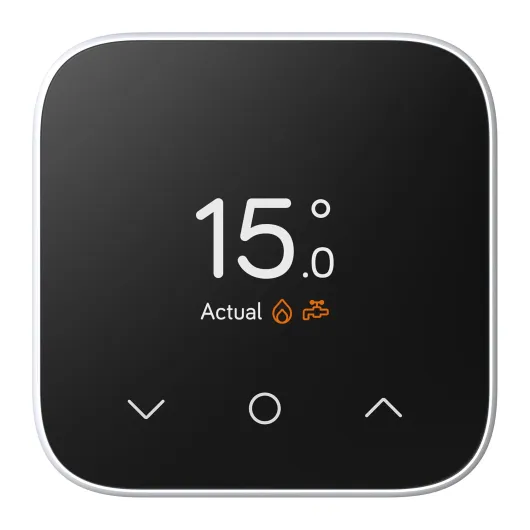
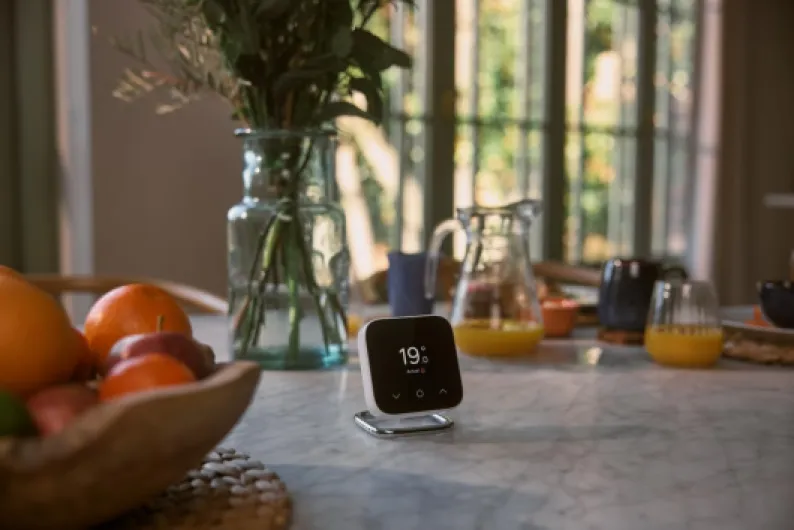
Design-wise, the Hive Thermostat Mini goes for the clean, modern look: small square white unit with a glossy front, simple digital display, and a few touch buttons. It’s not trying to be a centrepiece like the old round Nest thermostat. It’s more like a discreet white tile on your wall. In my house, it blended in fine next to the light switches and didn’t scream “smart gadget” to visitors, which I actually liked.
The display is readable enough, with a backlight that kicks in when you tap it, but it’s not huge. If your eyesight isn’t great or you like big bold numbers from across the room, this might feel a bit small. It shows the current temperature, target temperature, and basic status, but it doesn’t drown you in info. Most of the detailed stuff is clearly meant to be handled in the app. For quick checks like “is the heating on?” or “what temp is it set to?” it does the job.
The buttons are touch-based rather than physical clicky ones. Personally, I’m a bit mixed on that. They work okay and respond quickly enough, but there’s no tactile feedback, so you sometimes end up tapping twice because you’re not sure it registered. It’s not a big deal, but compared to a simple dial or a button you can feel, it’s a bit less satisfying. On the plus side, the flat front is easy to wipe clean and doesn’t trap dust.
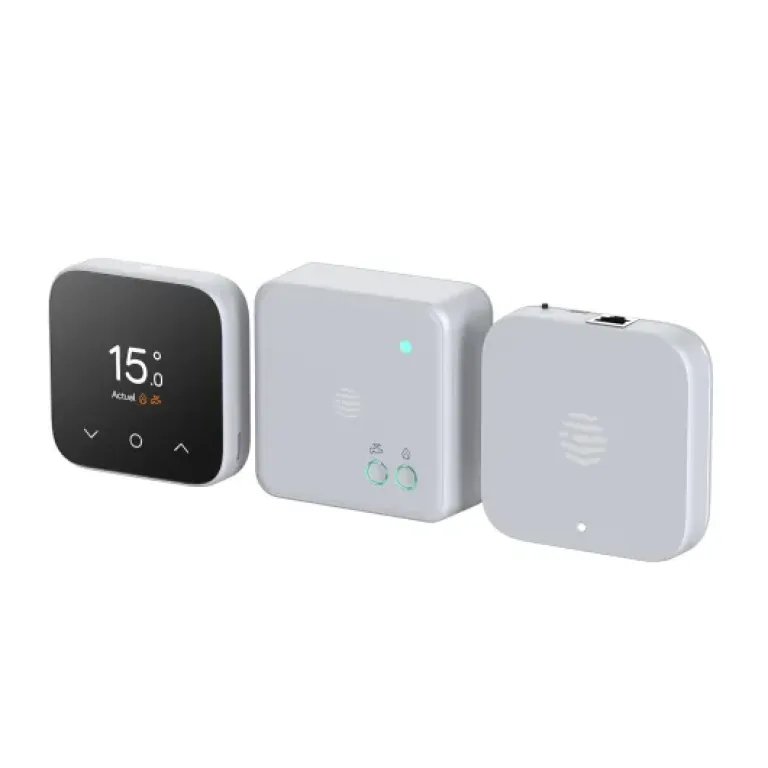
The receiver and Nano 3 Hub are both pretty compact and simple looking. The hub, in particular, is much neater than old router-style hubs — it connects over Wi‑Fi, so you can place it where the signal is good rather than being tied to your router with a cable. One thing to be aware of: because everything is wireless between hub, thermostat, and receiver, placement really matters. One reviewer mentioned tiles and walls killing the signal and having to move the receiver out of a cupboard. I had a similar experience: once I moved the hub closer and out of a metal TV unit, the connection became stable. So the design is tidy, but you do need to think about where you put each bit.
Build quality and long-term feel (plus the Nest replacement angle)
In terms of durability and build quality, the whole Hive setup feels pretty solid for a mainly plastic product. The thermostat itself is light, but it doesn’t feel flimsy or creaky. The glossy front and glass/plastic combo give it a modern look, and after a few weeks of being poked and wiped, there are no scratches or weird marks. I wouldn’t be rough with it, but for normal wall use, it seems fine.
The receiver and Nano 3 Hub are the bits I care more about for long-term use. They just sit there 24/7, so they need to be stable. So far, no random reboots or obvious overheating. The hub’s new dual-core processor is more of a spec sheet thing than something you feel, but the network has been stable once I sorted the placement. One Amazon user did mention needing a plug extender to strengthen the signal to a radiator valve upstairs, but that’s more about wireless range than build quality. If you have a bigger house or thick walls, expect to maybe add a range extender at some point.
The bigger durability question with smart thermostats, though, is software and support over time. One reviewer literally bought this to replace a Nest that Google stopped properly supporting. That’s a fair concern. Hive isn’t perfect, but they’ve been around a while and seem focused on this ecosystem, so I’d hope they keep things updated. Still, it’s something to keep in mind: your hardware can be fine, but if the app or cloud support gets dropped in a few years, you’re stuck. At least Hive is a UK-focused brand that seems to care about heating rather than just pushing a side product.
The official warranty is only 1 year, which is not amazing for something that controls your heating system. I’d prefer two years as standard. That said, the product category is fairly mature now, and there aren’t loads of reports of Hive hardware dying quickly. My feeling is that if it survives the first winter without issues, it’ll probably run for years. Just be ready to occasionally adjust placement if you add more Hive devices, because once you start adding extra thermostatic radiator valves, the network load increases and you might need to tweak things to keep it all connected smoothly.
Heating and hot water control: solid once set up, but fussy with signal and app
On the performance side, once everything was installed and talking to each other properly, the Hive Mini did exactly what I needed: it turned the boiler on and off when scheduled, handled both heating and hot water separately, and reacted quickly to manual changes from the app or the thermostat. When I hit Boost for heating or hot water, the boiler fired up within a few seconds. Temperature changes showed up in the app almost instantly when the signal was good.
The scheduling is pretty straightforward: up to six time slots per day for both heating and hot water. I set mine up with morning and evening heating blocks and a couple of shorter hot water windows. Editing times in the app is much less painful than on old wall programmers. You just drag and tap instead of pressing the same button 20 times. It’s not super advanced, but for a normal routine it’s more than enough. If you want really detailed automation and clever rules, that’s when Hive starts nudging you toward their subscription, which I’m not a fan of.
Where performance got a bit annoying was the wireless reliability and app behaviour. Like some Amazon reviewers, I noticed that if the hub, receiver, and thermostat weren’t placed carefully, things got flaky. Thick walls, tiled cupboards, or being too far from the hub can make the thermostat or radiator valves drop out. Hive’s solution is basically: move stuff around or buy their plug-in extender. One reviewer said Hive gave them a discounted extender and helped find the best spot, which is good support, but it still means you might have to fiddle with placement more than you’d like.
The Android app is where I think Hive is weakest. It does the basics: turn heating/hot water on or off, change temperature, set schedules, holiday mode, geolocation alerts. But it’s not super smooth. One reviewer mentioned having to reboot their phone because the app’s “read” function stalled, and I’ve had a couple of moments where the app just sat there loading. Also, some stuff that used to be built into old-school controllers (like certain advanced schedules) either doesn’t exist here or sits behind paid features. It feels like the hardware is pretty solid, but the software could use more polish and fewer nags.
What you actually get in the box and what it’s meant for
Out of the box, you’re getting three main pieces: the Hive Thermostat Mini (the small square thing you interact with), the receiver that wires into your boiler / wiring centre, and the Hive Nano 3 Hub that connects everything to your Wi‑Fi. There’s also the usual screws, backplate, and some basic instructions. It’s not a huge bundle, but it’s enough to run both heating and hot water on a conventional boiler system.
Important point: this specific kit is for conventional boilers with separate hot water control. That means systems with a hot water cylinder, not a simple combi that only fires up when you open a tap. Hive themselves say it’s not suitable for combi boilers, even though one Amazon reviewer did manage to bodge it onto a combi and get it working. Personally, I’d say: if you have a combi, buy the proper combi version and don’t try to be clever with wiring unless you really know what you’re doing.
In terms of features, on paper it covers the basics pretty well: up to six time slots per day for heating and hot water, Boost for up to six hours, a Holiday Mode so you can tell it when you’re away, and geolocation alerts if you leave the house with the heating still on. There’s also automatic frost protection so your pipes don’t freeze if the temperature drops hard. The new Nano 3 Hub is Wi‑Fi-based, smaller and neater than older hubs, and doesn’t need to sit right next to your router with a cable mess.
In practice, I’d describe the overall package as: solid but not fancy. It doesn’t try to guess your schedule like some learning thermostats, and there’s no magic AI stuff. It’s more like: you set your times, you tweak them when bills scare you, and the Hive just follows orders. For most people with a regular boiler, that’s probably fine. Just don’t expect it to do everything without you thinking about it, and remember that some “premium” features (more detailed automation, etc.) are locked behind a subscription, which is annoying on a product that already isn’t cheap.
Does it actually save money and make life easier?
Effectiveness for me is simple: does this thing make it easier to control the heating and hot water, and does it help keep the gas bill under control? After a few weeks, I’d say yes, within reason. I’m definitely using the boiler more efficiently than before. Instead of leaving heating on longer “just in case” or running hot water all day, I’ve tightened the schedules and use Boost when I need a bit extra. One reviewer said it was already saving them money on bills, and I can believe that if you’re coming from a very basic or badly set-up system.
The best part for me is just being able to grab my phone, see what’s on, and tweak it in seconds. If we decide to go out and the heating is about to kick in, I just flick it off in the app. If we’re coming home early on a cold day, I turn it on from the car. You don’t need to be a tech nerd to do this either; the app layout is fairly simple, and the physical thermostat gives you the basics without diving into menus.
The geolocation alerts are handy but not perfect. Sometimes they remind me I’ve left the heating on when I already turned it off, or they pop up a bit late. It’s useful as a backup reminder, but I wouldn’t rely on it as the main way of managing the system. Holiday Mode is more practical: you tell it when you’re away, it keeps things ticking over at a low level (and frost protection kicks in if needed), then warms the house back up before you return. That’s just a simple way to avoid wasting heat while the house is empty.
Overall, I’d say the Hive Mini is effective for normal, everyday use. It doesn’t do fancy learning or deep analysis of your usage, and you might need to pay a subscription if you want the full set of automation features, which is a bit of a downer. But if your main goal is: “stop heating an empty house and stop heating water all day”, it helps a lot. Just set decent schedules, use Boost instead of leaving stuff on constantly, and you’ll probably see some savings over time compared to a dumb controller.
Pros
- Proper control of both heating and hot water for conventional boiler systems
- Compact, modern thermostat and Wi‑Fi Nano 3 Hub with simple installation for DIYers
- Useful everyday features like Boost, Holiday Mode, geolocation alerts, and frost protection
Cons
- Android app can be unreliable and some features are locked behind a subscription
- Wireless signal between hub, thermostat, and receiver can be fussy in houses with thick walls or boiler cupboards
Conclusion
Editor's rating
After living with the Hive Thermostat Mini for a bit, my overall feeling is: it’s a solid, no-nonsense smart upgrade for anyone with a conventional boiler who wants proper control of both heating and hot water. The hardware feels decent, the Nano 3 Hub is neat and avoids cable mess, and once it’s all talking to each other, it just quietly does its job. Schedules, Boost, Holiday Mode, and frost protection cover most everyday needs, and being able to tweak everything from your phone is a big step up from old wall programmers.
It’s not perfect. The Android app is a bit clunky and sometimes needs a kick, and some features that should really be standard are sitting behind a subscription. Wireless signal can be fussy if your boiler is buried in a cupboard or your walls are thick, which might mean moving the receiver or buying an extender plug. The 1-year warranty is also on the short side for something this central to your home.
Who is this for? It’s a good fit if you have a conventional boiler with a hot water tank, you’re currently on a dumb timer, and you want simple, remote control without going full nerd. It’s also a decent option if you’re replacing a dead or abandoned smart system like an old Nest. Who should skip it? People with combi boilers should get the right Hive model, and anyone who wants super advanced learning features or hates subscriptions might be happier with a different brand. For most normal households though, this Hive Mini gets the job done and makes heating management a lot less of a chore.