
Summary
Editor's rating
Is it worth the money once you factor in extras?
Clean look, but some practical details you should know
Battery life and what it means in day‑to‑day use
Build quality, daily wear, and potential long‑term issues
Heating control and app behaviour in real life
What’s actually in the box and how it works day to day
Pros
- Genuine room‑by‑room temperature control that reduces heating of unused rooms
- Clear app with remote access, Away/Frost modes and history of consumption
- Flexible installation (wired or wireless thermostat) and compatibility with many boiler types
Cons
- Total cost can be high once you add plumber work and extra valves for all radiators
- Valves can be noisy when adjusting, especially noticeable at night in a bedroom
- Setup and pairing can be a bit tricky for non‑technical users, with some trial and error needed

Specifications
View full product page →| Brand | Netatmo |
Smart heating that actually changes how you use your radiators
I’ve been using the Netatmo Smart Thermostat with three connected radiator valves for a little while now, in a flat with individual gas heating and classic radiators. Before this, I just had a basic wall thermostat and manual radiator knobs, so either the whole place was warm or nothing was. I wanted something that would let me stop heating the spare room for nothing and stop doing the usual “thermostat up / window open” routine.
What pushed me to try this kit is that it’s a full package: one thermostat to control the boiler and three smart valves you put directly on the radiators. In theory, you end up with something close to electric radiators in each room, but still using your boiler. Plus, the app lets you see what’s going on and change the temperature even when you’re not at home. On paper, it ticked a lot of boxes: comfort, a bit of tech fun, and maybe some savings on the bill.
In practice, it’s not magic. You have to install the relay, replace your old thermostat (or add one if you didn’t have any), then adapt each radiator to accept the Netatmo valves. If your current valves are old or leaky, expect extra work or a plumber bill on top of the price of the pack. Also, the system needs a few days to learn how your place heats up, so the first week is a bit of trial and error with schedules and temperatures.
Overall, my feeling is: it’s a pretty solid solution if you like to tweak settings and you don’t mind spending some time on installation and configuration. It’s not plug-and-play for everyone, and it’s clearly not cheap once you factor in extra valves or a plumber. But once it’s in place and tuned, you really notice the difference between heating everything blindly and actually deciding which room deserves calories.
Is it worth the money once you factor in extras?
On value for money, this is where opinions will differ a lot. The pack itself is not cheap, and that’s just for one thermostat and three valves. If your radiators are already equipped with thermostatic bodies and you can install everything yourself, the cost is easier to swallow. You get proper room‑by‑room control, remote access, and some potential savings on the heating bill. Over a few winters, the investment can pay for itself, especially if you’re moving from a very basic, wasteful setup.
But there are a few hidden costs people don’t always think about. If your radiators only have simple on/off taps, you need to change the valve bodies first. That means a plumber visit, draining part of the system, and buying new mechanical valves. In some cases, that can easily add a few hundred euros on top of the price of the Netatmo kit, like one user who mentioned around 400 € just for that work. If you then decide to add more smart valves to cover all radiators, the bill climbs fast. Suddenly, you’re talking about a serious investment, not just a gadget.
In my case, because I could install it myself and I didn’t need to change all the valve bodies, the value feels pretty solid. I get more comfort, more control, and I’m clearly burning less gas by not heating empty rooms. But if I imagine having to pay a plumber and buy extra valves for every radiator, I’d think twice and probably start by equipping only the most used rooms, then expand later if I really see the savings on the bill. There’s no need to put a smart valve on every single radiator from day one.
So overall, I’d say the value is good if: you can do the install yourself, your radiators are already compatible, and you’re planning to stay in the place for a few years. If you’re renting short term, have an old messy installation, or hate dealing with apps and schedules, it might feel like overkill for the price. It’s a solid system, but you have to be honest about how much you’ll really use the advanced functions before dropping that kind of money.

Clean look, but some practical details you should know
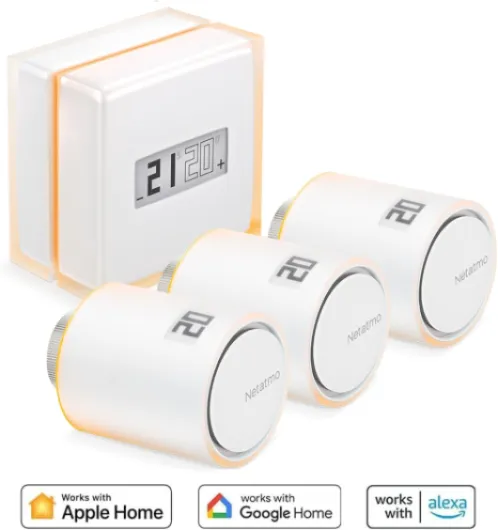
On the design side, Netatmo has gone for the classic white, square/rectangular look. The thermostat is a small white block with a simple screen that shows the temperature in big digits and a colored border when it’s heating. It’s very minimal: no big buttons, no clutter. On a wall or on a shelf, it doesn’t scream “tech gadget”, it just blends in. Personally, I liked that it doesn’t try too hard. It’s neutral, which is exactly what you want for something you’ll see every day in your hallway or living room.
The valves follow the same idea: white cylinders with a small digital display on the side. You can turn the top to change the temperature locally, and the display rotates depending on how they’re mounted, so you can still read them even if the valve is horizontal. That’s a nice touch. The display is basic but clear: target temperature and a small icon. In low light you can still read it, but it’s not super bright, so don’t expect a flashy screen. For a radiator valve, I think that’s fine; you don’t stand there reading it for long anyway.
Where design meets reality is the noise. When the valves adjust, there’s a small motor that makes a kind of whirring/clicking sound. It’s not crazy loud, but in a bedroom at night, when the room temperature changes slightly and the valve decides to move, you do hear it. If you’re a light sleeper and you put a valve in the bedroom, that’s something to think about. In the living room or hallway, it’s a non‑issue, it just becomes background noise after a while.
Overall, I’d say the design is simple and practical. Nothing flashy, but it looks modern enough and doesn’t cheapen the room. The small downside is that everything is white plastic, so if your radiators and walls are off‑white or colored, it stands out a bit. Also, over time, I’m curious how the screens will age; some user reviews mention displays fading after a few years. For now, mine are fine, but it’s something to keep in mind if you’re planning to keep the system for a long time.
Battery life and what it means in day‑to‑day use
On the battery side, both the thermostat and the valves run on standard AA batteries, which is good news. You don’t need any special battery type or proprietary pack. The thermostat uses 3 batteries, and each valve uses 2. The good thing is you can swap them easily without tools; the less good thing is that if you have a lot of valves all over the house, that’s quite a few batteries to manage over time. With the pack of three valves, it’s still reasonable, but if you add more later, think about having a stash of AAs at home.
In my case, after a few weeks, obviously nothing died yet, but based on what other users say and what Netatmo claims, you can expect around 1–2 years for the valves and similar for the thermostat, depending on how often they move and the signal quality. If your valves are constantly adjusting because your setpoints are very tight (like 0.5 °C differences) or the room temperatures fluctuate a lot, the motors will work more and batteries will drain faster. If you keep things more stable, they should last longer. So there’s a small trade‑off between micro‑management and not changing batteries all the time.
The app warns you when a battery is getting low, which helps avoid finding a cold room one morning because a valve died silently. When a valve runs out of juice, it basically stops controlling properly, so the radiator might stay closed or behave oddly until you replace the batteries. Same for the thermostat: if it’s dead, the whole heating logic goes out the window. So I’d say: don’t ignore the notifications, and maybe change the batteries in one go once a year at the start of the heating season, like you would with smoke detectors. It’s a bit of maintenance, but not a big deal.
Overall, battery management is acceptable, but clearly not as carefree as a wired system. The upside is you can place the thermostat where you want and install valves without running cables, which is a big plus in older homes. The downside is that every year or two you’ll have a small battery ritual to do. For me that’s fine; for someone who hates changing batteries and never checks apps, it might be a bit annoying over time.
Build quality, daily wear, and potential long‑term issues
In terms of durability, the first impression is that everything is decent but clearly plastic. The thermostat and valves are made of ABS plastic; they don’t feel fragile, but they also don’t give that super solid, heavy impression you might get from some pro gear. That said, these are devices you don’t handle constantly. Once installed, you mainly touch the valves to give them a quick twist now and then, and the thermostat just sits on the wall or on a piece of furniture. So as long as you’re not banging into the radiators all the time, they should hold up fine.
The part that worries me a bit more in the long run is the screens and the motors inside the valves. Several user reviews mention displays that fade or lose segments after a few years. I obviously can’t confirm that yet, but it’s something you should keep in mind if you’re planning to kit out a whole house. The motors, on the other hand, are small and not replaceable by the user. If a valve starts to jam or the motor dies, you’re basically looking at replacing the whole head, which is not cheap. For the price per valve, I’d hope they last at least several heating seasons without issues.
Mechanically, the installation on the radiator thread is important for durability. If you cross‑thread or force it, you’ll have problems later. Taking the time to screw the adapter correctly, maybe using a bit of silicone grease like some users suggest, helps a lot. Once properly mounted, the valves don’t wobble and feel stable. I’d avoid overtightening though; they’re still plastic on metal, so no need to go full gorilla on them. A plumber can do this in a clean way if you’re not confident.
In short, I’d rate the durability as good enough for home use, but not bulletproof. It’s smart home gear, not industrial hardware. If you’re gentle with your stuff and you’re okay with the idea that after 5–7 years you might have to replace one or two valves, it’s acceptable. If you want something you install once and forget for 20 years, this is probably not the category of product you should be looking at anyway.
Heating control and app behaviour in real life
On performance, the first real benefit I noticed is the room‑by‑room control. Before, if I wanted the living room at 21 °C, the bedroom and hallway got the same treatment whether I liked it or not. Now, I can genuinely keep the office cooler when I’m not working, and only warm it up when I know I’ll be there. After about two weeks of use with some tweaking of the schedules, I saw that the boiler was running less often during the day, while the living areas still felt comfortable. I don’t have exact percentage savings yet, but the feeling is clear: I’m not heating empty rooms all day.
The auto‑adapt feature does a decent job once it has learned your home. At the beginning, it’s a bit random: sometimes it starts too late and you’re still in a cold kitchen at breakfast. After a few days, it gets better at anticipating when to start the boiler so that the target temperature is reached at the right time. It’s not perfect, especially on days where the outside temperature changes fast (sunny then suddenly cold), but it’s still better than a dumb thermostat that just reacts without anticipating. You can always manually nudge the temperature from the app if needed.
The app itself is quite clear. You see each room with its current temperature and setpoint, plus the status of the boiler. Changing the schedule is doable from the phone, but it’s a bit fiddly if you try to do a full week in one go. It’s more comfortable on a tablet or computer. Once the schedule is in place, you mostly just use quick actions: boost heat in a room, enable Away mode, or lower everything at night if you’re going to bed earlier than usual. Remote access works fine; I’ve changed temperatures on mobile data without issues. Voice control with Alexa/Google is nice, but honestly I used it more at the beginning to play with it than in daily life.
There are a few quirks: if Wi‑Fi goes down, the system keeps the last configuration, and you can still control each valve by hand, but you lose central control from the app until the connection is back. Also, pairing and re‑pairing devices can be a bit annoying if you mess up the first installation; sometimes a long reset of the relay (20 seconds) is needed, and that’s not obvious if you didn’t read user comments. Once stable, though, it runs by itself. In short, performance is good once properly set up, but don’t expect zero effort: you’ll probably spend a few evenings adjusting schedules and temperatures before everything feels right.
What’s actually in the box and how it works day to day
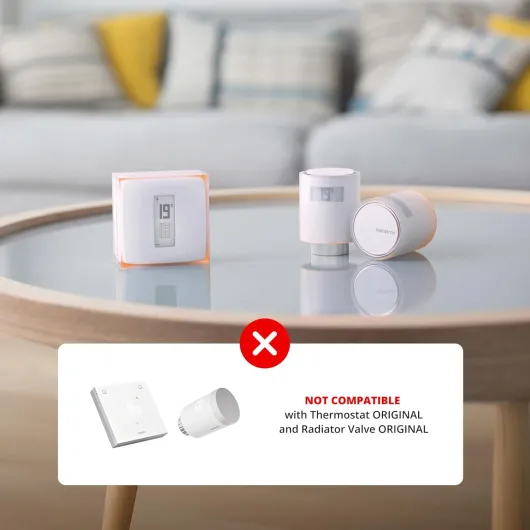
The pack includes one smart thermostat, one relay (the thing that actually talks to your boiler and to the internet), and three smart radiator valves. The thermostat can be used wired to replace an existing wall thermostat, or wirelessly and just placed on a shelf. The relay plugs near your boiler and connects to your Wi‑Fi (2.4 GHz only, worth noting if you’ve split your networks). The valves screw onto compatible radiator bodies; if your radiators still have simple on/off taps, you’ll likely need to replace those by thermostatic bodies before you can even use the Netatmo ones.
Once everything is installed, the logic is simple: the thermostat tells the boiler when to fire, and the valves decide how much each radiator opens. Through the app, you see each room/valve as a zone with its own temperature and schedule. So you can do things like: 21 °C in the living room in the evening, 18 °C in the bedroom at night, and 16 °C in the office unless you’re working from home. It’s all driven by time slots and target temperatures, and you can override room by room with a simple tap.
In daily use, there are a few key features that are actually useful and not just marketing. The “Away” and “Frost protection” modes let you drop the whole house to a low safety temperature when you’re gone for a few days. The auto‑adapt tries to anticipate when to start heating so that, for example, at 7 a.m. it’s already at 20 °C and not just starting to warm up. There’s also open‑window detection on the valves: if a room suddenly drops in temperature, the valve closes for a while to avoid heating with the window wide open. It’s not perfect, but it does avoid some waste.
In short, the product is a complete kit for taking control of a classic boiler + radiators setup. It’s not just a thermostat, and it’s not just valves: it’s the combination of both that makes it interesting. You do have to be ready to manage rooms in an app and accept that your heating becomes “something you configure” instead of just a wheel you turn on the wall. If you’re okay with that, the system starts to make sense quite quickly.
Pros
- Genuine room‑by‑room temperature control that reduces heating of unused rooms
- Clear app with remote access, Away/Frost modes and history of consumption
- Flexible installation (wired or wireless thermostat) and compatibility with many boiler types
Cons
- Total cost can be high once you add plumber work and extra valves for all radiators
- Valves can be noisy when adjusting, especially noticeable at night in a bedroom
- Setup and pairing can be a bit tricky for non‑technical users, with some trial and error needed
Conclusion
Editor's rating
Overall, the Netatmo Smart Thermostat + 3 Valves pack is a solid solution if you want proper control over a boiler and radiators setup. The biggest benefit is clearly the room‑by‑room management: you stop heating everything blindly and can finally decide which rooms deserve warmth and when. The app is fairly clear, remote control works well, and features like Away mode, frost protection and open‑window detection are not just marketing—they do help avoid obvious waste. Once you’ve spent a bit of time tuning the schedules, daily life becomes pretty simple: you mostly forget about it and just enjoy a more consistent temperature where you actually live.
That said, it’s not perfect and it’s not cheap. Installation can be a bit tricky if you’re not comfortable around boilers and radiator valves, and if your current valves are old taps, you may need a plumber, which quickly raises the total cost. The valves make some noise when adjusting, which can be annoying in a bedroom for light sleepers. Everything is plastic and long‑term durability of the displays and motors is still a question mark, even if for normal home use it should be fine for several years. Battery changes every 1–2 years are another small chore you have to accept.
If you’re the type who likes to tweak things, you have individual heating (gas, oil, electric, heat pump, etc.) and you plan to stay in your home for a while, this kit makes sense and should help you lower your bill over time. If you hate configuration, live in a place with a very old installation, or you’re on a tight budget, there are cheaper, simpler thermostats that will already improve your heating without going this far. For me, it’s a good product with clear pros and a few trade‑offs you need to be aware of before buying.