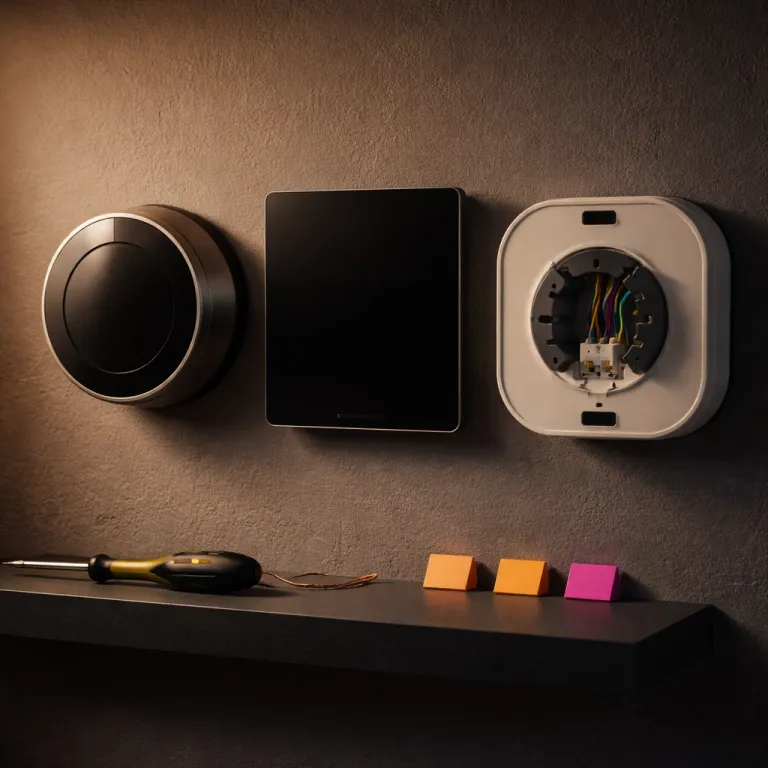
Why “best smart thermostat 2026” is the wrong question
Most people searching for the best smart thermostat in 2026 are really asking something else. They want a thermostat that fits their HVAC system, their daily routine, and their smart home habits, not a generic winner from a lab chart. The right connected thermostats feel invisible in daily life, quietly trimming energy use while keeping air comfortable in every room.
Instead of chasing one universal best smart thermostat, start with three hard constraints. First is wiring, because the number of wires behind your old thermostat decides which smart models can power their Wi‑Fi radios, touch‑screen displays, and room sensors without extra hardware. Second is HVAC type, since a simple gas furnace behaves very differently from a heat pump, a multi‑stage system, or a ductless mini‑split that may need a separate controller or a bridge.
The third constraint is ecosystem, which means the voice assistants and apps you already use. If you live with Amazon Alexa speakers, a Google Assistant display, and maybe a future Apple HomeKit hub, you should not buy a thermostat that only talks to one of them. The best smart choice is the thermostat that plays nicely with your existing smart devices, whether that is a Google Nest display, an Amazon smart speaker, or a HomeKit‑compatible hub.
Once those three inputs are clear, the field of thermostats shrinks fast. Premium models like the Ecobee Smart Thermostat Premium, the Nest Learning Thermostat, and the Honeywell Home T9 cluster around 200 to 280 euros (roughly 215 to 300 US dollars), and they justify that price only if you use their advanced learning, air‑quality, and multi‑room features. Budget thermostats such as the Amazon Smart Thermostat, the Honeywell T5, and the entry‑level Google Nest Thermostat sit under 100 euros (about 110 US dollars) and cover basic heating and cooling control for many homes.
From testing across gas furnaces, heat pumps, and mixed HVAC setups, one pattern repeats. People who are home most of the day rarely benefit from the most advanced learning thermostat features, because there is not much schedule variation for the algorithm to exploit. In those cases, a midrange thermostat with reliable temperature control and simple schedules can save nearly as much energy as a flagship smart thermostat with every premium option enabled.
The three checks that matter before you buy
Before you compare any best smart thermostat 2026 lists, you need to open the old thermostat and count wires. If you see a C wire labeled “C” or “common”, you can usually install almost any modern smart thermostat without an extra power adapter, which keeps the wall plate clean and the system stable. If there is no C wire, you either choose a thermostat that ships with a power extender kit, like many Ecobee thermostats, or you accept a slightly more complex HVAC system wiring job.
Next comes HVAC type, which quietly eliminates a surprising number of thermostats. A basic single‑stage gas furnace and air‑conditioning combo is easy, but a heat pump with auxiliary heat or a multi‑stage heating and cooling system needs explicit support in the thermostat’s specifications. If you own a ductless mini‑split, you often cannot use a standard wall thermostat at all, and you may need a dedicated smart controller that mimics the original remote instead of wiring into the air handler.
The third check is ecosystem fit, and this is where many buyers overpay. If you already use Amazon Alexa on Echo speakers, a thermostat that integrates tightly with Amazon smart routines will feel more natural than one that leans on Google Assistant or Apple HomeKit. If your home is centered on Google Nest speakers and displays, a Nest Thermostat or Nest Learning Thermostat will surface temperature and air‑quality controls more smoothly on those screens.
For mixed homes that juggle Alexa–Google compatibility and maybe an iPhone, look for thermostats that support all three major platforms. Ecobee’s premium models, for example, work with Amazon Alexa, Google Assistant, and Apple HomeKit, so you can change the temperature from whichever device is nearby. If you are still unsure how to balance wiring, HVAC system type, and ecosystem, a detailed buying checklist such as the one in this guide to choosing the best smart thermostat for your home can prevent expensive mistakes.
Once those three checks are done, you can safely ignore a lot of marketing noise. You do not need built‑in speakers, elaborate touch‑screen animations, or exotic learning modes if your schedule barely changes and you rarely touch the thermostat. What you do need is reliable heating and cooling control, clear temperature readings, and a system that does not randomly cut power to your HVAC blower because it is starved for that missing C wire.
Five buyer profiles, five clear picks
Instead of one vague best smart thermostat 2026 winner, think in terms of who you are. A renter, a first‑time upgrader, a HomeKit household, a heat pump owner, and a smart home builder each face different constraints and should not buy the same thermostats. Matching your profile to a specific thermostat model is the fastest way to save energy without drowning in spec sheets.
For renters, the Amazon Smart Thermostat is usually the best smart budget pick. It costs under 100 euros, works tightly with Amazon Alexa, and keeps installation simple for standard single‑stage heating and cooling systems, though it does need a C wire or a power adapter. If you move, you can often leave the thermostat behind and still feel you got your money’s worth from the energy savings and the convenience of voice‑controlled temperature changes.
First‑time upgraders in typical homes with gas heat and central air‑conditioning should look at the Honeywell T6 or T5. The T6 in particular is often overlooked, but at around 125 euros it is more thermostat than most homes need, with support for multi‑stage HVAC and flexible scheduling that does not require complex learning algorithms. This is where you can safely ignore brand‑recognition hype around more expensive Nest thermostat models if you just want stable heating and cooling without constant app tweaking.
HomeKit‑focused households finally have a native option in devices like the Aqara W200, which integrates deeply with Apple HomeKit scenes and automations. If you already use Google Nest speakers or Alexa–Google compatible displays alongside iPhones, you may prefer an Ecobee Smart Thermostat Premium, because it bridges Amazon Alexa, Google Assistant, and HomeKit in one unit. For these buyers, the premium price is justified by ecosystem flexibility more than by raw temperature control, which any decent thermostat can handle.
Heat pump owners and people with dual‑fuel or multi‑stage HVAC systems should prioritize explicit support over fancy learning thermostat branding. Ecobee’s higher‑end smart thermostats and the Nest Learning Thermostat both handle complex heat pump logic, but Ecobee’s room sensors and clearer configuration menus make it easier to avoid expensive mistakes with auxiliary heat. Smart home builders who plan to add sensors, air‑quality monitors, and mini‑split controllers later often start with Ecobee Premium or a high‑end Honeywell, because these thermostats expose more data to automations than a basic Google Nest Thermostat.
If you are still torn between ecosystems, it helps to read a focused comparison such as this guide on choosing between Google Home and Apple Home for your smart thermostat. That kind of analysis clarifies whether you should lean toward a Google Nest ecosystem or a more open Apple HomeKit setup. Once that decision is made, the list of best smart thermostats for your specific profile becomes refreshingly short.
What you should stop paying for in premium models
Many best smart thermostat 2026 roundups push the most expensive models by default. In practice, a lot of households will never use the extra learning, occupancy detection, and advanced air‑quality tracking that drive those premium prices. If you work from home or keep a steady schedule, the thermostat does not need to guess when you are away, because the temperature barely changes.
Flagship thermostats like the Nest Learning Thermostat and the Ecobee Smart Thermostat Premium shine in homes with irregular routines. They use learning algorithms, motion sensing, and sometimes room sensors to adjust heating and cooling dynamically, which can save energy when people come and go at odd hours. For a retired couple or a family that keeps a predictable nine‑to‑five pattern, those learning thermostat features often end up disabled after a few frustrating weeks of unexpected temperature swings.
Another overvalued feature is the built‑in voice assistant. A thermostat that includes Amazon Alexa or Google Assistant microphones sounds convenient, but most homes already have smart speakers in the kitchen or living room that handle voice commands better. Paying extra for a thermostat with a full voice assistant stack rarely makes sense when a simple integration with existing Amazon smart speakers or Google Nest displays can achieve the same temperature control.
Large touch‑screen interfaces also command a premium, yet they are used less than you might think. After the first week, most people adjust temperature from their phone, a smart display, or a quick voice command, not by standing at the wall and swiping through menus. A clear, basic screen that shows current temperature, target set point, and heating or cooling mode is enough for daily use, especially when the HVAC system is configured correctly during installation.
What is worth paying for is solid HVAC compatibility, including support for multi‑stage equipment and heat pumps, plus reliable Wi‑Fi and app performance. If your home has a mini‑split in the attic and a traditional furnace downstairs, you may need separate smart thermostats or controllers, but you do not need every premium feature in both zones. Spend money where it protects the HVAC hardware and energy bills, not where it adds another rarely used app interface.
Installation realities: wiring, adapters, and avoiding service calls
When people talk about the best smart thermostat 2026, they rarely mention the moment you pull the old thermostat off the wall. That is where many do‑it‑yourself projects stall, because the tangle of colored wire connections does not match the neat diagrams in the quick‑start guide. A little preparation here saves both time and the cost of an emergency HVAC technician visit.
Start by cutting power to the HVAC system at the breaker, then photograph the existing thermostat wiring before you loosen any screws. Label each wire according to the terminal it was connected to, not just by color, because different installers sometimes reuse colors in creative ways. If you see terminals for Y, W, G, R, and C, you likely have a standard single‑stage heating and cooling system with a C wire, which is ideal for most smart thermostats.
If the C wire is missing, do not panic, but do slow down. Some thermostats, like many Ecobee models and certain Honeywell units, ship with a power extender kit that installs at the furnace control board to simulate a common wire. Others, including the Amazon Smart Thermostat and some Nest thermostat models, may require either a separate adapter or a professional to pull a new wire through the wall, which can add significant cost.
Heat pump systems add another layer of complexity, especially when auxiliary heat or multi‑stage compressors are involved. In those setups, mis‑wiring a smart thermostat can cause the system to run expensive electric heat strips when they are not needed, wiping out any energy savings. If you are unsure whether your HVAC system is a simple furnace and air‑conditioning combo or a more complex heat pump, it is worth checking the model numbers on the indoor and outdoor units before you buy.
For homes with mini‑split systems, the wall thermostat may not control the equipment at all, because the original remote sends infrared commands directly to the indoor unit. In that case, you need a dedicated smart controller designed for air‑conditioning and heat pump mini‑splits, not a standard wall thermostat that expects low‑voltage wires. Getting this distinction wrong is one of the most common reasons people return smart thermostats after a frustrating weekend of failed installation attempts.
Future proofing: ecosystems, standards, and what still matters
Anyone searching for the best smart thermostat 2026 is also buying into a longer story. Thermostats now sit at the intersection of HVAC hardware, smart home ecosystems, and emerging standards that promise easier interoperability. The goal is to avoid replacing a perfectly good thermostat just because you changed from Amazon Alexa to Google Assistant or Apple HomeKit in a few years.
Modern smart thermostats increasingly support multiple ecosystems at once, but the depth of integration still varies. A Google Nest Thermostat will always feel most at home in a Google Nest ecosystem, surfacing temperature controls on Nest Hub displays and responding quickly to Google Assistant voice commands. Ecobee’s premium models, by contrast, aim for broad compatibility, working with Amazon Alexa, Google Assistant, and Apple HomeKit while also exposing data to third‑party platforms.
New connectivity standards such as Matter and Thread are slowly reshaping how smart devices talk to each other. Some recent thermostats and bridges can join a Matter network, which should, in theory, make it easier to control heating and cooling from any major platform without vendor lock‑in. If you want a deeper dive into how these standards affect thermostats and HVAC system planning, this analysis of Matter, Thread, and thermostats explains what has changed and what still has not.
Despite the buzz around new standards, the fundamentals remain the same. A thermostat must reliably control temperature, protect the HVAC equipment from short cycling, and help you save energy without constant micromanagement. The best smart thermostats do this while also giving you flexible control from phones, voice assistants, and automations, whether you prefer Amazon smart speakers, Google Nest displays, or a quiet Apple HomeKit setup.
When you evaluate future proofing, prioritize open ecosystems and clear documentation over flashy marketing. A thermostat that publishes detailed HVAC compatibility charts, supports multiple assistants, and offers regular firmware updates will age better than a closed device with a beautiful touch screen and little transparency. In the end, the smartest upgrade is the one that still works smoothly when your next phone, next speaker, or next HVAC system arrives, because comfort is measured not by the app interface, but by the February gas bill.
Key figures on smart thermostats and energy savings
- Studies from major utilities and independent evaluations, such as the U.S. Environmental Protection Agency’s ENERGY STAR program and field trials by utilities like PG&E and National Grid, show that smart thermostats typically reduce heating and cooling energy use by about 8 to 15 percent, which can translate to roughly 50 to 150 euros per year in many European homes, depending on climate and HVAC efficiency. For example, the ENERGY STAR “Smart Thermostat Savings” analysis and PG&E’s smart thermostat pilot evaluations both report savings in this range.
- Field data from programs that subsidize smart thermostat installations indicate that households with variable schedules see the largest gains, sometimes exceeding 20 percent savings on air‑conditioning costs when occupancy‑based setbacks are used consistently; these results are usually reported in utility demand‑side management summaries and program evaluation reports, such as National Grid’s residential smart thermostat impact studies.
- Industry surveys from market‑research firms such as Statista and Parks Associates report that more than half of new thermostat sales in developed markets are now smart models, reflecting a steady shift away from basic programmable thermostats as homeowners seek app control and integration with Amazon Alexa, Google Assistant, and Apple HomeKit.
- Analyses of HVAC service calls, including reports from trade associations and large service networks, suggest that incorrect thermostat wiring or configuration accounts for a significant minority of issues after upgrades, especially in homes with heat pumps or multi‑stage systems, which reinforces the value of careful installation or professional help.
- Programs that pair smart thermostats with demand‑response incentives, where utilities briefly adjust temperature during peak demand, can offer bill credits that effectively pay back the cost of a midrange thermostat within two to three heating seasons, according to published results from pilot projects in North America and Europe.
FAQ about choosing the best smart thermostat 2026
Do I really need a C wire for a smart thermostat ?
Most modern smart thermostats work best with a C wire, because it provides continuous power for Wi‑Fi, sensors, and the display without stealing power from the HVAC control circuits. Some models include power extender kits or can run without a C wire, but those setups are more prone to glitches and short cycling. If you can add a C wire during installation, you increase both reliability and compatibility with future thermostats.
Which smart thermostat is best for a heat pump system ?
For heat pump systems, you should choose a thermostat that explicitly supports heat pump modes, auxiliary heat, and, if relevant, multi‑stage compressors. Ecobee’s higher‑end models and the Nest Learning Thermostat are strong options, because they guide you through correct configuration and protect against running expensive backup heat unnecessarily. When in doubt, check your HVAC model numbers and confirm compatibility on the manufacturer’s website or product data sheet before buying.
Can a smart thermostat work with mini split air conditioning ?
Most ductless mini‑split systems use infrared remotes rather than low‑voltage thermostat wires, so a standard wall thermostat usually cannot control them directly. In those cases, you need a dedicated smart controller designed for mini‑splits, which learns the remote codes and sends commands to the indoor unit. Some homes use both a traditional thermostat for central heating and a separate smart controller for mini‑split air‑conditioning zones.
Is a premium smart thermostat worth it if I am home all day ?
If you are home most of the time and your schedule is predictable, a midrange programmable smart thermostat often delivers similar energy savings to a premium learning thermostat. High‑end features like advanced occupancy detection and complex learning algorithms matter less when there are few opportunities for automatic setbacks. In that scenario, prioritize reliability, clear controls, and solid HVAC compatibility over the most expensive flagship model.
Which voice assistant works best with smart thermostats ?
Amazon Alexa, Google Assistant, and Apple HomeKit all support smart thermostats, but the best choice depends on the devices you already own. If your home is filled with Echo speakers, an Amazon smart thermostat or an Ecobee model with deep Alexa integration will feel natural, while Google Nest thermostats pair smoothly with Nest speakers and displays. HomeKit‑focused households should look for thermostats with native Apple HomeKit support, so temperature control fits cleanly into existing scenes and automations.