
Summary
Editor's rating
Value: good comfort and potential savings, but only if you commit
Design: clean look, small screen, and one little quirk
Battery: one charge a season is fine, but USB‑C cable not included
Durability & reliability: holds up well, but the ecosystem lock-in is the real risk
Performance: stable heating, fewer arguments, but you need to tune it
What you actually get and what you secretly still have to buy
Pros
- Stable and precise room-by-room temperature control once configured
- Rechargeable battery with roughly one charge per heating season
- Integrates well with Matter/Thread and smart speakers (Alexa, Google, Siri)
Cons
- Not compatible with older tado V3+ systems, effectively forcing a full upgrade
- Requires extra hardware (Bridge X or Thread border router) and possibly a subscription for full features

Specifications
View full product page →| Brand | tado |
Smart valves that actually make sense (once you get your head around them)
I’ve been using tado gear for a while, and I picked up this Smart Radiator Thermostat X as an add-on to see if the new "X" generation is really worth the hassle and cost. I installed it on one of the main radiators in our flat – the living room – because that’s the room where we constantly argue about it being too hot or too cold. I’m not an installer, just reasonably handy, and I already have a Matter/Thread setup at home, so I’m basically the target user for this thing.
First point: this is only an add-on valve, not a complete heating system. Out of the box, you get the head, some adapters, and paperwork. No Bridge X, no hub, nothing. If you don’t already have a Thread border router (HomePod mini, some newer routers, some smart speakers) or the tado Bridge X, you’re not connecting this to anything smart. It will still act as a manual thermostatic valve, but then you’re wasting most of what you’re paying for.
Second point: it’s not compatible with the older tado V3+ stuff. This is not obvious enough in my opinion. If, like one of the Amazon reviewers, you’ve already dropped a few hundred quid on older tado gear and you think you’ll just add this to your existing system, you’re in for a bad surprise. I tried pairing it with an older bridge just to check, and yeah, no chance. It simply doesn’t show up.
So overall, from the first week, my impression is: when it’s set up properly and you understand Matter/Thread, it works well and feels solid. But between the extra gear you may need and the confusion around compatibility, this is not plug-and-play for everyone. You need to know what you’re getting into or you’ll be annoyed very quickly.
Value: good comfort and potential savings, but only if you commit
On pure price, this thermostat sits in the mid to high range for smart radiator valves. It’s not the cheapest option on the market, especially considering this is just an add-on head with no bridge included. If you already have a Thread border router or a Bridge X and you’re just adding one or two valves, the price makes more sense. If you’re starting from zero and need Bridge X, more valves, and maybe AI Assist, the full bill climbs quickly towards several hundred pounds.
In terms of what you get for that money, it’s not just convenience. The combination of room-by-room control, proper scheduling, and presence-based features (if you pay for AI Assist) can actually reduce your gas or heating bills. In my case, I’m mostly heating the rooms we use in the evening and early morning instead of blasting the whole flat all day. Over a full winter, that does add up. I wouldn’t blindly believe the “up to 55% savings” figure, but a decent reduction is realistic if your previous setup was dumb and always-on.
Where the value is weaker is for single-room or light users. If you only heat one small room, or you live in a very well-insulated flat with low bills already, the payback time will be long. And if you already have older tado V3+ stuff, this specific X version is almost bad value because it forces you to consider a full system swap. In that case, I’d honestly say: stick with your current system until it dies or until tado offers a proper migration path.
For someone starting fresh with a modern smart home (Matter/Thread, Alexa/Google/Apple), the value is better. You get a smart, fairly polished product that fits into your existing ecosystem, can be controlled by voice, and doesn’t require a ton of maintenance. Just be honest with yourself about the total cost of ownership: extra hardware, possible subscription, and the time you’ll spend setting it up. If you accept all that, it ends up as a decent long-term buy, not a bargain, but not a rip-off either.
Design: clean look, small screen, and one little quirk
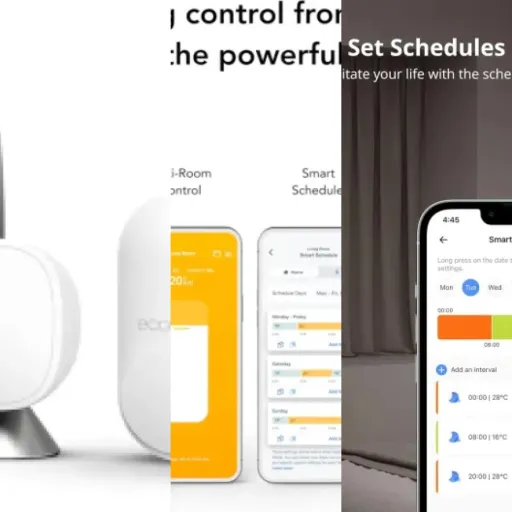
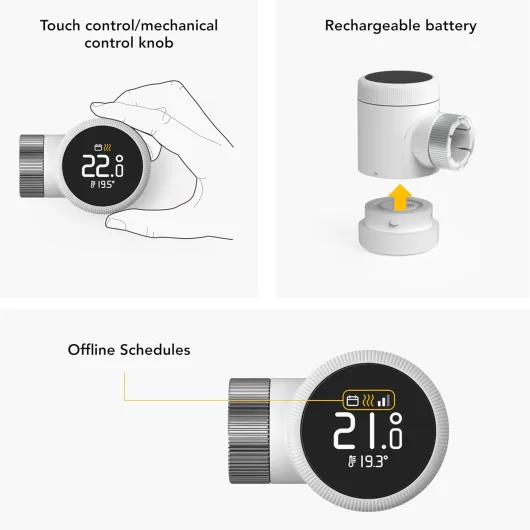
Design-wise, the thermostat is pretty clean and simple. It’s a white plastic cylinder/oblong shape with a matte finish, so it doesn’t scream “tech gadget” from across the room. On my older white radiators, it blends in well. If you’ve seen the older tado radiator valves, this feels like a slightly more modern and minimal version. There’s a touch display on the front that lights up when you tap or turn it, showing the set temperature and basic icons. It’s bright enough to read in daylight and has a backlight for evenings.
The interface is mostly touch-based plus a bit of rotation. You tap the front to wake it, then slide or tap to change the temperature. It’s not as fast as just turning a chunky mechanical valve, but it’s okay. I wouldn’t use it as the main way to control the heating anyway; the app or voice control is just more comfortable. One thing I noticed: the screen is small and close to the radiator, so if your radiator is in a tight corner or behind furniture, you end up crouching and squinting a bit to see what you’re doing.
The installation design is actually one of the strong points. The included adapters cover most standard radiator valves, and the metal nut gives a solid feeling once you tighten it. It doesn’t wobble or feel like it’s going to leak, which was my main worry the first time I replaced a valve. You get a clear sense when it’s properly tightened. I had to try two adapters to find the right one, but once I did, the fit was good and secure.
One design quirk: because the thermostat is sitting right next to a hot radiator, the built‑in temperature sensor tends to read a bit higher than the actual room temperature. tado lets you set a temperature offset in the app (I ended up at around -3 °C like one of the Amazon reviewers), but you have to tweak this manually. Once that’s set, it regulates more sensibly, but out of the box it can stop heating too early because it thinks the room is warm when in fact only the area around the radiator is. It’s not a design disaster, but you need to know about it and adjust it.
Battery: one charge a season is fine, but USB‑C cable not included
The thermostat uses a built‑in rechargeable lithium‑ion battery, which is a bit different from many rivals that still rely on AA batteries. On paper, tado says you only need to charge it about once per heating season. In my case, using it daily with lots of schedule changes and some manual adjustments, the battery dropped roughly 20–25% over three weeks. That lines up with what other users say: you can expect to plug it in once or twice a year depending on how hard you use it and how strong your Thread connection is.
Charging itself is straightforward but slightly annoying in practice. There’s a USB‑C port on the thermostat, but no USB‑C cable or charger in the box. You have to remove the thermostat from the radiator, bring it to a charger, and leave it plugged in for around two hours for a full charge. The good news is that it’s genuinely quick: I went from about 25% to full in just under two hours on a standard phone charger. While it’s charging, the radiator is basically uncontrolled unless you temporarily screw a manual valve back on, which no one is going to do for a two‑hour window.
If you have several of these valves, the best approach is what one Amazon reviewer mentioned: batch charging. Pick a mild day, take them all off, and rotate them on a charger. It’s a bit of a chore but only once per season. Personally, I find it less annoying than constantly swapping AA batteries and guessing which ones are still good. The tado app also gives you battery status, so you get a heads‑up before it dies, not a surprise in the middle of a cold night.
Overall, I’m fine with the battery system. It’s not perfect – I’d love a way to charge it without removing it from the radiator, or a small removable battery pack you can swap – but in practice it’s manageable. The key is just to plan ahead and not ignore the low battery warnings. Compared to cheaper valves with disposable batteries, this feels more modern and long‑term friendly, but it does ask for a bit of organisation from you.

Durability & reliability: holds up well, but the ecosystem lock-in is the real risk
On the physical side, the thermostat feels sturdy enough for everyday use. The plastic is matte and doesn’t creak when you tighten it, and the metal nut gives a solid connection to the valve. I’ve taken it off and reinstalled it a few times (to test different adapters and to charge it), and the threads still feel tight and precise. It doesn’t feel like something that will fall apart after one winter. The buttons and touch surface still respond well after a few weeks of daily poking.
In terms of reliability, users who have a bunch of these (10–20 units) report that they run for over a year with basically no failures, which matches my experience with older tado valves. Once set up correctly on a good network, they just do their job quietly in the background. No random resets, no weird behaviour in the middle of the night. The firmware updates happen via the app, and so far they haven’t broken anything for me. That’s important because you really don’t want your heating system to become a beta test every time there’s an update.
The bigger concern for me is not the physical durability but the ecosystem durability. tado has already moved from the V3+ system to this new X line, and they’re flat-out not compatible. If you’re invested in the older gear, this thermostat is basically useless to you unless you’re willing to replace almost everything. That makes me a bit wary about how they’ll treat the current X range in a few years. Will we end up with another incompatible generation? Hard to say, but it’s something to keep in mind if you’re planning a full-home setup.
So overall: as a device, it feels reliable and well built for the money, and I’m not worried it will break physically. The real long-term risk is software and ecosystem decisions made by tado, not the hardware itself. If you’re okay buying into the current X ecosystem and you don’t already have a house full of older tado devices, you’ll probably be fine. If you’re mid-upgrade from V3+, I’d be careful and maybe rethink before mixing generations.
Performance: stable heating, fewer arguments, but you need to tune it
In terms of pure performance, the valve does what it’s supposed to: it opens and closes the radiator based on the set temperature and schedule, and it does it quietly and reliably. I’ve had it running for several weeks on a busy living room radiator, and there’s no weird clicking, no hunting up and down, and no obvious connection drops once the Thread network is stable. When the room cools down below the target temperature, you can hear the radiator start to warm up again within a couple of minutes, and it cuts off cleanly once it’s reached the set point.
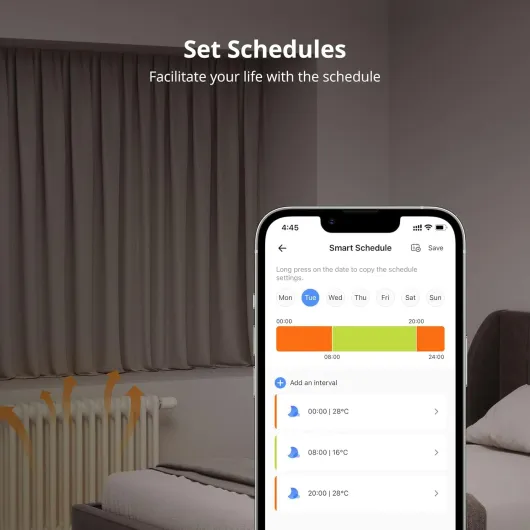
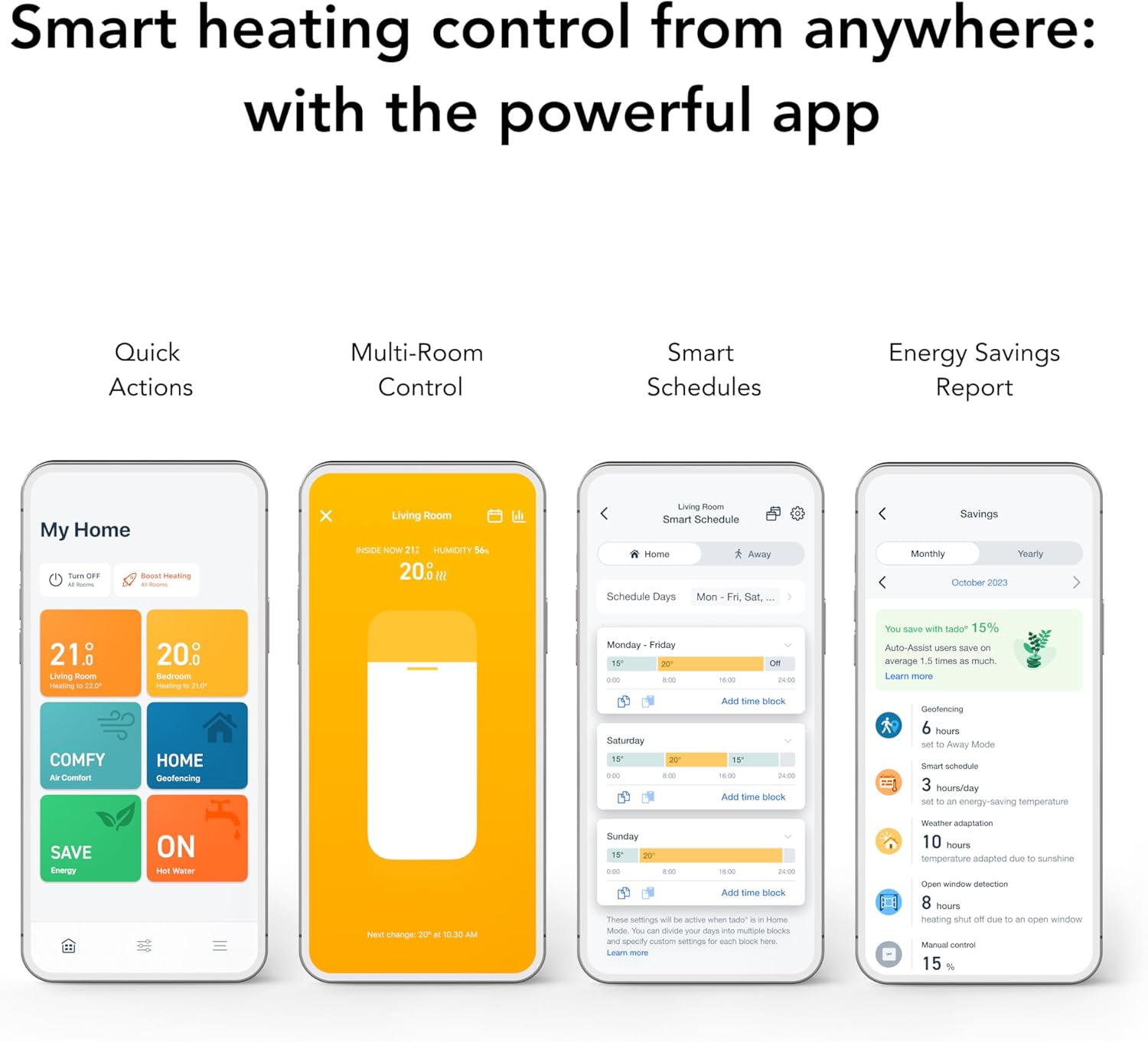
The best part for me is the room‑by‑room control. Before this, our heating was basically “all or nothing”: either the whole flat was roasting, or everything was off and cold. With this on the living room and a couple of other rooms, I can keep the bedroom cooler and the living room comfortable in the evening without having to run around fiddling with manual valves. Schedules in the app are straightforward: you set different temperatures for different time blocks and days. Once you’ve set a weekly pattern, you mostly forget about it.
Where it gets a bit tricky is the whole Matter/Thread side. Once I understood how it works and had a HomePod mini as a border router and one extra Thread plug to extend the mesh, things were rock solid. Before that, when the valve was at the far end of the flat, I had occasional delays in commands or the app not updating instantly. So the performance is good, but it heavily depends on your Thread network quality. If you only have one border router buried in a corner, don’t expect miracles – you might end up needing another Thread device to strengthen the mesh.
In daily use, the combination of app control, schedules, and smart speaker support is handy. Saying “set living room to 20 degrees” actually works, and the tado app gives a clear timeline of when the heating was on. Just be aware that many of the smarter features that actually fine‑tune performance – like geofencing to turn heating down when you leave, or open window detection – are part of the AI Assist paid plan. Without that, it’s still a smart valve, but you’re not getting the full automation potential they advertise. Overall, I’d say performance is pretty solid once everything is tuned, but there’s some initial setup and learning you can’t escape.
What you actually get and what you secretly still have to buy
Out of the box, the Smart Radiator Thermostat X package is pretty simple: one valve head, a small set of adapters for different radiator valves, a regulatory sheet, and an installation manual. No cables, no charger, no Bridge X. The unit has an internal rechargeable battery, so at least you don’t have to mess with AA batteries, but you’ll need your own USB‑C cable and charger. The dimensions are roughly 4.9 x 6.7 x 6.7 cm, so it’s compact enough not to look ridiculous on a standard radiator.
On the technical side, this thing talks using Matter over Thread. That sounds fancy, but in practice it just means: low power, mesh network, and you need some kind of Thread border router to connect it to your home network and phone. That can be a HomePod mini, some newer routers, certain smart speakers, or tado’s own Bridge X (which is sold separately and not cheap). If you already live in the Apple/HomeKit/Matter world, it fits in quite nicely. If you don’t, you’re going to have to buy extra stuff just to get started.
tado also pushes their AI Assist subscription pretty hard: geofencing, open window detection, energy insights, etc. It’s around £3.99/month or £29.99/year. You can use the basic schedule and temperature control without it, but all the fancy automation that actually saves energy over time is locked behind that paywall. That’s an extra running cost people often forget to factor in. Personally, I tried the trial and then decided to pay yearly because in winter it does help cut down on wasted heating, but I’m not thrilled about another subscription.
So in practice, this single thermostat at the advertised price is only part of the real bill. Realistically, to make it useful you often need: a Thread border router or Bridge X, possibly another Matter device to strengthen the mesh, and maybe the AI Assist if you want the full saving features. Once you accept that, the product itself is fine and does what it claims, but for a first-time buyer the total cost is higher than it looks on the product page.
Pros
- Stable and precise room-by-room temperature control once configured
- Rechargeable battery with roughly one charge per heating season
- Integrates well with Matter/Thread and smart speakers (Alexa, Google, Siri)
Cons
- Not compatible with older tado V3+ systems, effectively forcing a full upgrade
- Requires extra hardware (Bridge X or Thread border router) and possibly a subscription for full features
Conclusion
Editor's rating
Overall, the tado° Smart Radiator Thermostat X is a solid smart valve that does what it claims, as long as you’re the right kind of user. If you already have a Matter/Thread setup at home and you want proper room-by-room control without rewiring your heating system, it fits in nicely. The hardware feels solid, the regulation is stable once you’ve tweaked the temperature offset, and the app and smart speaker control make daily use simple. Battery life is good enough that charging it once per season isn’t a big drama.
Where it falls short is mainly around ecosystem and cost. It’s not compatible with older tado systems, so anyone already invested in V3+ gear will feel rightly annoyed. On top of the price of the valve itself, you may need a Bridge X or other Thread border router, maybe another Matter device for a stronger mesh, and possibly the AI Assist subscription if you want all the automation they advertise. That pushes the real cost up, especially if you’re doing a whole-home setup.
I’d recommend this to people who are already comfortable with smart home tech, who plan to control several rooms, and who are okay paying a bit more upfront for more comfort and some energy savings over time. If you just want a simple cheap way to turn a single radiator up and down, or if you’re already on an older tado system, this is probably not the smartest place to put your money right now.