
Summary
Editor's rating
Worth it if you already live in the tado world, pointless if you don’t
Minimal white box that blends in and stays out of the way
Runs on batteries but also wired – a slightly odd combo
Plastic build, but decent enough for what it is
Feels like it will last, but long-term depends on the ecosystem
Heating control: solid once set up, a bit confusing at the start
What this add-on thermostat actually does (and doesn’t)
Pros
- Gives real multizone control when combined with existing tado setup
- Clean, compact design with simple on-device controls and strong app support
- Works with Alexa, Siri, and Google Assistant, plus solid HomeKit integration
Cons
- Setup for multiple zones and boiler control can be confusing and may need support tweaks
- Plastic build and battery-powered front feel a bit basic for the price

Specifications
View full product page →| Brand | tado |
A second thermostat that actually makes sense
I added this tado wired add-on thermostat to an existing tado setup that was already running one main thermostat and several smart radiator valves. The idea was simple: I wanted proper control of an extra floor instead of the usual all‑or‑nothing heating. I’m not an installer, just a reasonably handy homeowner, so I went in expecting a bit of swearing with cables and app menus.
In practice, it went smoother than I thought. The thermostat is clearly designed as an extension, not a full starter kit, so you need to already have the tado bridge and main controller. Once you accept that, it’s basically a way to turn one dumb zone into a smart one. In my case that meant giving the upstairs its own logic instead of relying on whatever the hallway downstairs felt like.
Over a few weeks, I used it in a mixed setup: underfloor heating on the ground floor with one tado, radiators on another floor with this add‑on, plus a bunch of tado TRVs. I tried different schedules, manual overrides, and voice control with Alexa. I also played a bit with HomeKit and some more advanced settings like how it calls the boiler or just opens valves.
Overall, it does what it says: it gives you real multizone control without ripping out your whole system. It’s not perfect, and the app logic can be a bit confusing when you start adding several zones, but compared to my old single wired thermostat, the difference in comfort and control is pretty big. Just don’t expect it to magically fix a badly designed heating system on its own.
Worth it if you already live in the tado world, pointless if you don’t
On the value for money side, this add-on thermostat sits in a slightly niche spot. It’s not cheap for “just” another thermostat, but if you already have a tado starter kit and you want proper zoned heating, it starts to make sense. The real benefit shows up over time: more comfortable rooms and the potential to cut down on wasted heating by not warming the whole house when you only need one floor or one area.
Compared to buying a whole separate system, this is still cheaper and less messy. You reuse the same internet bridge, the same app, and the same account. All your zones show up in one interface, you get unified schedules, and you can control everything from your phone or via Alexa/Siri/Google. That convenience is hard to price, but once you get used to adjusting individual rooms from the sofa, going back to a single dumb thermostat feels pretty primitive.
Where the value drops is if your plumbing isn’t set up for real zones. If you just have one simple loop and one valve, adding this wired thermostat won’t suddenly give you proper zoning; you’d need smart radiator valves or plumbing changes as well. In that case, your money is probably better spent on the tado TRVs first, because they give you room-by-room control even on a single loop. The wired add-on is more for when you already have, or plan to have, multiple circuits.
So, is it good value? I’d say yes, for existing tado users with multi-zone potential. It’s not a bargain, but it’s also not outrageous considering the control you gain. If you’re starting from zero and just want basic smart heating, go for a starter kit first and see if you even need extra zones later. No need to throw money at add-ons you’ll never really use. But in the right setup, this thermostat comfortably justifies its price over a couple of winters.

Minimal white box that blends in and stays out of the way
Design-wise, tado has gone for the usual smart-home look: small white square, rounded edges, glossy front, and a simple LED/LCD display that only lights up when you touch it. On the wall, it’s pretty discreet. It doesn’t scream for attention like some older programmable thermostats with huge buttons and bright green screens. In my hallway and office it just looks like a small white box, which is exactly what I want from a thermostat.
The display is basic but clear. You tap the surface and it shows the target temperature and a rough indication of current temperature, plus little icons. It’s not a full color screen or anything fancy; it’s enough to quickly check and nudge the temperature up or down. 90% of the time I just use the app, but I appreciated having physical control when my phone was in another room. The touch controls are a bit on the “soft” side, you have to get used to where to press, but after a couple of days it became automatic.
One thing I liked is the overall size and depth. At around 10.4 x 10.4 cm and under 2 cm deep (plus the backplate), it doesn’t stick out too much. Compared to my old chunky wired thermostat, this looks cleaner and more modern. The white/matte finish matches most walls, and it doesn’t collect fingerprints badly. If you care about aesthetics, it’s neutral enough to work in most rooms, from hallway to living room or home office.
On the downside, there’s no fancy metal trim or premium materials here; it’s just white plastic. It feels fine in the hand, but not high-end. Also, the display only shows limited info – if you expect detailed graphs or lots of data on the device itself, forget it, that all lives in the app. For my use, that’s fine: the thermostat is basically a quiet box on the wall, and all the brains are on my phone. But if you’re used to more tactile, button-heavy thermostats, this will feel a bit too minimal at first.
Runs on batteries but also wired – a slightly odd combo
This wired thermostat is a bit of a hybrid: it’s corded for control (connected to your boiler or valve) but also runs on 3 AAA batteries for power. That confused me at first because my old wired thermostat took power directly from the boiler connection. With tado, the low‑voltage electronics and Wi‑Fi seem to rely on the batteries, while the wiring is mainly for switching the heating circuit.
In practice, battery life is decent. After several weeks of use with regular app adjustments and daily schedules, the battery level still shows as fine in the app, and I haven’t had any warnings. Other users report getting many months out of a set of batteries, which sounds reasonable. The thermostat doesn’t have a bright always‑on screen or anything power‑hungry, so it doesn’t eat batteries quickly. tado also sends notifications when batteries are getting low, so you’re not left with a dead device in the middle of winter without warning.
Changing the batteries is simple: you pop off the front cover, swap the AAAs, and clip it back on. No need to remove the backplate or touch the wiring. I’d suggest using decent alkaline batteries and keeping a spare set at home, especially in colder months. It’s not a big deal, but it’s one more thing to maintain compared to a thermostat that runs fully off the boiler’s power.
If you hate the idea of putting batteries into a wall‑mounted device that’s also wired, this might annoy you a bit. It’s not a deal breaker for me, but it’s worth knowing before you buy. The good side is that you’re not dealing with mains power on the front unit, which makes it safer to handle. Overall, battery handling is straightforward, and the combination of wired control plus battery power gets the job done without drama.
Plastic build, but decent enough for what it is
The tado wired thermostat is made from PC and ABS plastic. In plain language: it’s solid enough plastic, nothing fancy. When I first unboxed it, I didn’t get any premium vibe, but it also didn’t feel cheap or flimsy. The front plate clips on firmly, and there’s no creaking when you press on the touch area. For a device you rarely touch, that’s more than enough in my opinion.
The included accessories are straightforward: wall plate, screws, wall plugs, sticky pads, batteries, and cable labels. The sticky pads are useful if you’re mounting it on a smooth surface and don’t want to drill, but personally I went with screws for peace of mind. The labels for the existing thermostat wires are a small thing, but they help a lot during installation, especially if you’re not used to fiddling with boiler wiring. Everything feels like it’s been thought through for a DIY install, not for pro-only installers.
Weight-wise, at around 156 grams, it’s light, which is good when you’re hanging it on plasterboard. The backplate is a bit more basic – just plastic with screw holes and terminals – but once it’s on the wall you don’t see it anyway. I’ve taken it off and on a few times to double-check wiring, and the clips still feel solid, so I’m not worried about it wearing out quickly.
If I had to nitpick, the glossy front can pick up slight scuffs if you scrape it with tools during installation, so maybe don’t let it dangle on the wires while you’re drilling. Also, don’t expect any kind of moisture resistance rating; I wouldn’t put this in a damp bathroom without thinking about ventilation. Overall though, for a thermostat that mostly just sits there, the materials are perfectly fine: not luxurious, but practical and sturdy enough for everyday use.
Feels like it will last, but long-term depends on the ecosystem
After living with this tado thermostat for a while, I’d say build durability seems fine. Once it’s on the wall, you barely touch it, so there’s not much that can physically wear out. The plastic casing feels solid, the buttons are capacitive (no mechanical switches to break), and the wall mount is sturdy enough. I’ve removed and reattached the front a few times to check wiring and batteries, and the clips still feel tight.
More important than the plastic, though, is software and ecosystem durability. The good point here is that tado works with HomeKit, and some users run it locally through HomeKit and even block internet access to tado’s servers. That’s reassuring if you’re worried about the company changing things on the cloud side in a few years. In my tests, HomeKit control continued to function even when I limited external access, which suggests the system isn’t completely dependent on the cloud for basic control.
The one area that could affect long‑term satisfaction is support and configuration help. If you have a simple setup, you’ll probably never talk to tado support again after installation. But if you’re running several zones and something odd happens, you may need them to tweak server‑side settings, as one of the Amazon reviewers mentioned. That’s not a hardware durability issue, but it does tie your comfort to how responsive tado remains over the years.
Physically, I don’t see any obvious weak spots. No moving parts, no crazy hinges, and no exposed connectors. As long as you don’t mount it in a very humid place or somewhere it can get knocked, it should last easily beyond the 1‑year warranty. I’ve had tado gear in general for a couple of years now, and none of the thermostats or valves have failed. So while it’s not built like a tank, for a wall‑mounted plastic thermostat, durability looks pretty solid in real use.
Heating control: solid once set up, a bit confusing at the start
In terms of performance, this add-on thermostat does the main job: it keeps its zone at roughly the temperature you set, according to the schedule you define in the app. Compared to my old single-zone setup, the comfort is noticeably better. No more roasting the living room to 25°C just so the back rooms warm up. Instead, each zone has its own target, and this wired thermostat handles its part of the house pretty reliably.
The reaction time is decent. When the room temperature drops below the set point, it calls for heat (or opens the valve, depending on your wiring) and the boiler kicks in shortly after. You’ll sometimes notice small swings, like 0.5–1°C below the target before it reacts, but nothing dramatic. You can also tweak some of the behaviour in the app, and tado has their own algorithms to avoid the boiler short‑cycling. I did see one user mention early issues with the system not heating all zones unless the main thermostat was calling for heat, but tado support can apparently fix some of that by adjusting settings on their side.
Where it gets a bit tricky is multi-zone logic. With several wired thermostats and smart radiator valves, you need to be clear which device is actually in charge of the boiler and which ones just control valves. If you misconfigure it, you can end up with zones that ask for heat but the boiler never fires, or the opposite: boiler firing too often. After some trial and error in the Rooms & Devices section, I got it to behave: one device acts as the main boiler caller, the others mainly open valves, and the boiler is triggered when any zone is active. Once that was sorted, it ran smoothly.
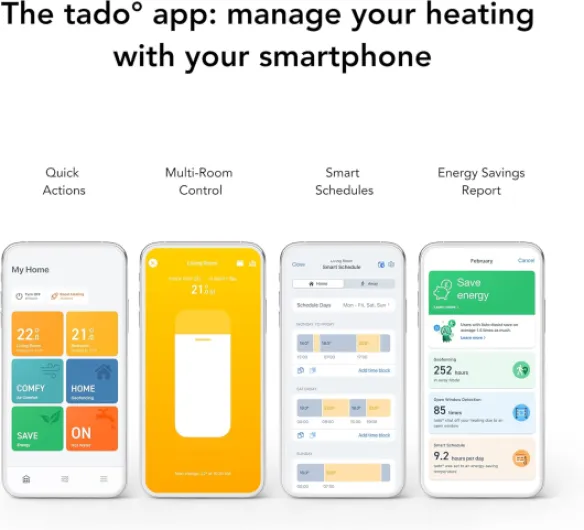
Integration with Alexa, Siri, and Google Assistant is handy. I mostly use Alexa: “set office to 21 degrees” works fine and updates the app instantly. The app itself is one of the strong points: clear overview of all zones, schedules are easy to set up, and you can quickly see which rooms are heating. There’s also open-window detection and battery warnings, which are more relevant for the TRVs but still nice to have in the same ecosystem. Overall, performance is pretty solid, but you need to be ready to spend an hour or two understanding how tado thinks about zones if you have a more complex system.
What this add-on thermostat actually does (and doesn’t)
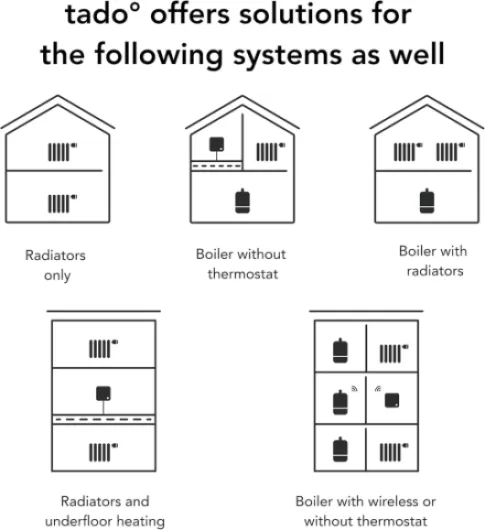
This is not a full heating controller, it’s exactly what the name says: an add-on wired smart thermostat. You use it when you already have a tado starter kit and want to create extra zones: another floor, a separate underfloor loop, or a different radiator circuit. Think of it as a smart on/off switch with temperature control for another part of your house. It connects to your existing tado internet bridge by Wi‑Fi and shows up in the app as another room/zone.
The main thing it does is give that extra zone its own schedule and temperature. For example, I have the downstairs living area warm in the morning and evening, but I only want the attic home office heated on work days. With this add‑on, I can let the office stay cooler on weekends without touching the rest of the system. If your plumbing is set up with separate valves per floor, you can wire this thermostat to open or close that valve, so the boiler only feeds that zone when it’s actually needed.
There’s a catch though: in many setups, only one tado device is allowed to “call” the boiler directly in the app. That means extra wired thermostats sometimes just open valves, and the boiler is triggered indirectly when a valve is open. It works, but the configuration in the app can feel a bit nerdy. You have to go into Rooms & Devices and play with the Zone Controller settings so things don’t fight each other. If you’re not comfortable with that, you might need a heating engineer or at least a careful read of tado’s guides.
In short, this product makes sense if your home already has multiple heating circuits or you plan to use it mainly as a zone valve controller. If you just have one simple boiler and one loop, this add‑on alone won’t bring you much. It really shines when combined with other tado kit: smart radiator valves downstairs, wired thermostat for underfloor, and this extra one for another loop or floor. On its own, it’s pointless; as part of a bigger tado setup, it’s pretty solid.
Pros
- Gives real multizone control when combined with existing tado setup
- Clean, compact design with simple on-device controls and strong app support
- Works with Alexa, Siri, and Google Assistant, plus solid HomeKit integration
Cons
- Setup for multiple zones and boiler control can be confusing and may need support tweaks
- Plastic build and battery-powered front feel a bit basic for the price
Conclusion
Editor's rating
Overall, the tado Wired Smart Thermostat add-on is a solid upgrade if you already use tado and want real multi-zone control. It does the basics well: stable temperature control, clear app, decent integration with Alexa/Siri/Google, and a design that disappears into the background. Once it’s set up properly, you get the comfort of different temperatures and schedules for each part of the house, which is a big step up from a single hallway thermostat.
It’s not perfect. The configuration for complex systems can be confusing, especially deciding which device actually calls the boiler and which just opens valves. Support can be a bit slow according to some users, and the plastic build, while fine, doesn’t feel premium. The battery-powered front on a wired thermostat will also annoy some people, even though in practice it works fine and battery life is reasonable.
If you’re already in the tado ecosystem and your house has, or could have, separate heating circuits (underfloor vs radiators, different floors, etc.), this add-on makes sense and should pay off in comfort and possibly lower bills. If you’re a new user with a simple one-loop system, start with a starter kit and maybe smart radiator valves; this add-on alone won’t bring you much. In short: good product for the right setup, decent value, but not magic. It gets the job done without much drama once you’ve wrestled the settings into place.