
Summary
Editor's rating
Value for money vs other options
Design: basic plastic box that does the job
Durability and long-term feel
Performance over time and compatibility quirks
Installation: doable for DIY, but not exactly plug-and-play
What this C-wire adapter actually is (and isn’t)
Does it actually power the thermostat reliably?
Pros
- Provides stable power to smart thermostats on systems without a C-wire
- Cheaper and less invasive than running a new thermostat cable
- Installation is manageable for DIYers with basic wiring comfort
Cons
- Not compatible with mini-splits and some non-standard HVAC systems
- Instructions and labeling could be clearer for complete beginners

Specifications
View full product page →| Brand | YABUYALI |
Making an old HVAC talk to a smart thermostat
I grabbed the CWIREADPTR8001/E C-wire adapter because my older HVAC system doesn’t have a C-wire, and I wanted to install a Wi-Fi thermostat without rewiring half the house. I’m not an electrician or HVAC tech, just a fairly handy homeowner who’s swapped a few thermostats before. The idea of this little box is simple: steal power from the existing G and Y wires and feed your smart thermostat so it doesn’t keep rebooting or draining batteries.
In my case, the setup is a pretty standard forced-air gas furnace with central AC, nothing fancy and definitely not new. No C-wire in the wall, just the usual R, W, Y, G bundle. I’d been putting off the thermostat upgrade because I didn’t feel like running a new cable through the wall and into the furnace control board. This adapter looked like the lazy workaround, so I went for it, knowing full well it might be a bit of trial and error.
Out of the box, it’s clearly aimed at folks with basic DIY skills. No specialized tools needed beyond a screwdriver and maybe a phone to zoom in on the wiring diagram. The product page says it works as a C-wire adapter for various Wi-Fi thermostats and calls out Honeywell compatibility specifically. That sounded close enough for my use case, even though the brand here (YABUYALI) isn’t exactly a household name.
After installing and living with it for a bit, I’d say it does what it claims, but it’s not magic and it’s not for every system. If you have a very old or weird setup, or a mini-split, this isn’t going to solve your problems. But if you’ve got a fairly standard furnace/AC combo and just no C-wire, it’s a reasonable way to power a smart thermostat without opening walls or calling an HVAC tech right away.
Value for money vs other options
In terms of value, this adapter sits in a pretty reasonable spot. It’s usually cheaper than calling an HVAC tech to pull a new thermostat cable, and often cheaper than buying a branded C-wire kit from one of the big thermostat makers. For what you pay, you get a working solution that can keep a smart thermostat powered on a system that otherwise wouldn’t support it without extra wiring. That’s basically the whole pitch, and in that sense the price makes sense.
Compared to alternatives: running a new wire is the cleanest and most future-proof solution, but that can mean fishing cable through walls, drilling, patching drywall, and possibly paying a pro. That easily jumps into the hundreds. Some thermostats can use external 24V plug-in transformers instead, but that requires having an outlet near the thermostat and living with a wire running down the wall, which looks a bit sloppy. This adapter is a middle ground: a bit of wiring work, no visible changes on the wall, and a modest one-time cost.
The downside on value is mainly the generic branding and hit-or-miss compatibility. If you get unlucky and realize your system isn’t suited for this after you buy it, you’ve just spent money and time on something that won’t help. That’s where the mid-range Amazon rating (3.8/5) feels about right. When it works with your system, it’s good value. When it doesn’t, it’s just another box you return or toss.
For a standard single-stage furnace and AC, I think the price-to-benefit ratio is pretty solid: you spend a relatively small amount to avoid rewiring and keep your new smart thermostat powered correctly. If you’ve got anything more complex or unusual, the value drops fast because the risk of incompatibility goes up. So I’d call it good value in the right scenario, mediocre value if you’re guessing about your system.
Design: basic plastic box that does the job
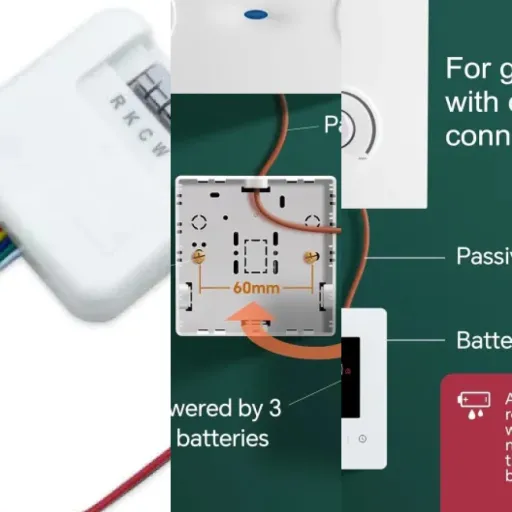
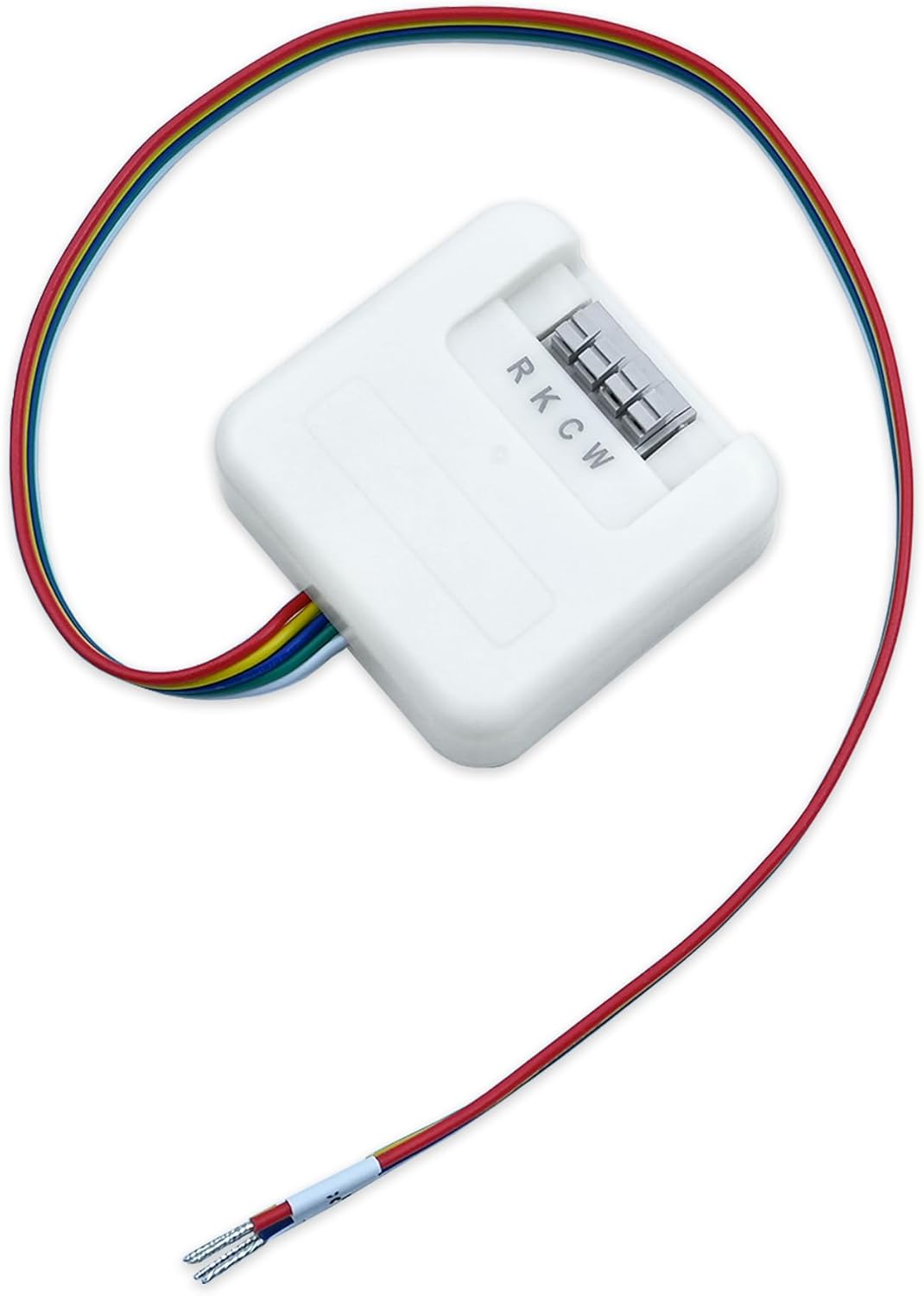
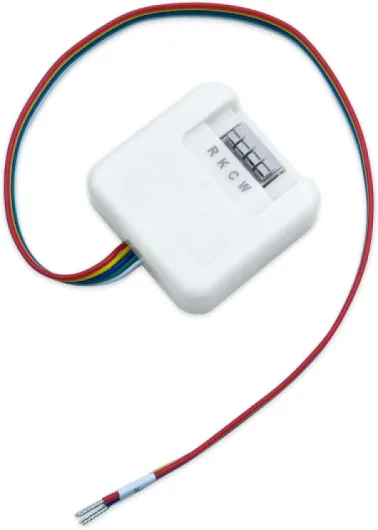
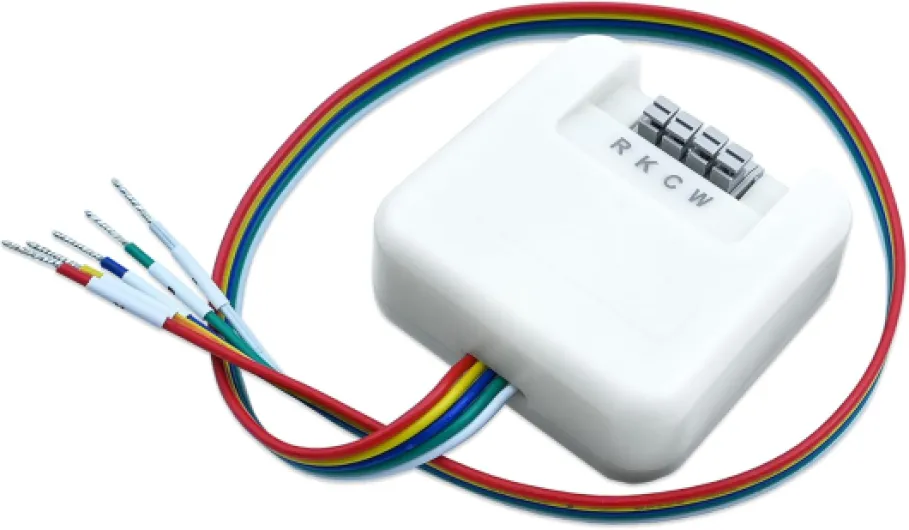
Design-wise, the CWIREADPTR8001/E is nothing fancy, and that’s fine. It’s a small white plastic module with labeled wires coming out and screw terminals for connections. You’re not going to see this thing once it’s installed because it usually sits near the furnace or air handler, so I honestly don’t care that it looks generic and a bit cheap. As long as the labels are clear and the terminals don’t strip out, that’s what matters here.
The labeling is the key part. On mine, the wires and terminals were marked in a way that lined up decently well with the included guide and what I saw in the product listing. I still had to double-check against my furnace’s control board labels (R, C, Y, G, W, etc.), but at least nothing was totally confusing. The adapter shows which wires go to the thermostat side and which go to the furnace side, and that’s what you need when you’re crouched in front of a furnace with the power off and a headlamp on.
The plastic housing itself feels light and a bit cheap, but it’s not something you’re going to handle every day. There are a couple of mounting holes so you can screw it onto the inside wall of the furnace cabinet or nearby wood. I just used one self-tapping screw and a zip tie on the wires to keep it from hanging loose. No moving parts, no buttons, nothing to fiddle with. Once it’s mounted and wired, you pretty much forget it exists.
If I had to nitpick, I’d say the instructions and markings could be a bit clearer, especially for people who’ve never opened a furnace panel before. A simple big diagram sticker on the device itself would help. But overall, the design is serviceable: cheap plastic, workable markings, and small enough not to clutter the already cramped space near a furnace control board.
Durability and long-term feel
Durability on a product like this is mostly about two things: whether the plastic and terminals hold up and whether the internal electronics survive normal HVAC cycles. I haven’t had this for years, so I can’t give a five-year report, but after some weeks of use and several on/off cycles of both heat and AC, it’s been completely stable. No loose connections, no discoloration, and no signs of overheating on the housing.
The plastic casing is thin and feels cheap in the hand, but once it’s mounted and the furnace panel is back on, it doesn’t see much stress. The wire insulation seems fine, and the screw terminals clamped down on the conductors without stripping. I tugged on the wires lightly after tightening, and they stayed put. That’s usually where low-quality terminals fail first. So far, they’re holding up as expected for a low-voltage accessory.
One thing to keep in mind: this adapter lives in a fairly rough environment temperature-wise. Inside a furnace cabinet can get warm, dusty, and a bit humid at times. I haven’t seen any condensation or corrosion issues yet, but that’s the kind of thing that would show up after a few seasons, not a few weeks. Given the price point and the generic brand, I don’t expect industrial-grade build quality, but I also don’t see any obvious red flags right now.
Overall, I’d say durability seems adequate for home use. It’s not bulletproof, but if you mount it securely, keep the wires tidy, and your furnace isn’t shaking itself apart, it should last a while. If something does fail, it’s low-voltage and easy enough to swap out, but of course that means opening the furnace again, which is annoying. For the moment though, it’s behaving like a set-it-and-forget-it part.

Performance over time and compatibility quirks
After running this adapter for a while, performance has been pretty uneventful, which is what you want from a wiring gadget. No buzzing, no heat, no weird smells, and no random failures. The thermostat voltage readings stay stable, and I haven’t had to touch the adapter again since the day I installed it. That’s a good sign that the internal electronics are at least decent, even if the brand name isn’t famous.
Where performance gets more nuanced is compatibility. The product page and one of the Amazon reviews make it clear: this is for major standard systems, not mini-splits or oddball setups. I tried to help a friend with a ductless mini-split using this adapter, just to see if it might work. Short answer: it didn’t. The wiring and control logic on that system were totally different, and forcing this adapter in there made no sense. We backed out and didn’t push it, but it confirmed that the warning about mini-splits is real. If your system manual doesn’t show R, C, Y, G, W in a fairly standard way, don’t count on this.
On a regular forced-air system though, it behaves like any other C-wire kit I’ve seen. The smart thermostat boots reliably, Wi-Fi stays connected, and there’s no sign of power drops when the compressor or fan kicks on. I’ve monitored a couple of long cooling cycles on a hot day, and the thermostat display didn’t flicker or reboot. That’s usually when power issues show up, and here it stayed steady.
So in performance terms, I’d call it “pretty solid if your system is compatible”. It doesn’t magically broaden what your thermostat can control, it just provides the common wire it needs. If you match it with the right type of HVAC (standard 24V, single-stage, common wiring), it runs quietly in the background and does its job. If you try to stretch it onto non-standard setups, you’ll probably hit frustration and blame the product, but honestly that’s more about using it where it wasn’t meant to go.
Installation: doable for DIY, but not exactly plug-and-play
The product claims "easy installation" and says even people unfamiliar with thermostat wiring can handle it. I’d say that’s half true. If you’re comfortable turning off breakers, opening your furnace, and matching labeled wires, you’ll be fine. If the idea of touching low-voltage wires inside a furnace cabinet freaks you out, you’re probably better off calling someone or using a different solution like an external plug-in transformer (if your thermostat supports it).
Step-by-step, here’s what I actually did: turned off HVAC power at the breaker, removed the furnace front panel, found the control board, and took a clear phone photo of how everything was wired before touching anything. Then I labeled each thermostat wire (R, W, Y, G, etc.) with small bits of masking tape. After that, I followed the adapter’s diagram: disconnected G and Y from the board, landed them into the adapter, then used the adapter’s wires to reconnect to the board. Finally, I connected the newly created C/K outputs to the thermostat side as indicated. It’s not complex, but you do need to stay organized and not rush it.
The instructions that came with mine were okay but not super polished. They’re clearly written for someone with at least a bit of wiring logic. A true first-timer might stare at it for a while. I had to cross-check the included sheet with the product images on the listing to be 100% sure I wasn’t swapping something. That added maybe 10–15 minutes to what could have been a quicker job if the diagrams were bigger and clearer.
Once everything was hooked up, I restored power and watched carefully for any strange noises or error codes. None showed up. The thermostat booted, detected the new wiring, and after a quick configuration it was controlling the system like normal. So yes, installation is realistic for a DIYer, but I wouldn’t call it "plug-and-play". You’re still inside a furnace panel with multiple wires, and a mistake can leave you without heat or AC until you fix it. If that makes you nervous, factor in the cost of a pro or look for a different style of power solution.
What this C-wire adapter actually is (and isn’t)
The CWIREADPTR8001/E is basically a small interface box that sits between your furnace control board and your thermostat wiring. Its whole job is to convert G and Y into C and K, so your smart thermostat can get constant power. It’s not a smart device itself, it doesn’t talk to Wi-Fi, and it won’t fix bad HVAC design. It’s just a wiring workaround in a plastic shell.
Inside the box, you’ve got a few labeled wires that go to your furnace control board and a set of terminals where you connect the existing thermostat wires. The idea is you move some functions around: the fan control and cooling signals get rerouted so that one of the existing conductors can act like a proper common wire. In practice that means you’re unscrewing the Y and G connections at the furnace, putting this adapter in between, and then reconnecting things according to the diagram.
The product description says it works with various Wi-Fi thermostats and is fully compatible with select Honeywell models. It’s also pitched as a replacement for other branded C-wire kits. I didn’t test it on every brand, obviously, but it behaved like the common C-wire kits I’ve seen bundled with thermostats. Just be aware: compatibility here mostly means “standard 24V forced-air systems with conventional wiring.” If you’ve got multi-stage, heat pumps with weird setups, or mini-splits, I wouldn’t rely on this without double-checking your wiring diagram and your thermostat manual.
So in short, this is a practical problem-solver, not a fancy gadget. If you already know your system is basic and you just miss that one C-wire, it lines up with what’s advertised. If you’re hoping it will magically adapt any random system under the sun, that’s where expectations and reality might not match. The 3.8/5 rating on Amazon feels roughly in line with that: it works for some people, others probably hit compatibility or wiring issues.
Does it actually power the thermostat reliably?
This is where it counts: does it keep the smart thermostat powered without weird glitches? In my setup, yes, it did. Before the adapter, my thermostat either wouldn’t power up at all or would boot but complain about low power. After wiring in this C-wire adapter, the thermostat came on, stayed on, and I haven’t seen random reboots or dim screens. That’s the main box checked for me.
Installation was about 30–45 minutes, taking my time and double-checking wires. I turned off power at the breaker, opened the furnace, labeled my existing thermostat wires with tape, then followed the wiring guide: moved G and Y from the furnace board into the adapter, then from the adapter back to the board, and connected the new C/K outputs to the thermostat side. It sounds more complicated than it is; you’re basically just inserting this thing in the middle of the G and Y paths. Once I flipped the power back on, the thermostat recognized the new wiring and ran through its setup just fine.
In day-to-day use, cooling and heating both work like they did before. Fan control also behaves normally. I didn’t notice any delay in the system responding to thermostat calls. The main difference is the thermostat now has a stable 24V power source, so features like Wi-Fi, backlight, and motion sensing all run without worrying about batteries. I’ve let it run through a few full cooling cycles and a couple of heating tests, and everything looked stable.
There are a couple of caveats, though. First, this approach relies on your system wiring being pretty standard. If your fan or compressor wiring is non-standard, you can end up with strange behavior or no cooling. Second, if your thermostat expects a different style of C-wire kit (like some proprietary setups), you might have to tweak the configuration. But for a basic furnace/AC combo, I’d say effectiveness is solid: it powers the thermostat and doesn’t interfere with normal operation, which is all I really wanted out of it.
Pros
- Provides stable power to smart thermostats on systems without a C-wire
- Cheaper and less invasive than running a new thermostat cable
- Installation is manageable for DIYers with basic wiring comfort
Cons
- Not compatible with mini-splits and some non-standard HVAC systems
- Instructions and labeling could be clearer for complete beginners
Conclusion
Editor's rating
If you’ve got a fairly standard 24V furnace and AC setup with no C-wire, the CWIREADPTR8001/E is a practical, low-cost way to power a smart thermostat. It’s not fancy, it’s not from a big-name brand, but it does the basic job: converts G/Y into C/K and keeps your thermostat powered without constant reboots. Installation is realistic for a DIY-minded person who’s not scared of opening a furnace panel and following a wiring diagram. Once installed, it just sits there and works in the background.
On the other hand, it’s not a universal fix. It doesn’t play nicely with mini-splits or more unusual systems, and the instructions could be clearer for total beginners. The build quality is acceptable but not premium, and the generic brand means you’re not getting polished support or documentation. That said, for the price, it’s hard to complain too much when it does what it says on a compatible system.
So who is this for? It’s for homeowners with standard HVAC wiring who want to upgrade to a Wi-Fi thermostat without paying for new wiring or a pro install. Who should skip it? Anyone with a mini-split, a complex multi-stage system, or zero comfort around wiring. In that case, either call an HVAC tech or look at other power solutions supported directly by your thermostat brand.