Summary
Editor's rating
Value for money: cheap way into smart heating, with trade-offs
Design: functional, plasticky, and a bit old-school
Battery life and power: 3×AA, low drain so far
Build quality and durability: feels cheap but not fragile
Performance and temperature control: decent, not ultra-precise
What you actually get in the box
Pros
- Very affordable way to add smart control to multiple radiators at once
- Decent temperature control with weekly programming and child lock
- Battery-powered (3×AA) with simple, no-wiring installation and support for common M30/M28 threads
Cons
- Interface and manual are clunky and not very user-friendly, setup can be confusing
- Build feels cheap and IP20 rating means no real protection against moisture

Specifications
View full product page →| Brand | CKAFZMYJQBT |
Cheap smart heating in theory, a bit fiddly in practice
I’ve been using this pack of 4 CKAFZMYJQBT TRV801Z smart radiator valves for a few weeks on standard radiators at home. I mainly wanted something simple: control each room from my phone, avoid heating empty rooms, and ideally not spend the same price as a big brand thermostat. This unknown brand popped up much cheaper than the usual names, so I gave it a shot, fully expecting some compromises.
To be clear: this is not a premium, polished product. It’s a budget smart TRV set that gets the basics done if you’re a bit patient and not scared of menus that feel like they were translated quickly. The valves claim support for app control, voice control, weekly programming, and open window detection. On paper, it checks all the boxes. In reality, some functions are decent, some are a bit clunky, and a few are more marketing than daily-use features.
My setup: old-school radiators with M30×1.5mm threads in a small flat, Wi‑Fi router in the hallway, and a mix of Alexa and Google Assistant at home. I put one valve in the bedroom, one in the living room, one in the office, and one in the bathroom. I used fresh alkaline AA batteries as recommended. I mainly tested three things: how well it controls temperature, how annoying the interface is, and if the batteries drain too fast.
Overall first impression: it works, but it feels like a cheap smart gadget rather than a polished system. If you’re picky about interfaces and build quality, you’ll probably roll your eyes a few times. If you mainly care about saving some heating costs and don’t mind a bit of DIY-style setup, it’s honestly acceptable for the price, with some quirks you need to know before buying.
Value for money: cheap way into smart heating, with trade-offs
Where this product makes the most sense is price versus features. A pack of 4 smart TRVs from big brands can easily cost you two to three times more. Here you get app control, basic scheduling, child lock, and some energy-saving functions for noticeably less. If you’re trying to upgrade several radiators on a budget, that matters a lot. You can equip a whole small apartment for the price of 1–2 premium valves.
That said, you do feel the price difference in a few areas: the app integration isn’t as polished, the manual is basic, and the interface isn’t very user-friendly at first. You might spend an evening swearing at the settings before everything works the way you want. If your time and nerves are more valuable than saving money, it might be worth paying extra for a better-known brand with a smoother experience.
In my case, after the initial setup pain, the valves have been stable and predictable enough that I consider the purchase decent value. I can lower the temperature in rooms I’m not using, boost the living room before I get home, and avoid heating the bedroom too much at night. That alone should shave something off the heating bill over a winter. If they last a few seasons without dying, the investment is justified.
So overall, I’d say: good value for money if you’re not too picky and you’re comfortable with a bit of tinkering. If you want something polished, with a smooth app, clear instructions, and support you can easily contact, then this unknown brand will probably frustrate you. But if you just want cheap smart control over multiple radiators and are okay with some compromises, it’s a reasonable deal.
Design: functional, plasticky, and a bit old-school
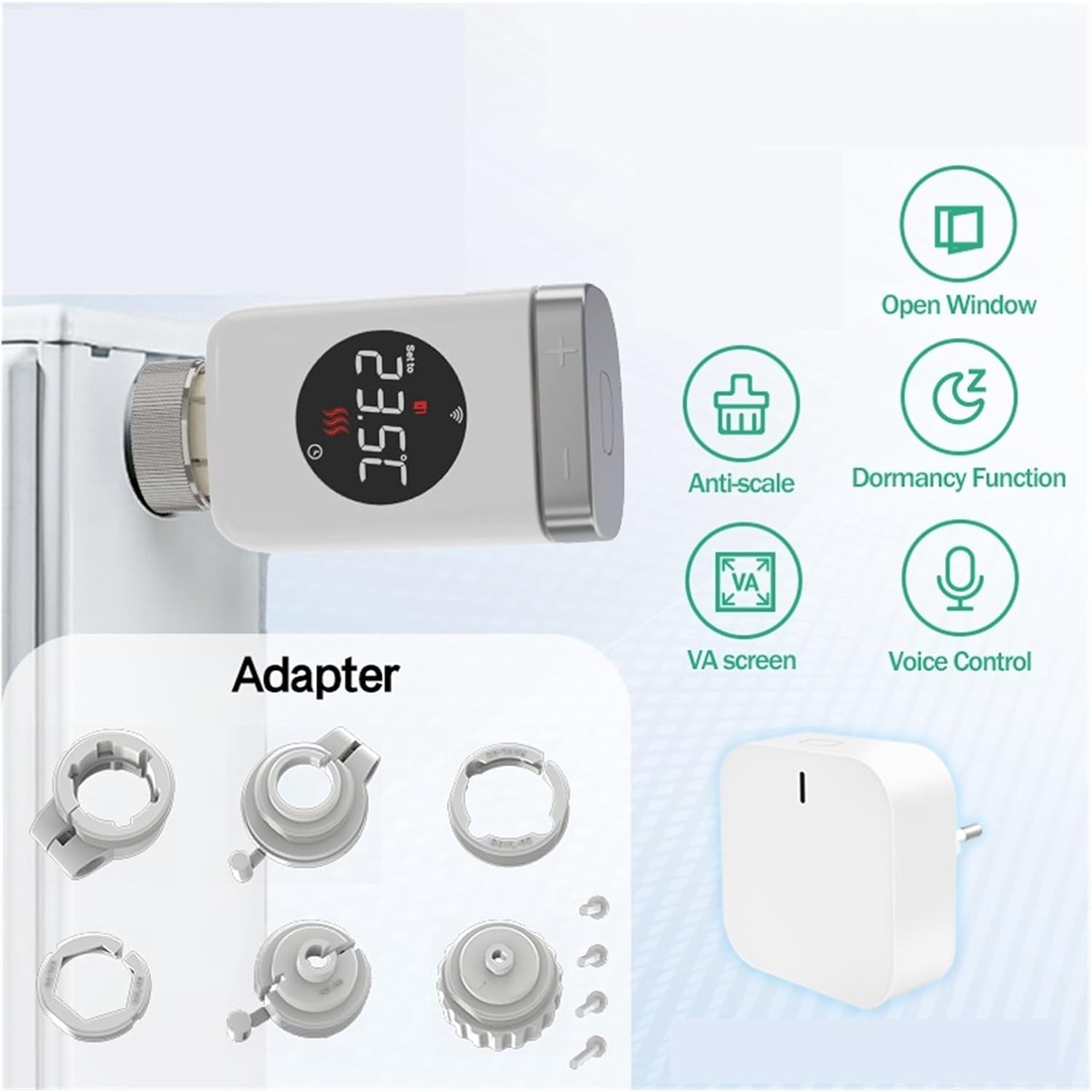
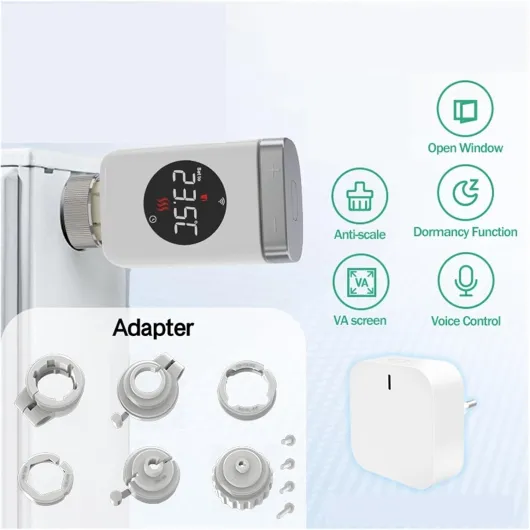
Design-wise, these TRVs are clearly built to be practical rather than pretty. The casing is plain white plastic, with a small screen and a couple of physical buttons. It doesn’t look terrible on the radiator, but you can tell it’s not from a big-name brand that spent time on aesthetics. If you care a lot about how things look in your living room, this is more "it blends in enough" than something you’d show off.
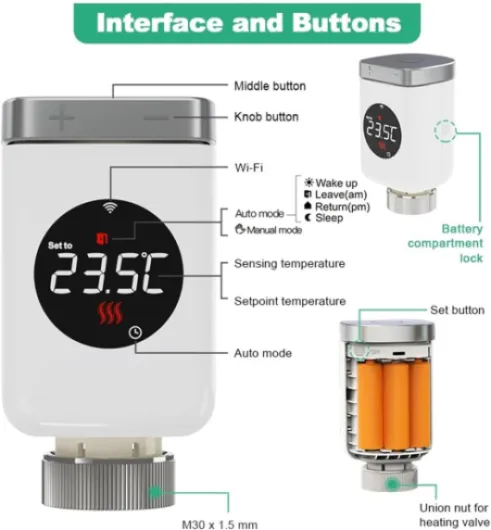
The display is basic but readable. You can see the set temperature, some icons for modes, and status indicators. The backlight is fine in a dim room, but in full sunlight it can be a bit hard to read unless you’re close. The buttons are small but clicky enough. They don’t feel premium, but they also don’t feel like they’ll fall off immediately. After a couple of weeks of regular use, there’s no wobble or weird creaking when pressing them.
One thing I did like: the compact size. Some smart TRVs are bulky and end up sticking out in narrow hallways, which you hit with your leg or vacuum cleaner. These are reasonably short, and on my radiators they didn’t get in the way. The diameter is also modest, so they don’t look cartoonishly oversized compared to the valve body.
On the downside, the overall design is clearly function-first. There’s no fancy rotating ring like some competitors, no color display, and the menu navigation through small buttons feels a bit dated. If you’re used to Nest or Tado-style interfaces, this will feel like going back a generation. But if you just want a simple physical interface and you’re okay tapping through a few modes, it does the job without major frustration, once you’ve memorized what each icon means.
Battery life and power: 3×AA, low drain so far
Each valve runs on 3×1.5V AA alkaline batteries, which are not included. Personally I prefer AA over built-in rechargeable batteries for this kind of product. If one dies in the middle of winter, I can just pop in new ones instead of waiting for a charge. I used decent brand-name alkaline batteries, not cheap no-name ones, to give it a fair chance.
After a few weeks of use with daily schedule changes and a fair amount of manual messing around during setup, the battery indicators still show full on all four valves. That’s a good sign, but obviously not a long-term verdict. Based on similar devices I’ve used, I’d expect something in the range of 6–12 months of battery life depending on how often your heating runs and how often the valve adjusts. The motor doesn’t move constantly, only when it needs to open or close more, so power consumption is quite low.
The product claims low power consumption, and from what I’ve seen so far, that seems accurate. There’s no weird drain, no random restarts, and no flickering display that would suggest power issues. Just make sure you actually use proper alkaline batteries, not old half-dead ones you find in a drawer, or you’ll blame the valve for what is basically bad batteries.
On the downside, there’s no rechargeable option or USB port, so if you hate dealing with disposable batteries, this will annoy you. Also, I didn’t see any very clear early battery warning beyond the standard icon, so you need to keep an eye on it or risk the valve dying in the closed or open position at some point. Overall though, for a battery-powered, no-wiring install, it’s pretty practical and I’d rather deal with AA batteries once a year than call a professional to run power cables to each radiator.
Build quality and durability: feels cheap but not fragile
In terms of durability, I’d say it feels like typical low-cost smart home gear: lots of plastic, but nothing obviously flimsy. The casing doesn’t flex or creak when you tighten it onto the radiator, and the threads engaged cleanly on my M30 valves. I tightened them firmly by hand and didn’t feel like I was about to crack anything. After a few weeks of heating cycles, there’s no loosening or wobble.
The product is rated IP20, which basically means "protected from fingers and not much else". So don’t expect it to survive water splashes or a very humid bathroom right above a shower. I did put one in my bathroom, but not directly in the splash zone, and so far it’s fine. I wouldn’t install it where it can be sprayed or dripped on. For normal living rooms, bedrooms, offices – no problem. Just treat it like any electronic device, not like a waterproof knob.
The buttons and the motor mechanism feel okay. I’ve had cheaper TRVs in the past where the motor started sounding rough after a few weeks; here, the sound stayed consistent. Of course I can’t predict how it will behave after 2–3 winters, but nothing so far screams "this will die soon". The CE and RoHS certifications at least show it’s passed some basic standards, though that doesn’t automatically mean long life.
If you have kids, the child lock function is handy. Once enabled, pressing buttons doesn’t change the settings, so you avoid the classic "why is the radiator suddenly at 28°C?" moment. The plastic doesn’t feel like it would survive being hit with a toy hammer, but for normal daily knocks or accidental bumps with a laundry basket, it seems solid enough. In short: budget feel, but acceptable robustness for the price, as long as you don’t expect tank-like build quality.
Performance and temperature control: decent, not ultra-precise
In daily use, the temperature control is decent but not surgical. I set the bedroom to 19°C at night and 21°C in the evening. The actual room temperature hovered between roughly 19–21.5°C according to a separate thermometer I trust. So it’s not perfectly locked on the target, but it stays in a comfortable range. For a budget TRV, I’m fine with that. If you expect 0.1°C precision, this isn’t it.
The valves react reasonably quickly when you change the set temperature via the app or directly on the unit. You hear the motor move the pin inside the valve within a few seconds. It’s not silent, there’s a small electric whirring noise when it adjusts, but it only lasts a short moment and I stopped noticing it after a couple of days. In a bedroom at night, it’s audible but not loud enough to wake me up.
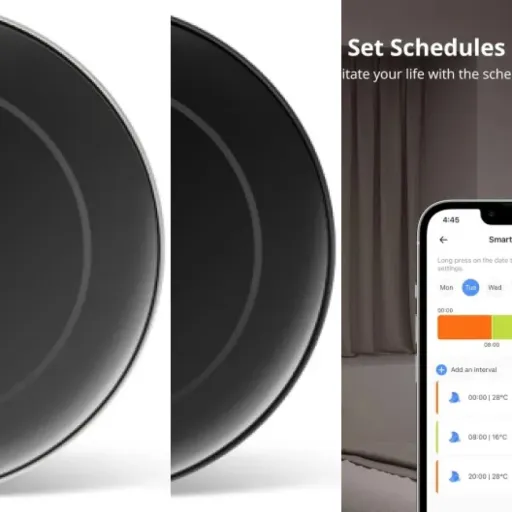
The weekly programming works, but programming directly on the device is a bit of a pain. It’s easier to set broad schedules (like day/night) than to fine-tune a lot of different time slots. Once you’ve set it up, it runs reliably though. My living room valve switched between eco and comfort modes at the right times every day, without random resets or weird behavior.
I tested the open window function by turning off the radiator, opening the window wide, and checking if it noticed the rapid drop. Sometimes it kicked in and reduced heating, sometimes it didn’t react as I expected. I’d call this feature "nice to have when it works" but not something I’d rely on. For basic performance – room gets warm when you ask, cools down when you lower the temp – it’s fine. For more advanced, automatic energy-optimizing behavior, it’s a bit hit-and-miss, which is what I’d expect at this price point.

What you actually get in the box
In the box you get 4 smart radiator heads, a basic manual, and that’s about it. No batteries included, which is clearly stated, but still slightly annoying when you want to set everything up right away. Each head is fairly compact: around 59.7×95.3×59.7mm, so it doesn’t stick out too much from the radiator. There’s a small display on the front and a few buttons for manual control and setup.
The valves are designed for M30×1.5mm and M28×1.5mm threads. The description says no extra adapters are needed, and in my case that was true for three radiators. On one older radiator I had to use an adapter I already had from a previous TRV, but that’s more about my plumbing than the product. If your valves are standard modern ones, chances are it’ll screw on directly. Just be ready with some pliers and a towel for grip if your old heads are stuck.
The manual is… usable but not great. The English is understandable but a bit rough, and some steps are not super clear if you’ve never installed a TRV before. I had to re-read the programming section twice and ended up testing things by trial and error. The app/voice control part isn’t explained in much detail either, you kind of have to guess which generic smart home app to use if the listing didn’t tell you.
In terms of claimed features, you get: weekly programming, child lock, open window detection, remote control via app, and voice assistant support. Nothing crazy or fancy, but a decent list for the price. You just have to accept that the experience feels more "budget gadget" than "high-end smart home". For someone used to big-brand thermostats, it’ll feel basic; for a first smart TRV setup, it’s acceptable once you get over the learning curve.
Pros
- Very affordable way to add smart control to multiple radiators at once
- Decent temperature control with weekly programming and child lock
- Battery-powered (3×AA) with simple, no-wiring installation and support for common M30/M28 threads
Cons
- Interface and manual are clunky and not very user-friendly, setup can be confusing
- Build feels cheap and IP20 rating means no real protection against moisture
Conclusion
Editor's rating
After living with these CKAFZMYJQBT TRV801Z smart radiator valves for a while, my opinion is pretty straightforward: they work, but they feel budget. Temperature control is decent, the app connection does what it needs to, and the weekly schedule runs reliably once you’ve set it up. The build is mostly plastic but doesn’t feel like it will fall apart right away, and battery usage seems low so far. It’s basically a functional smart TRV set without any real polish.
I’d recommend this pack to people who want to equip several radiators cheaply, are okay with a slightly clunky interface, and don’t mind digging through a basic manual and app settings. If your goal is to stop heating empty rooms and get some control room by room without spending a fortune, it gets the job done. On the other hand, if you hate fiddling with settings, want slick apps, and prefer known brands with strong support, you should probably skip this and pay more for a more established system.