
Summary
Editor's rating
Value for money vs Tado and other brands
Design, size and day-to-day handling
Battery life and power quirks
Build quality, mounting and long-term feel
Heating control, noise and how it behaves in real life
What this valve actually does (and what you need around it)
Pros
- Works very well with Home Assistant, Zigbee2MQTT and ZHA once paired correctly
- Metal valve connector and multiple adapters give a solid, flexible fit on most radiators
- Good price compared to premium brands, making multi-room setups more affordable
Cons
- eWeLink app is clunky, with frequent command failures and unreliable firmware updates
- Motor noise and bright display can be annoying in bedrooms, especially at night
- Temperature sensor near the radiator needs calibration or external sensor for accurate room control

Specifications
View full product page →| Brand | SONOFF |
A budget smart TRV that’s great if you already live in Zigbee land
I’ve been running the SONOFF Zigbee Thermostatic Radiator Valve (TRVZB) on a couple of radiators for a while now, mainly in a bedroom and an office. I already use SONOFF stuff (switches, sensors, a hub), so this was a logical next step to cut heating costs room by room. I didn’t go into it expecting premium Tado-level polish; I just wanted something that talks Zigbee, works with Home Assistant, and doesn’t eat batteries every month.
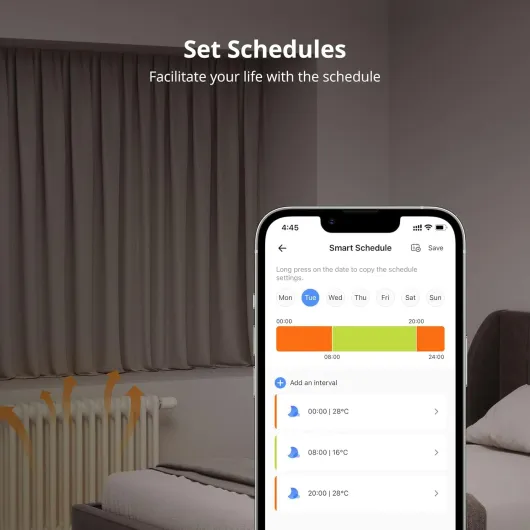
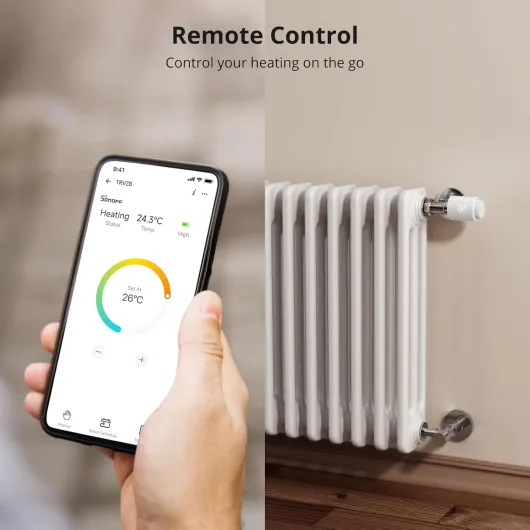
In day-to-day use, it’s basically what I expected: technically solid on the hardware/Zigbee side, but rough around the edges on the app side. If you’re into Home Assistant, Zigbee2MQTT, or ZHA, it’s pretty easy to make it do what you want. If you plan to just plug it into eWeLink and forget about it, the experience is more hit and miss, especially when you start playing with schedules and remote control from the app.
The other thing to know is that this is not a tiny valve. It’s not massive, but on radiators close to a wall you really need to measure the clearance. On one of my rads, the body clears the wall by about 1 mm, exactly like one of the Amazon reviews said. So it fits, but it’s tight. Also, the motor and the backlight are noticeable in a dark, quiet bedroom, so if you’re very sensitive to noise or light at night, that’s something to keep in mind.
Overall, it feels like a smart TRV that’s great value if you’re a tinkerer and already have a Zigbee hub or Home Assistant. If you want something that just works out of the box with a slick app and no fiddling, this probably isn’t it. It does the job, but you have to be ready to deal with some quirks and a slightly clumsy app interface.
Value for money vs Tado and other brands
Price-wise, the SONOFF TRVZB sits in the lower to mid range of smart TRVs. It’s definitely cheaper than Tado, Netatmo and similar big names, especially if you want to equip several radiators. That’s basically why I picked it: I wanted to smarten up multiple rooms without dropping a fortune. On that front, it delivers decent value if you’re ready to do a bit of setup work yourself, especially with Home Assistant or Zigbee2MQTT.
Where the value drops is if you expect a smooth, polished ecosystem out of the box. The eWeLink app is fine for simple stuff, but several people (and I’m in that camp) have had issues with saving schedules, changing temperatures remotely, or doing firmware updates. You sometimes get the lovely “failed, please try again” message, and the valve then acts like a dumb manual TRV. At that point, the cheaper price doesn’t feel so attractive. Compared to Tado, the difference is clear: Tado costs more, but the app is cleaner, the UX is better, and updates tend to work.
For a Home Assistant user though, the story is different. With Zigbee2MQTT or ZHA, this thing is a pretty solid budget option. It pairs, exposes useful entities, and lets you do real automations: room-by-room schedules, window/contact sensor logic, energy-saving scenes, etc. If you already paid for a Zigbee hub or run a smart home server, you’re basically just paying for the hardware, not a subscription or a locked-in platform.
So in terms of value: if you’re a tinkerer or already invested in SONOFF / Home Assistant, it’s good value for money and gets the job done. If you want something plug-and-play with a top-tier app and don’t want to fight with firmware or error messages, spend more and go for a higher-end brand. You’ll pay 2–3× more per valve, but you’ll also save yourself a fair bit of annoyance.
Design, size and day-to-day handling
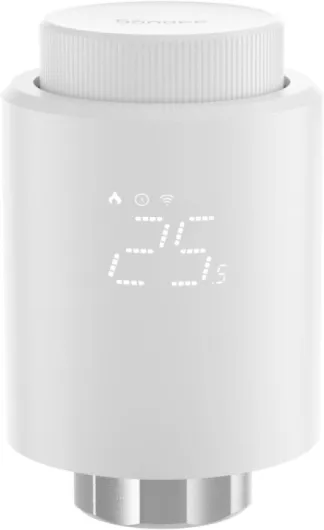
Physically, the TRVZB is a white, round-ish plastic body with a clean look. It’s not fancy, but it doesn’t look cheap once installed. The LED display shines through the plastic, which I actually like more than those old-school black LCD screens. You see the set temperature, some icons for mode, and that’s about it. On top you’ve got a dial/button you turn to adjust the temperature manually, which is handy for guests or family members who don’t want to open an app.
Size-wise, it’s not the slimmest TRV out there. On my living room radiator (plenty of space), it looks fine. On a bedroom radiator close to the wall, it’s very tight. I had roughly 1–2 mm of clearance between the body and the wall, so if your radiator valve is already almost touching the wall, double-check before buying. That said, I like that the metal connector sits close to the valve without a long plastic neck like some other models; it feels sturdier and less likely to flex if someone bumps it.
One thing to flag: the backlight and motor noise. In a bright room, you don’t notice the light at all. But at night, when the room is dark, the display lights up every time the valve moves or you interact with it. Same with the motor: it’s not crazy loud, but in a silent bedroom you definitely hear it when it opens or closes more. On my office radiator, I don’t care. In the bedroom, it woke me up once or twice when it decided to adjust in the middle of the night for no obvious reason.
Overall, I’d say the design is practical and decent-looking, but not discreet. It’s easy to read, easy to turn, and the child lock is mandatory in kids’ rooms because the top dial is very easy to knock and change the temperature. If you want something tiny and invisible, this isn’t it. If you just want something that doesn’t look like a total brick and is simple to use on-device, it does the job.
Battery life and power quirks
The valve runs on 3× AA batteries at 4.5 V. SONOFF doesn’t include any batteries in the box, which I actually don’t mind; I’d rather choose my own than get some cheap no-name cells. I used long-life alkaline in one valve and lithium in another. With decent batteries, you’re looking at several months of operation, depending on how often the valve moves and how chatty your Zigbee network is. I haven’t killed a set yet, but after a few months the reported level started to drop slowly, nothing dramatic.
A couple of things I noticed: don’t cheap out on batteries. With low-quality or half-used AAs, the valve can act weird, especially during pairing or calibration (more noise, failed pairing attempts, or random disconnects). I also wouldn’t use low-voltage rechargeables unless you know what you’re doing; some people report flaky behavior with them in TRVs in general, not just this one. Given the price of the valve, it’s not worth trying to save a few cents on power.
Battery changes are straightforward: twist off, swap the three cells, and it reboots and recalibrates. The downside is it’s one more thing to remember if you have several of these in the house. In a big setup with many valves, you’ll probably want some automation or reminder when battery level drops below a certain threshold, otherwise you’ll end up with one radiator stopping randomly in the middle of winter because the batteries gave up.
Overall, I’d call the battery situation acceptable but not mind-blowing. It’s in line with other motorised TRVs I’ve used. If you use it heavily (lots of temperature changes, frequent window detection events, etc.), you’ll burn through batteries faster. If you keep schedules simple and don’t constantly fiddle with the temperature, you’ll probably get close to what SONOFF implies in their marketing — something like a season or so on a decent set of AAs.
Build quality, mounting and long-term feel
From a build perspective, the body is plastic but doesn’t feel flimsy. The important part for me is the metal M30 connector at the bottom. A lot of cheaper TRVs use plastic there, and that’s the bit that actually clamps onto your valve. Having metal gives more confidence that it will survive being bumped or over-tightened. Once it’s on, it sits firmly and doesn’t wobble. I’ve removed and refitted one a couple of times to swap radiators, and the threading still feels clean.
The included adapters are handy if you don’t have standard M30 valves. I only needed the bare M30 on my radiators, but I tried fitting one of the adapters just to see, and it grabbed fine. The important thing is to take your time, hand-tighten properly, and not cross-thread anything. If you rush it, you can absolutely mess up the plastic adapters. Once installed correctly, I haven’t seen any leaks or movement. It just sits there and does its job.
On durability of the electronics and motor, it’s harder to judge long-term, but I’ve seen one running for around two years in a friend’s place via Home Assistant without dying. The Amazon reviews are mixed on firmware updates, though: some people can’t update at all and get errors in the app, which doesn’t scream long-term software support. The hardware seems fine; the software/firmware side feels a bit neglected in comparison.
If you compare it to something like Tado: Tado feels more polished in hand and in software, but you’re also paying a lot more. With SONOFF, you’re getting “good enough” build quality for the price. I haven’t seen any cracks, yellowing, or obvious wear so far. I’d just be cautious about relying on future firmware updates to fix issues; buy it for what it does today, not what it might do in a year.
Heating control, noise and how it behaves in real life
In terms of pure performance, the valve does what it’s supposed to do: it opens and closes the radiator based on the target temperature and responds to commands pretty quickly. With Home Assistant and Zigbee2MQTT/ZHA, I found it very responsive — when I changed the temperature in the UI, the valve reacted within a couple of seconds and you hear the motor moving. Compared to a basic manual TRV, the control is obviously much more precise since you can target specific temperatures and build automations around them.
The built-in temperature sensor is decent but not perfect. Like all TRVs, it’s sitting right next to the radiator, so it reads a bit higher than the middle of the room when the radiator is hot. In my daughter’s bedroom, the TRV showed around 22–23°C while a sensor on the opposite wall said 20–21°C. That’s normal, but it means if you want proper comfort, you either calibrate it or you use an external room sensor and let Home Assistant or the eWeLink app drive the valve based on that. Once I did that, the results were much better and the room stayed more stable.
Noise-wise, it’s in the middle. Some people say it’s quiet; others say it’s annoying. My impression: in the day or in a living room, it’s fine. At night, in a silent bedroom, you do hear the motor when it does a bigger adjustment. It’s not constant, just when it moves. The other odd thing is the random-seeming adjustments during the night with the official app: sometimes it wakes up, moves a bit, and lights up even though there’s no obvious schedule change. With Home Assistant schedules, this felt more under control, but via eWeLink it sometimes behaved in a way I couldn’t fully explain.
Window detection technically works (it reacts to a sudden drop in temperature), but in practice I stopped relying on it. A cold draft from an open door can also fool it, and I prefer using a separate contact sensor on the actual window to shut off the valve. So performance overall: good for heating control and responsiveness, average for built-in temperature accuracy, and a bit annoying at night if you’re a light sleeper.
What this valve actually does (and what you need around it)
On paper, the SONOFF TRVZB is a battery-powered Zigbee 3.0 thermostatic radiator valve that you screw onto an existing M30 x 1.5 radiator valve. It comes with a bunch of adapters (CAL, RAVL, RAV, M28, GIA, plus duplicates) so it should fit most standard European radiators. Important detail: it does NOT come with batteries. You need 3× AA, and if you want decent battery life, use good quality alkaline or lithium, not cheap rechargeables.
It talks Zigbee, not Wi‑Fi, so you need a Zigbee hub or a system that acts like one. SONOFF pushes their own hubs (ZBBridge-P, ZBBridge-U, NSPanel Pro, iHost), but it also works with Home Assistant via ZHA or Zigbee2MQTT. If you’re using Alexa or Google Assistant, those don’t talk to the valve directly; they go through your hub or Home Assistant. Voice control works, but only if your smart home setup is already in place and configured properly.
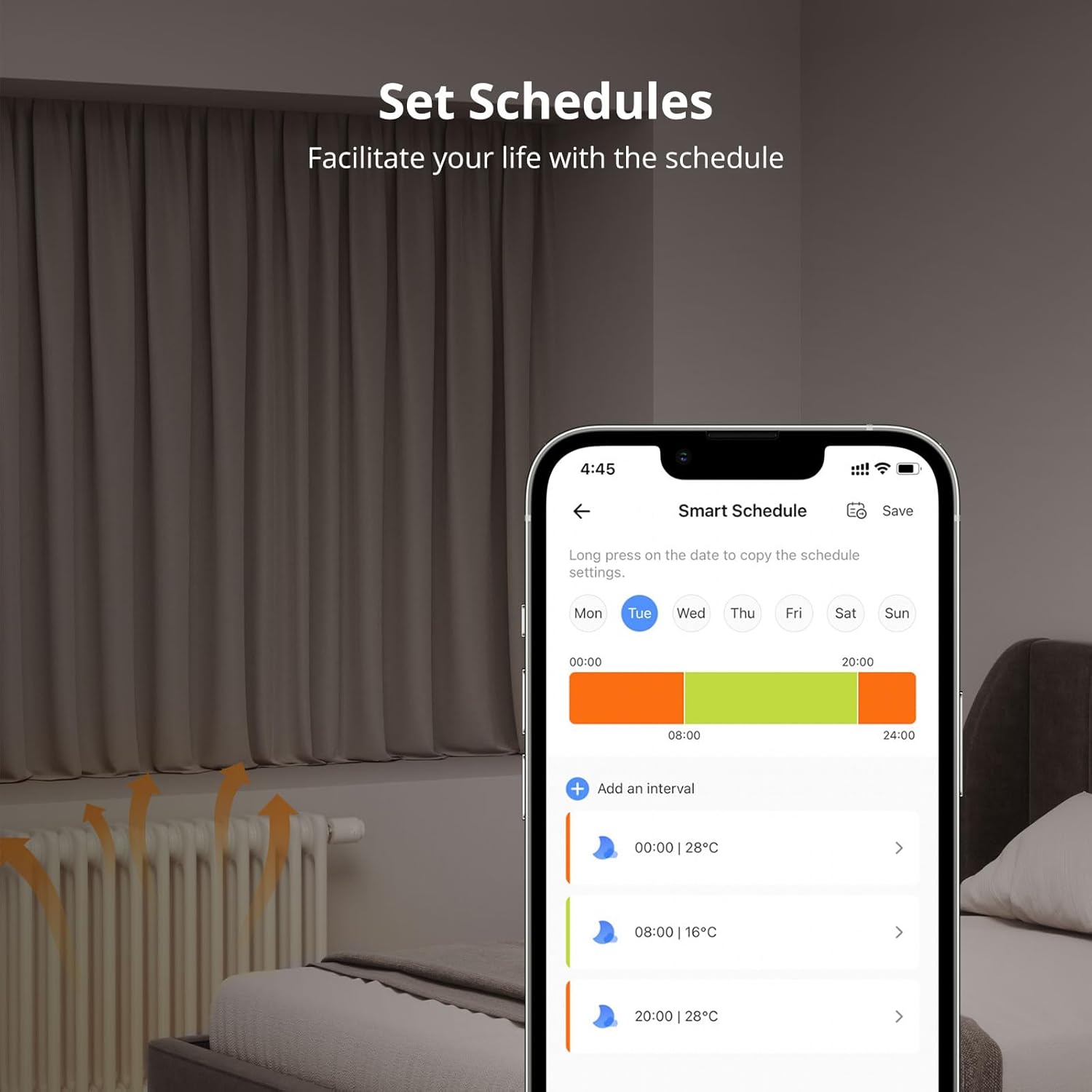
The valve supports 0–100% opening with 1% increments, window detection (it spots a fast drop in temperature and closes), historical data in the app, and basic safety stuff like frost protection and child lock. In practice, most people will use it for: set a target temperature, create schedules, group a few valves in the same room, and maybe shut them off when a window opens. All that is possible, but how smooth it is really depends on whether you’re using eWeLink or Home Assistant.
From my use, I’d describe it like this: hardware and Zigbee side = pretty solid for the price; official app side = usable but sometimes annoying. If you go in thinking it’s a cheaper Tado, you’ll be disappointed. If you go in thinking it’s a decent Zigbee TRV you can bend to your will with automations, it makes much more sense.
Pros
- Works very well with Home Assistant, Zigbee2MQTT and ZHA once paired correctly
- Metal valve connector and multiple adapters give a solid, flexible fit on most radiators
- Good price compared to premium brands, making multi-room setups more affordable
Cons
- eWeLink app is clunky, with frequent command failures and unreliable firmware updates
- Motor noise and bright display can be annoying in bedrooms, especially at night
- Temperature sensor near the radiator needs calibration or external sensor for accurate room control
Conclusion
Editor's rating
Overall, the SONOFF TRVZB is a good budget smart radiator valve for people who already have a Zigbee setup or Home Assistant and aren’t scared of a bit of tinkering. The hardware is decent, the metal connector is reassuring, and the valve reacts quickly to commands. It works well with Zigbee2MQTT and ZHA, and once you’ve set up your automations, it quietly controls room temperatures and helps you avoid heating empty rooms. For this price range, that’s already not bad.
Where it falls down is the software experience on the official side. The eWeLink app is usable but clunky, and several users (including me) have run into failed commands, firmware updates that won’t go through, and odd behavior like the valve moving and lighting up for no clear reason at night. In a bedroom, the combination of motor noise and bright display can get annoying. Compared directly to Tado or similar systems, you feel the difference in polish and reliability, especially if you rely only on the vendor app.
Who is it for? If you’re a Home Assistant user, or already running a SONOFF Zigbee hub, and you want cheap but functional room-by-room heating control, it’s a solid option. You’ll get the most out of it by pairing it with external temperature sensors and writing your own automations. Who should skip it? Anyone who wants a super smooth, app-first experience, or who is very sensitive to noise/light in the bedroom, should probably save up and go for something like Tado, even if it costs more. In short: good value for techy users, a bit frustrating for plug-and-play folks.