
Summary
Editor's rating
Is it good value for money?
Old-school look, but practical where it counts
Battery use and day-to-day hassle
Build quality and how sturdy it feels
How it actually controls the heating day to day
What you actually get in the box
Pros
- Reliable wireless link and solid temperature control with TPI and optimum start/stop
- Clear, large LCD screen with backlight and straightforward physical buttons
- Good value for money compared to full smart thermostats, with flexible 7-day/5-2/24h scheduling
Cons
- Interface and menus feel dated and a bit clunky to program at first
- Some listings mention Wi‑Fi/app control which doesn’t match the real, basic feature set

Specifications
View full product page →| Brand | WeaShaemgLi |
A budget wireless thermostat that actually works
I put this ESI ESRTP4RF+ wireless thermostat in place of an old, basic wall stat that came with the boiler. I was mainly looking for two things: being able to move the thermostat to a better room, and setting proper schedules so the heating wasn’t kicking in randomly. I didn’t want a fancy smart-home system, just something simple that wouldn’t cost a fortune or need a subscription.
From the start, this thing feels like a very practical product: no flashy app ecosystem, no voice assistant gimmicks, just a wireless programmable thermostat and a receiver that talks to the boiler. The pairing was already done out of the box, which is nice because I hate menu diving just to get basic stuff running. Once it was on the wall and powered, it pretty much worked straight away.
I had it running for a couple of weeks before writing this, through a mix of cold evenings and milder days. In that time I played with the 7‑day programming, manual override, and the different modes like optimum start/stop. I also tested how stable the wireless connection was by moving the thermostat around a normal-sized house with brick walls and a floor in between.
Overall, my impression is that it’s a practical, budget-friendly controller that suits most standard boilers. It’s not perfect – the interface is a bit old-school and the documentation is just okay – but for basic home heating control, it does the job without drama. If you want deep app control and graphs, this isn’t it. If you just want your boiler to behave better, it’s a pretty solid option.
Is it good value for money?
Price-wise, this thermostat sits in the budget to mid-range area. It’s cheaper than big-name smart thermostats like Nest or Hive, but more than the ultra-basic mechanical dials. For what you pay, you get wireless control, solid temperature management, and proper scheduling options. If you just want the heating to follow a routine and be able to move the stat to the room you actually use, the value is pretty strong.
Where it really makes sense is if you’re comparing it to paying for a full smart system with internet control and app dashboards. If you don’t care about tweaking your heating from the office or watching usage graphs, there’s no point in spending double or triple. This ESI unit gives you the core functionality – good scheduling, wireless placement, better comfort – without the extra cost or complexity. That’s why a lot of landlords and heating engineers go for it: it’s good enough for most people, and it doesn’t confuse them.
The downside is that some listings mention Wi‑Fi and app control, which can be misleading. In real use, this behaves like a normal wireless programmable stat, not a full cloud-connected device. So if you bought it expecting to control it from your phone, you’d be disappointed. For the money, I would have liked a slightly more modern interface, maybe clearer menus, but that’s nitpicking given the overall price point.
Overall, I’d call the value good. It’s not a bargain bin toy, but it’s affordable and does its job reliably. If you already have an engineer coming to fit or replace a boiler, adding this on top is a fairly small extra cost for a decent comfort upgrade. If you’re on a tight budget and don’t need app features, it’s a sensible choice.
Old-school look, but practical where it counts
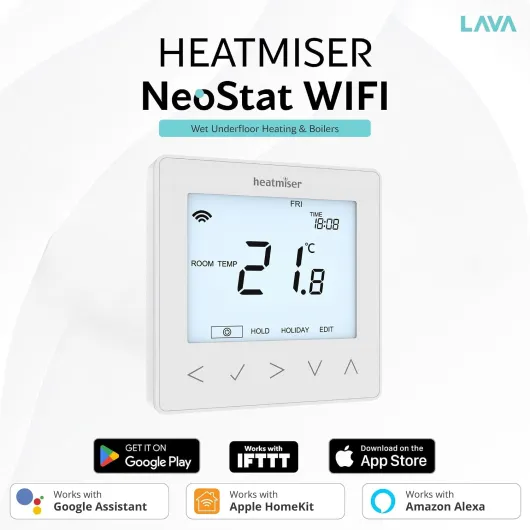
Design-wise, this thermostat is plain and functional. It’s a white plastic box with a big LCD and some buttons. If you’re expecting a sleek glass panel or something that looks like a smartphone on the wall, this is not that. It looks like a typical heating control you’d see in rental properties or standard homes – nothing stylish, but it blends in and doesn’t shout for attention.
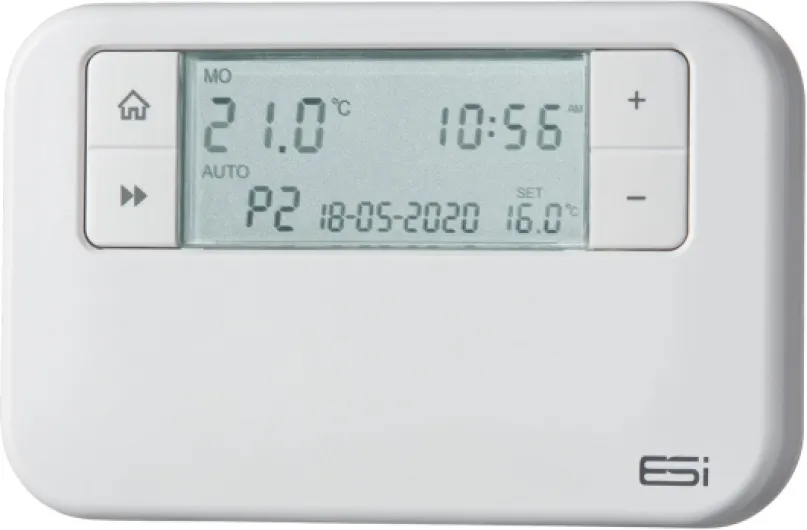
The good part is the layout is logical. The screen clearly shows the room temperature, set temperature, and mode. The buttons are physical and have a decent click, so you always know when you’ve pressed something. There’s no touch interface, which I actually like for this kind of product because you can use it with cold hands, in low light, and without hunting for invisible touch spots.
The blue backlight is useful. It comes on when you press a button, and it makes the display easy to read at night. It’s not the prettiest backlight, but it’s functional. The digits are big and bold, and older eyes should manage fine. Compared to some cheap stats with tiny fonts and bad contrast, this one is clearly better in everyday use.
One minor downside is that the menu system feels a bit dated. You scroll through options and settings with buttons instead of anything more intuitive. Once you’ve set up the schedules you probably won’t dive into the menus often, but the first setup can feel a bit like programming a 90s alarm clock. Still, for the price, I’d rather have a boring but reliable design than a fancy one that’s confusing or fragile.
Battery use and day-to-day hassle
The thermostat runs on 2x AA batteries, which is pretty standard. In my time using it, the battery level barely moved, and other owners mention they get many months, often over a year, out of a set of decent alkaline batteries. So you’re not constantly swapping them out. There’s a low battery warning on the screen, so it shouldn’t just die on you with no sign.
What I like is that the thermostat doesn’t chew through batteries with gimmicks. No always-on bright screen, no Wi‑Fi connection constantly pinging the router. It’s a simple radio link and a basic LCD, so the power draw is low. If you use good-quality batteries (Duracell, Energizer, or even a decent supermarket brand), you’re probably looking at changing them once a year or so, depending on how often you fiddle with settings and backlight.
There’s no built-in rechargeable battery or USB charging, but honestly, for this kind of device, AA batteries make more sense. If one dies, you just grab new ones from a drawer. No waiting for it to charge or worrying about some proprietary battery pack failing after a few years. The battery compartment is easy to access; you don’t need tools or to unmount the whole unit from the wall just to swap them.
So on the battery front, it’s pretty low-maintenance. Not exciting, but that’s kind of the point: you install it, put in two batteries, and then forget about it for a long time. If you hate devices that constantly nag you for power, this one is fairly quiet and cheap to keep running.
Build quality and how sturdy it feels
The build quality is decent but basic. The plastic casing feels light, not premium, but it doesn’t feel like it’s going to fall apart either. The buttons have a firm click, and the screen is well seated with no weird flex or creaking when you press on it. This is clearly designed as a practical bit of kit for normal homes and rental properties, not as a design object.
The receiver is a simple box that usually sits by the boiler and never gets touched once it’s wired. That’s probably why it feels a bit more solid – it’s meant to be installed and forgotten. The terminals inside are standard and the backplate is a common pattern that a lot of heating engineers recognise, which makes it easier to swap if another ESI or similar unit is installed later. From a durability point of view, fewer weird custom parts is a good thing.
I’ve seen cheaper wireless stats where the battery cover is flimsy or the stand is wobbly. This one is okay in that department. You can wall-mount the thermostat or sit it on a surface, and it doesn’t feel like it’ll tip over if you brush past it. The plastic will scratch if you’re rough with it, but once it’s in a normal place and you’re just pressing buttons occasionally, it should last years.
There’s a 3-year manufacturer warranty, which gives a bit of confidence. Heating engineers in reviews say they keep these in the van and use them regularly, which usually means they’ve seen enough of them in the wild to trust they don’t fail every five minutes. It’s still a budget controller, so I wouldn’t expect it to survive being dropped down the stairs or smashed by a door, but in normal use, it feels solid enough for long-term use.
How it actually controls the heating day to day
In daily use, the temperature control is pretty precise. I set it to 20°C in the main living area, and it held within about half a degree most of the time. The built-in TPI control means the boiler cycles on and off in shorter bursts rather than just slamming on full until it overshoots. You notice fewer big temperature swings compared to basic on/off wall stats. The house feels more stable, and the boiler doesn’t hammer on and off as harshly.
The wireless connection between thermostat and receiver was solid in my case. I had the receiver by the boiler downstairs and the thermostat upstairs in a bedroom and later in the living room. No dropouts, no random fails. The range seems fine for a normal UK house with brick walls and one floor between. I didn’t need to re-pair it at any point; it just worked. That matches what a lot of heating engineers say: ESI wireless kits are usually reliable on the radio side.
The scheduling is flexible enough for most people. Being able to choose between 7-day (different each day), 5/2 (weekdays/weekend), or 24-hour (same every day) is handy. I used 5/2 because my weekday routine is different from weekends. You can set multiple heating periods per day (4 or 6), which covers morning, daytime, evening, and night if you want. Programming it is a bit of a chore the first time, but once it’s done, you rarely touch it. The manual override is straightforward: if you’re cold, you bump it up and it runs until the next programmed change.
Overall, in terms of pure performance, it does what it’s supposed to do: it turns the boiler on and off at the right times and keeps the temperature stable. It’s not smart-home level with apps and remote control, despite what some listings say about Wi‑Fi and Bluetooth – in practice, this is a standard wireless stat, not a full-blown smart thermostat. If you’re okay with that and just want reliable heating control, it performs well for the price.
What you actually get in the box
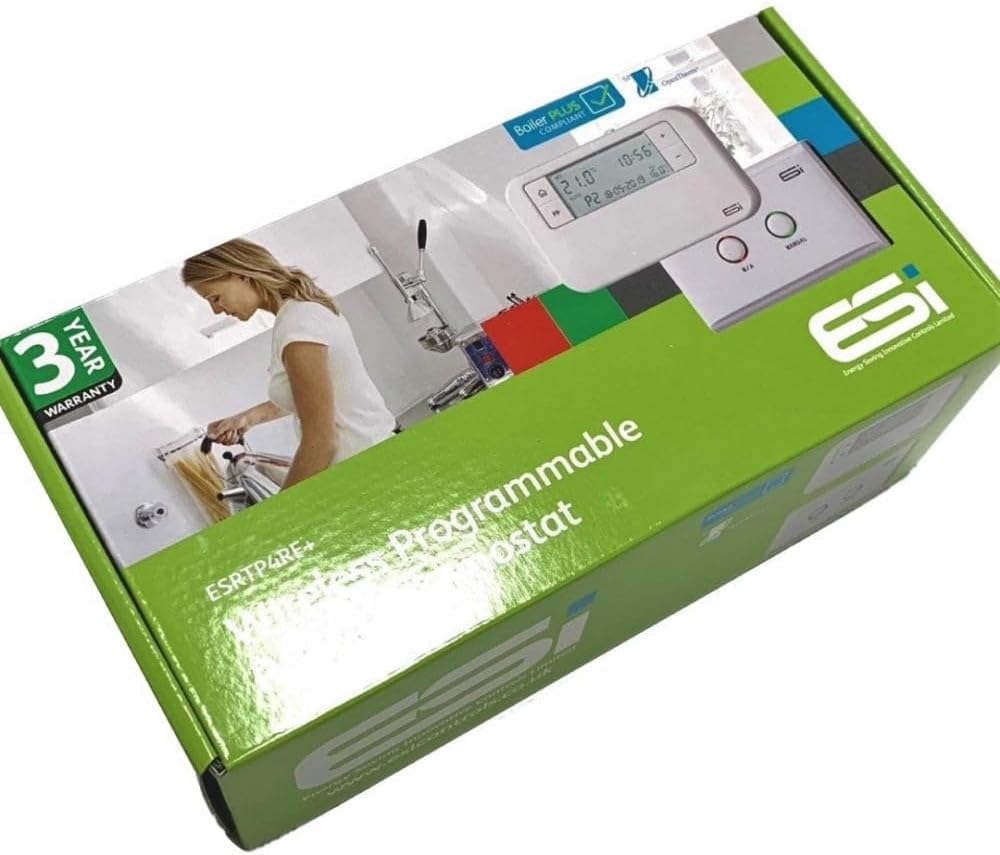
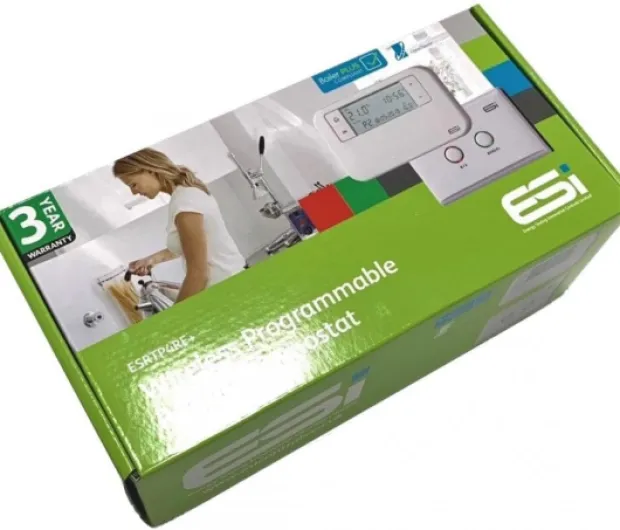
In the box you get two main pieces: the receiver (the bit that wires into your boiler) and the wireless thermostat unit that you carry or wall-mount in the room. That’s it, plus a basic set of screws and some paperwork. No fancy extras, no unnecessary accessories. The thermostat takes 2x AA batteries (not always included, so assume you’ll need your own). The receiver is mains powered through the boiler wiring.
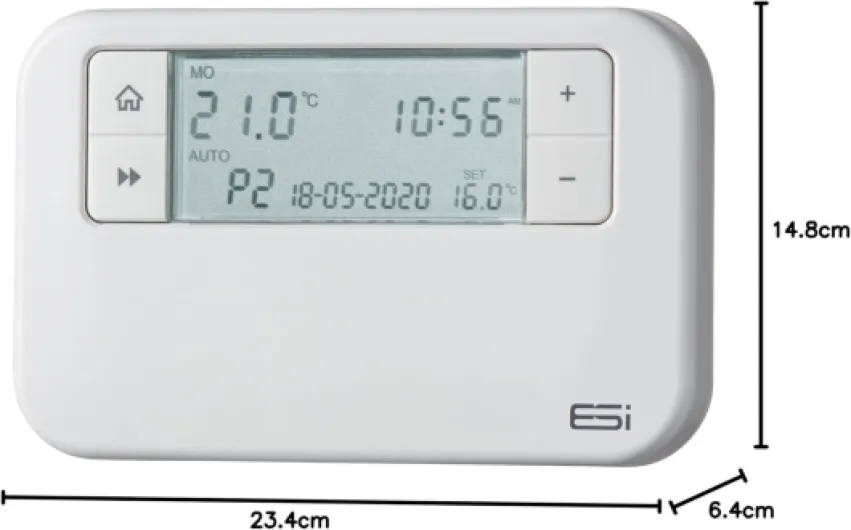
The thermostat itself has a large LCD screen with a blue backlight, a few physical buttons on the front, and a simple plastic shell in white. The screen is big enough that you can read the temperature from across the room without squinting, which is something a lot of cheaper stats mess up. The backlight is handy at night, and it’s not too bright or annoying. The receiver is a plain white box that sits near the boiler; you won’t be admiring it, but you also won’t really see it after day one.
Feature-wise, it covers the basics plus a bit more: you can choose 7‑day, 5/2, or 24‑hour operation, and you can have 4 or 6 time/temperature events per day. It has auto, manual, override and off modes, plus some energy-saving bits like optimum start/stop and TPI control (basically smarter cycling to avoid overshooting and to run the boiler more efficiently). It’s clearly built more for function than style, which is fine for this price range.
On the paperwork side, the manual is okay but not brilliant. The wiring diagrams are there, but if you’re not used to boiler wiring, you’ll probably want a heating engineer or electrician to do the install. A lot of reviewers say the same: the product is straightforward, but you still want someone qualified for that part. Once it’s wired, the rest of the setup is manageable for a normal user with a bit of patience.
Pros
- Reliable wireless link and solid temperature control with TPI and optimum start/stop
- Clear, large LCD screen with backlight and straightforward physical buttons
- Good value for money compared to full smart thermostats, with flexible 7-day/5-2/24h scheduling
Cons
- Interface and menus feel dated and a bit clunky to program at first
- Some listings mention Wi‑Fi/app control which doesn’t match the real, basic feature set
Conclusion
Editor's rating
The ESI ESRTP4RF+ is a practical, no-nonsense wireless thermostat. It doesn’t try to be a full smart-home hub, and it doesn’t look fancy, but it controls the boiler reliably, keeps the temperature steady, and lets you put the thermostat in the room that actually matters. The screen is clear, the wireless link is stable, and the programming options cover most normal routines.
It’s best suited for people who want simple, reliable heating control without the tech circus. If you’re upgrading from an old wall stat or kitting out a rental, it hits a good balance of features and price. Heating engineers seem to like it because it’s easy to keep a few in the van, the backplate is standard, and once it’s in, tenants or owners can figure it out without a long lesson.
If you’re into smart homes, want phone control, or care a lot about sleek design, this will feel a bit basic and dated. The interface is old-school, the plastic is nothing special, and there’s no real app integration despite what some specs suggest. But if your priority is “set it, forget it, and stop the boiler wasting gas”, this thermostat gets the job done for a fair price.