
Summary
Editor's rating
Value for money: good if you’re already in Bosch, pricey if you start from zero
Design: looks clean on the wall, stand is a bit pointless
Build quality and durability: feels solid enough, but it’s still plastic
Performance: stable temperature, but hysteresis might annoy picky users
Connectivity and smart features: good with Bosch, decent with Alexa/Google, tinkery with Home Assistant
What you actually get and how it fits in a real setup
Effectiveness in daily life: does it actually keep you comfortable?
Pros
- Stable and accurate temperature control for wired and underfloor heating
- Clean integration with Bosch Smart Home Controller, Alexa, and Google Assistant
- Simple, clear interface with rotary knob and LED matrix display
Cons
- Requires Bosch Smart Home Controller hub for smart features, adding to the overall cost
- 230 V wired install is not plug-and-play and needs existing wiring or an electrician
- Default hysteresis can be too tight for direct boiler control in DIY/Home Assistant setups

Specifications
View full product page →| Brand | Bosch |
A smart thermostat that’s actually quite boring – in a good way
I’ve been using the Bosch Smart Home Room Thermostat II (230 V, wired / underfloor heating version) for a few weeks on a wired underfloor loop in my living room. I wasn’t looking for some futuristic gadget, just something that keeps the room at the right temperature, works with my phone, and doesn’t freak out my boiler every five minutes. In that sense, this thing is pretty much what it says on the box: a wired smart thermostat that talks to the Bosch hub and can be poked by Alexa or Google Assistant.
The first thing to understand: this is not a standalone thermostat. You need a Bosch Smart Home Controller (the hub) if you want any smart features. Without it, it’s basically a nice-looking wall thermostat with basic control. So if you’re not already in the Bosch ecosystem or planning to go there, you’ll probably find this less attractive from the start, especially compared to Wi‑Fi thermostats that connect directly to your router.
In daily use, it’s been pretty straightforward. The app setup went smoothly, schedules are easy enough to create, and the thermostat has been holding the room temperature fairly close to what I set, without big swings. I paired it with other Bosch heating bits, and it plays nicely with them. Voice control with Alexa works, but in reality I mostly just let the schedules run and ignore it unless I’m cold and bump it up a degree.
It’s not perfect though. The price stings a bit once you add the hub, and the wired 230 V requirement means it’s not just “stick it on the wall and go” unless you already have the cable where you want it. Also, some of the advanced stuff (like deadband / hysteresis tuning if you’re picky) needs tinkering or Home Assistant. Overall, it’s a solid, slightly boring workhorse: not flashy, but it does the job and fits well if you’re already in Bosch Smart Home land.
Value for money: good if you’re already in Bosch, pricey if you start from zero
On the value side, this thermostat sits in that slightly awkward spot where the hardware itself is decent, but the total cost can climb once you factor in everything you need. The thermostat alone is not dirt cheap, and you also need a Bosch Smart Home Controller (or Controller II) to use the smart features. If you’re coming from a totally dumb setup with no hub, by the time you buy the controller plus this thermostat, you’re in the same price territory as some big-name smart thermostats that connect directly to Wi‑Fi and give you a full solution out of the box.
Where the value starts to make sense is if you’re already invested in Bosch Smart Home. If you have the hub and maybe some Bosch radiator thermostats or window sensors, adding this unit as a room thermostat is a logical upgrade. It lets you put the control point where you actually sit, link multiple radiators or underfloor circuits, and manage everything from one app. In that context, the price feels more reasonable because it’s extending an existing system rather than starting a new one from scratch.
One Amazon user mentioned dropping a star just for the price, and I get that. It’s not outrageously overpriced, but it’s also not a bargain. You’re paying for the Bosch ecosystem, the decent build quality, and the integration. If you’re on a tight budget and just want basic programmable control, cheaper standalone thermostats exist that will do 80% of the job for less money, just without the smart home bells and whistles.
So for value, I’d call it good but not spectacular, heavily depending on your situation. If you already have Bosch gear and want a clean, integrated room thermostat for wired or underfloor heating, the price is acceptable. If you’re starting from zero or only want one smart thermostat with no hub, there are more cost-effective options that might fit you better.

Design: looks clean on the wall, stand is a bit pointless
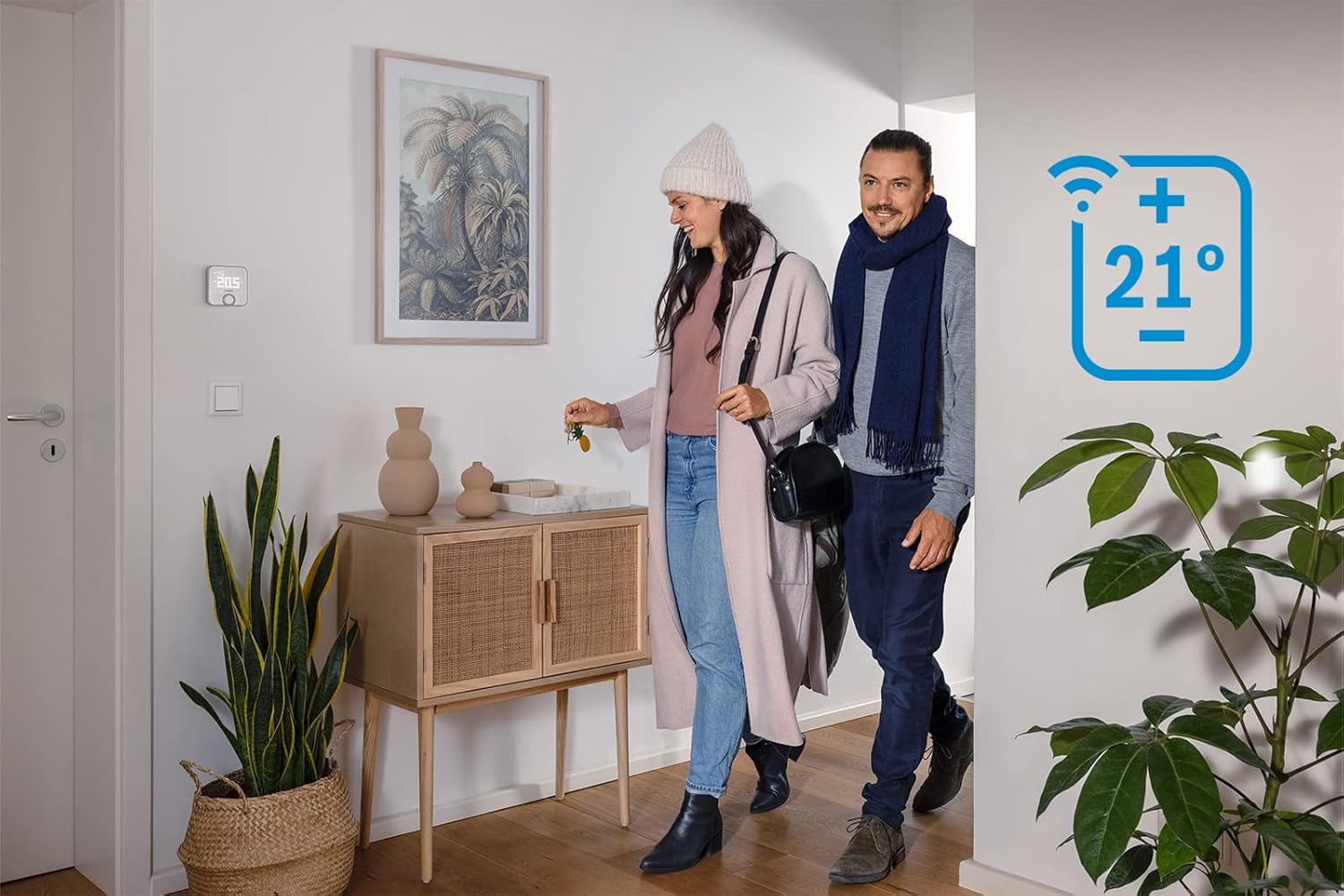
Design-wise, Bosch went for the usual modern white square look. It’s a small unit (about 8.6 x 8.7 cm, 3.4 cm deep), plastic, and fairly neutral. On the wall, it doesn’t scream for attention, which I like for a thermostat. The front is very simple: a rotary/push knob and an LED matrix that lights up to show the temperature, humidity, and icons. It’s not some high-res color screen, but for a thermostat, I don’t really need that. The display is readable from normal distance and has backlight, so you can see it in the dark.
The rotary knob is actually the main physical control. You turn it to adjust the target temperature and push to confirm. It’s a familiar, old-school way of using a thermostat, just with a digital readout. It feels okay, not super premium, but not cheap either. The click feedback is decent. I’ve had cheaper thermostats where the knob felt wobbly; this one feels more stable. If you have older folks in the house who hate apps, this kind of control is easy for them to understand.
One of the user reviews mentioned the stand being a bit rubbish, and I agree. While Bosch calls the device “portable” in the specs, in reality it’s a wall-mounted 230 V unit for most people. You technically can put it on a stand, but because it’s wired and meant to be fixed in a wall box, that defeats the purpose for a lot of installations. If you really want a portable room sensor, this is not the most practical choice unless you heavily modify your setup.
Overall, the design is simple and functional: white plastic, discrete, with a clean display and a single control knob. It looks more “appliance” than “gadget”, which I think is the right call for something that lives on your wall for years. Just don’t buy it expecting some flashy centerpiece; it’s more like a quiet box that blends into the background and gets on with its job.
Build quality and durability: feels solid enough, but it’s still plastic
Durability is always tricky to judge after only a few weeks, but I can at least talk about how it feels. The thermostat is light (about 130 grams) and made entirely of plastic, but it doesn’t feel flimsy. The housing clips into the in-wall frame securely, and once it’s installed it sits flat on the wall without gaps or wobble. The rotary knob feels reasonably robust; I don’t feel like it’s going to come off in my hand after a year of use.
Compared to some cheaper no-name thermostats I’ve tried, this one feels better built. The plastic isn’t soft or creaky, and the buttons and display haven’t shown any weird behavior so far. Bosch has a decent track record with home appliances, and this feels in line with that: not luxurious, but reliable enough for something that you’ll touch a few times a day. It’s made in China, which is standard these days, but the quality control seems fine based on my unit.
There are no moving parts apart from the knob, and no battery compartment since it’s powered by 230 V AC. That’s one less thing to worry about: no batteries to replace, no corroded contacts. As long as your wiring is solid and your mains power is stable, there’s not much that should fail mechanically. The LED matrix display should also last a long time; it’s not an OLED screen that will burn in easily.
That said, it’s still a plastic thermostat. If someone smashes a chair into the wall or a kid decides to hang from it, it’s not going to survive. The stand (if you use it) also doesn’t inspire much confidence, so I’d stick to the intended wall-mount setup. Overall, I’d rate the durability as pretty solid for normal household use, but not bulletproof. I don’t see any obvious weak point in the design for everyday handling, and I’d expect it to run for years if not abused.
Performance: stable temperature, but hysteresis might annoy picky users
In terms of raw performance, the thermostat does what it’s supposed to do: it controls your wired heating or underfloor heating and keeps the temperature in a reasonable range around your setpoint. In my living room with underfloor heating, once I set it to 21 °C, it hovered close to that with only small deviations, which is exactly what I want. The display shows the current room temperature and whether it’s actively calling for heat, so you can see what it’s doing at a glance.
One thing that does come up, especially if you integrate it with Home Assistant or watch it closely, is the hysteresis/deadband behavior. By default, the thermostat sends a pretty tight on/off signal: it tends to switch heating on and off quite frequently if you’re using it to drive a boiler relay directly through Home Assistant. One of the Amazon reviewers even tested it with a light and saw it toggling every 3–4 minutes in some cases. For a boiler, that kind of short cycling is not ideal in the long run.
In a standard Bosch setup (thermostat + Bosch controller + proper actuators/valves), this is less of a problem because the system is designed to handle that behavior, and the underfloor loops have thermal inertia anyway. But if you’re trying to be clever and use the binary heating signal to drive a separate relay or custom logic, you might have to adjust the deadband via Zigbee/ZHA or wrap it with extra logic in Home Assistant. So the thermostat is accurate and responsive, but maybe a bit too eager in some niche setups.
For everyday users sticking to the Bosch ecosystem, I’d say performance is solid: it heats when it should, respects schedules, and doesn’t cause big swings in comfort. The temperature readings felt realistic compared to a separate thermometer in the room. Response time when changing the setpoint from the app or via Alexa is quick enough that you don’t feel like you’re waiting ages. Just keep in mind this is not a learning thermostat with fancy algorithms; it’s more straightforward on/off or proportional control depending on your wiring and actuators.
Connectivity and smart features: good with Bosch, decent with Alexa/Google, tinkery with Home Assistant
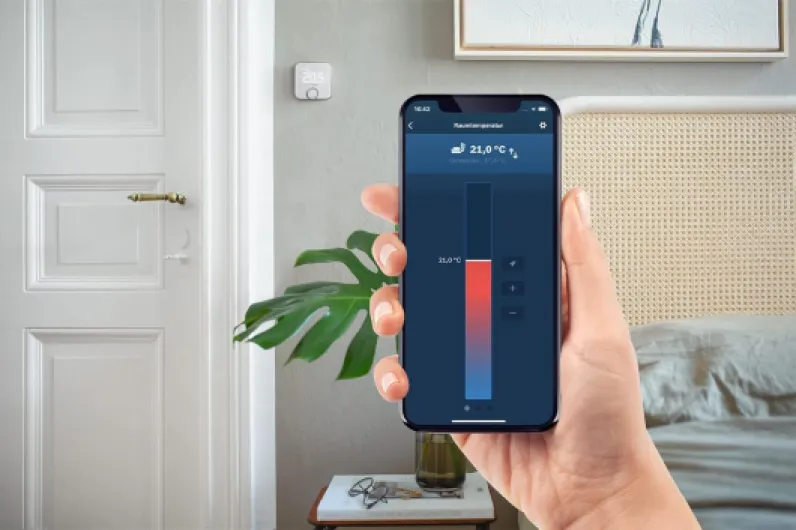
On the connectivity side, this thermostat speaks ZigBee to the Bosch Smart Home Controller and then uses your Wi‑Fi through the hub for app and cloud stuff. You don’t connect the thermostat directly to your Wi‑Fi, which is fine but means the hub is mandatory for anything smart. Once paired, the Bosch app sees it instantly and you can control it from your phone, set schedules, and link it with other Bosch smart devices like radiator valves or window/door sensors for heating automation.
Alexa and Google Assistant integration is straightforward. Once you link the Bosch Smart Home skill to your account, your thermostat shows up as a device you can control by voice. I tested basic commands like setting the temperature and turning down the heating, and they worked reliably. There’s no wild voice scene magic here, but for simple stuff like “set living room to 20 degrees” it’s fine. If you’re deep into Amazon or Google smart speakers, it fits into that ecosystem without drama.
For more advanced users, the ZigBee connectivity opens the door to Home Assistant. It’s not officially marketed for this, but several people (including one of the reviews) got it working via ZHA. The catch: the default behavior exposes a binary heating on/off that can be a bit too chatty, and the deadband is quite narrow. If you’re driving a boiler relay directly from that, you’ll probably want to tweak the deadband in the ZHA cluster or add your own climate entity with custom logic to avoid short cycling. That’s doable, but you need to be comfortable digging into Home Assistant and clusters, so it’s not for beginners.
In short, connectivity is strong if you stay in the intended Bosch bubble and pretty decent if you like to tinker. If you want a thermostat that just connects directly to Wi‑Fi, no hub, and works with every random platform without effort, this is not that product. But if you already have a Bosch Smart Home Controller or plan to build a Bosch-based setup, the integration is clean and stable.

What you actually get and how it fits in a real setup
Out of the box, the Bosch Smart Home Room Thermostat II package is pretty lean: you get the thermostat unit itself, an in-wall 230 V housing, a little wire bridge, and a quick start guide in a bunch of languages. No hub, no extra sensors, nothing fancy. The idea is clearly that this is one piece of a bigger Bosch Smart Home puzzle, not a full solution on its own. The thermostat is meant for wired heating systems or existing underfloor heating that runs on 230 V, so it’s not a drop-in replacement for every boiler thermostat out there.
In my case, I wired it into an existing underfloor heating loop that already had a 230 V control line running to a wall box. Once it was physically in, the Bosch Smart Home app walked me through pairing it to the Bosch Controller II. That part was smooth: scan, add device, assign it to a room, done. After that, I could see the current temperature, humidity, and heating status (on/off) in the app and on the little LED matrix display on the device.
The way Bosch wants you to use this is as a room controller that can also command other Bosch radiator thermostats or heating actuators. So, for example, you put this thermostat in your living room where you actually sit, and you link the radiators or the underfloor loops in that room to it. Then the room temperature is based on where you are, not where the radiator happens to be. In practice, that makes more sense than just relying on a valve on the radiator in the corner.
One thing worth noting: if you’re a tinkerer, it does talk Zigbee (ZigBee / ZHA), and some people have it running via Home Assistant. But it’s not marketed as a DIY Zigbee thermostat, so don’t expect an official, polished experience outside the Bosch ecosystem. For most people, the normal scenario is: Bosch Controller hub + Bosch app + maybe Alexa/Google. In that configuration, it’s pretty straightforward and behaves like a normal smart thermostat with room schedules and remote control.
Effectiveness in daily life: does it actually keep you comfortable?
In day-to-day use, the effectiveness of this thermostat comes down to two things: how well it keeps the room at a comfortable temperature, and how much it gets in your way. On both fronts, it’s pretty solid. Once I set up my heating schedules in the Bosch app (wake-up, daytime, evening, night), it just followed them quietly. The room temperature felt stable, no big hot/cold swings, especially with underfloor heating which is already slow and steady by nature.
One nice touch is the ability to create flexible time programs and heating breaks. For example, I set a lower temperature during the hours I’m at work, and a pre-heat before I’m back. You can also pause heating for a specific room if you don’t use it often. The app makes this pretty straightforward, and after a couple of days of tweaks, I didn’t really need to touch it anymore. That’s exactly the behavior I want from a thermostat: set it up once and forget it for weeks.
Voice control with Alexa and Google Assistant is more of a convenience than a must, but it works. Saying “set living room to 22 degrees” actually changes the setpoint quickly. I use it occasionally when I’m on the sofa and don’t feel like grabbing my phone. Remote control from outside the house via the app is also handy: if I leave earlier or come home later than planned, I can adjust the heating without going into full manual mode.
Where it’s less effective is for people who want something plug-and-play without a hub or wiring. You need 230 V at the thermostat location and the Bosch controller hub for the smart functions. If you’re renting or don’t want to touch the wiring, this is not going to be very effective for you, because you’ll fight the installation from day one. But in a house where you already have wired zones or underfloor heating and don’t mind some basic wiring, it does its job well and mostly stays out of your way.
Pros
- Stable and accurate temperature control for wired and underfloor heating
- Clean integration with Bosch Smart Home Controller, Alexa, and Google Assistant
- Simple, clear interface with rotary knob and LED matrix display
Cons
- Requires Bosch Smart Home Controller hub for smart features, adding to the overall cost
- 230 V wired install is not plug-and-play and needs existing wiring or an electrician
- Default hysteresis can be too tight for direct boiler control in DIY/Home Assistant setups
Conclusion
Editor's rating
Overall, the Bosch Smart Home Room Thermostat II for wired / underfloor heating is a solid, no-nonsense smart thermostat that does what it’s supposed to do without a lot of drama. It keeps the room at a stable temperature, integrates cleanly with the Bosch Smart Home Controller, and works fine with Alexa and Google Assistant. The design is simple and neutral, the controls are straightforward with a rotary knob and clear LED display, and once you’ve set your schedules, it mostly disappears into the background and just runs.
It’s not perfect, though. The main downsides are the total cost once you factor in the required hub, and the fact that it’s really aimed at people who are already in (or committed to) the Bosch ecosystem. The 230 V wired requirement also means installation is not trivial if you don’t already have the cabling in place. For tinkerers using Home Assistant, it works but may need some tweaking of the deadband/hysteresis to avoid short cycling a boiler. So it’s more of a reliable work tool than a flashy gadget.
I’d recommend this thermostat to homeowners with existing wired or underfloor heating who already own a Bosch Smart Home Controller or plan to build a Bosch-based smart home. In that setup, it offers good comfort, solid integration, and enough smart features to be useful without being overcomplicated. If you’re just looking for a single smart thermostat with Wi‑Fi and no hub, or you’re on a tight budget, I’d look at other options first, because for a one-off install this can feel a bit expensive for what it does.