
Summary
Editor's rating
Is it worth the money compared to other smart thermostats?
Clean look, readable screen, but nothing to drool over
Battery use on the thermostat and power setup for the rest
Build quality and how confident I feel it will last
Heating control, OpenTherm and how it behaves day to day
What you actually get and how it fits into your setup
Pros
- Simple, clear thermostat with easy-to-read backlit screen and straightforward buttons
- Reliable app and Alexa control once set up, with useful schedules, boosts and Holiday mode
- OpenTherm support gives smoother heating and can reduce gas use compared to basic on/off stats
Cons
- Initial app and hub setup can be fiddly and may require resets and patience
- Only suitable for combi boilers, no hot water tank or multi-zone control from this kit

Specifications
View full product page →| Brand | Hive |
A straightforward smart thermostat for people who just want control
I’ve been using this Hive Thermostat with the Nano 3 Hub on a standard combi boiler for a few weeks now, and I’ll be honest: I bought it because I was tired of walking to the boiler timer and guessing when the heating would kick in. I didn’t want something overly fancy, just decent remote control and better schedules. This Hive setup mostly does that job without too much hassle.
Installation for me was half DIY, half “phone a friend who knows electrics”. The receiver by the boiler is mains wiring, so if you’re not comfortable with that, just budget for an electrician. Once that bit was done, the thermostat and hub side was pretty straightforward, even if the app setup was a bit clunky at times. Nothing impossible, just mildly annoying.
Day to day, the system is simple: thermostat on the wall, Nano 3 hub near the router, and the Hive app on your phone. You can turn heating on/off, tweak temperature, set schedules, and use things like Holiday mode. It’s not packed with fancy graphs and crazy automation, but it covers the basics well enough for a normal household.
If you’ve got a combi boiler and you just want to stop heating an empty house and have the place warm when you get home, this is a pretty solid option. It’s not perfect, the app can be a bit temperamental and the first setup might test your patience, but once it’s running, it does what it’s supposed to do without you thinking about it all the time.
Is it worth the money compared to other smart thermostats?
On the money side, I’d say this Hive kit is good value for what it does, especially if you catch it on offer. You get a proper smart thermostat, a hub, OpenTherm support, and a well-established app. It’s not the cheapest thing on the market, but it’s also not in the top price bracket like some of the more flashy brands. For a normal household that just wants better control and to cut down on heating wasted on an empty house, it makes sense.
Compared to some rivals, Hive sits in a nice middle ground. You don’t get loads of advanced stuff like multi‑room smart TRVs included in the box, but you also don’t pay for features you’ll never touch. What you do get is: app control, schedules, geolocation reminders, Holiday mode, and OpenTherm modulation that can help trim gas use a bit. If you use it properly (set sensible schedules, lower temps when away), it should easily pay back its cost over a few winters.
On the downside, I do think setup could be smoother for the price. Having to mess around with resets and pairing because the app thinks the hub is offline is annoying. Also, the fact it’s combi‑only means it’s not a flexible purchase if you change your system later, though that’s not really the product’s fault, just something to be aware of.
Overall, I’d say if you already use Alexa or similar, have a combi boiler, and want straightforward smart control without going down a rabbit hole of advanced home automation, this is money reasonably well spent. If you want ultra‑detailed energy stats or control of multiple zones and hot water tanks, you might be better off with a different ecosystem, even if it costs a bit more upfront.
Clean look, readable screen, but nothing to drool over
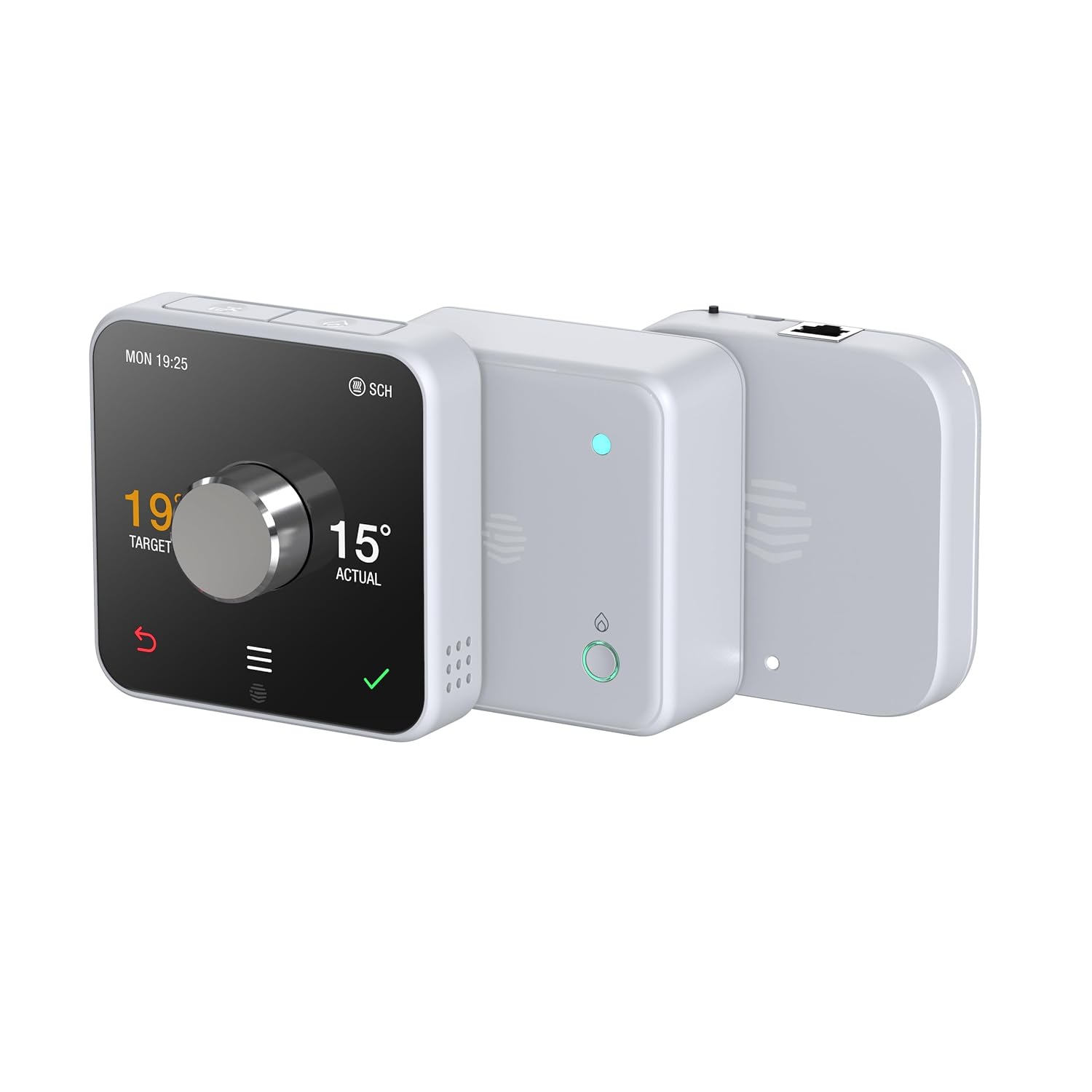
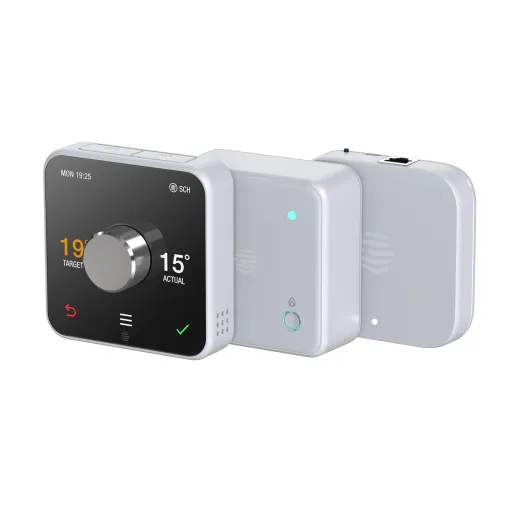
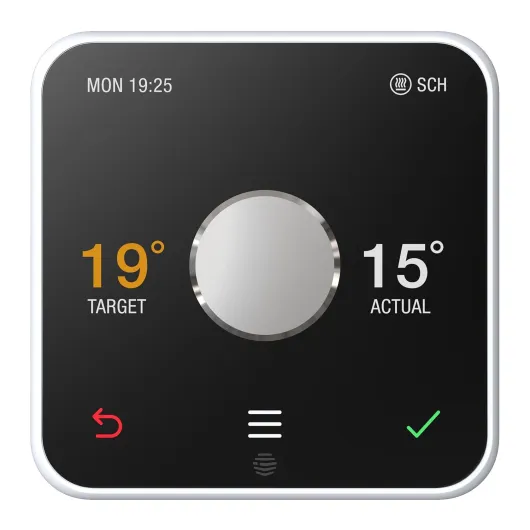
Design-wise, the Hive thermostat is pretty straightforward. It’s white, compact, and looks modern enough without screaming “look at my smart gadget”. On the wall, it just blends in. If you’re expecting some flashy colour screen or super polished metal finish, this isn’t that. It’s more “practical plastic box” than design piece, which is fine for a hallway or near the stairs.
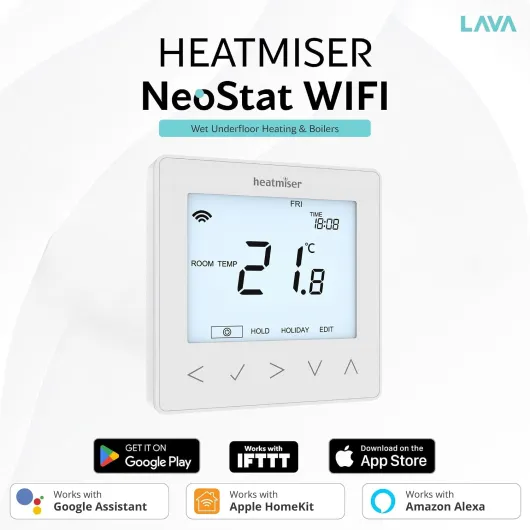
The display is clear and backlit, which is what matters. You can read the temperature from a couple of metres away, and the icons are simple: target temp, current mode, that sort of thing. The buttons are physical push buttons, not a full touchscreen, which I actually prefer. You can stab at them with cold hands and they respond. Temperature changes are done with up/down controls, and a middle button for confirming or going through the menu.
The Nano 3 hub is tiny and pretty discreet. It’s designed to sit near your router and just quietly do its job. No big aerials or messy cables, just a small white box. The receiver by the boiler is the least pretty, but it’s usually hidden away in an airing cupboard or next to the boiler, so who cares. It has a couple of LEDs and buttons for manual control and pairing, which is handy when the app is misbehaving.
In short, the design is decent but nothing more. It looks tidy, doesn’t clutter the room, and the screen is easy to read. If you care more about function than showing off to guests, you’ll be fine with it. If you want something that looks like a designer gadget, there are fancier options out there, but they also tend to cost more.
Battery use on the thermostat and power setup for the rest
The thermostat itself runs on 4 AA batteries, which are included. After a few weeks of use, the battery indicator hasn’t moved, so I’d expect them to last several months at least, maybe a year depending on how often you’re poking at it and how strong your signal is. It’s not rechargeable or anything fancy, just standard AAs you can replace easily. That’s actually something I prefer over built‑in batteries that die and force you to replace the whole device.
The receiver and the Nano 3 hub are both mains powered. The receiver is wired into the boiler circuit, so that’s not something you’re going to be unplugging. The hub uses a small power adapter and connects via Wi‑Fi. No Ethernet cable needed, which helps keep things tidier near the router. The hub stayed powered and connected most of the time; I only had to reboot it once when the app got confused and claimed it was offline.
One thing to note: if the thermostat batteries die, you can still turn the heating on and off using the receiver buttons by the boiler. It’s not ideal, especially if the boiler is in a loft or awkward spot, but at least you’re not stuck with no heating. So if you see the battery warning, just swap them out sooner rather than later and you’re good.
Overall, the power side is pretty straightforward. No constant charging, no weird proprietary battery packs. Just plug in the hub, wire the receiver, and drop in some AAs. For a product that you basically forget about 99% of the time, that’s good enough. I’d give it a solid score here: it’s practical and doesn’t create extra hassle once installed.
Build quality and how confident I feel it will last
In terms of build, the Hive thermostat feels like decent mid‑range plastic. It doesn’t creak or feel flimsy when you press the buttons, and the battery cover sits snugly without wobbling. It’s not heavy or premium-feeling, but it doesn’t feel like a cheap toy either. After a few weeks on the wall with daily use, there are no marks, no fading, and the buttons still click properly.
The receiver is more industrial-looking but solid. It’s designed to sit near a boiler, so it’s clearly built to just sit there and work. Once it’s installed, you don’t really touch it apart from the odd manual boost or pairing reset. I don’t see any obvious weak points: no flimsy hinges, no weird moving parts. Same goes for the Nano 3 hub: small, light, and seems robust enough to survive being knocked off a shelf.
From a reliability point of view, I haven’t had any hard failures. No random reboots, no complete loss of control. The couple of issues I did have were software/app related, not the hardware dying. That’s both good and bad: good because nothing broke physically, bad because if the app acts up, it feels like the whole system is flaky even when the actual devices are fine. Still, the physical side gives me the impression it’ll last several years without any drama.
So, durability-wise, I’d call it solid but not premium. It’s the kind of kit you install and forget, and that’s what you want from heating controls. There are thermostats on the market that feel more high-end, but for the price bracket this sits in, the quality seems fair. I don’t feel like I’m going to be replacing it any time soon unless I switch boiler type or move house.
Heating control, OpenTherm and how it behaves day to day
In daily use, the performance is pretty solid. The thermostat reacts quickly when you change the temperature, and the boiler kicks in within a few seconds. With OpenTherm, it doesn’t just slam the boiler on and off; it modulates the heat output. In normal language: instead of the boiler blasting full power then cutting out, it runs more steadily and keeps the room closer to the target temperature. I noticed fewer big swings between “too hot” and “a bit chilly” compared to my old basic thermostat.
The app lets you set up to six time slots per day, seven days a week. That’s enough for most people: morning warm-up, daytime off or lower, evening comfort, night setback, etc. I liked being able to copy days and tweak them instead of starting from zero each time. Holiday mode is also handy: you set the dates you’re away and a minimum temperature, and it keeps the house from freezing without wasting gas. The automatic frost protection at around 7°C is also reassuring if you’re away in winter.
The geolocation feature is a nice idea: the app sends you a reminder if you leave home when the heating is due to come on. In practice, it works, but you have to be okay with the app tracking your location. I’m a bit on the fence about that, so I left it on for a bit, then turned it off. It’s not essential, just a small bonus if you like automation. Voice control through Alexa also works fine; there were one or two times the skill didn’t respond instantly, but nothing dramatic.
Overall, the performance is reliable. The only hiccups I had were a couple of times when the app said the hub was offline even though it wasn’t. A quick reboot of the hub fixed it, but it’s the kind of thing that annoys you when you just want to turn the heating on. Still, compared to older on/off stats, this feels more efficient and more comfortable, and that’s really what I wanted.

What you actually get and how it fits into your setup
In the box you basically get three main bits: the Hive thermostat, the receiver that sits next to your boiler, and the Hive Nano 3 Hub that connects everything to the internet. Plus some screws, wall plugs, batteries for the thermostat, and the usual paperwork. Nothing fancy, but everything you need is there. The product listing bangs on about OpenTherm and Wi‑Fi, but in simple terms: one box talks to the boiler, one box talks to your router, and the thermostat talks to both.
Important point: this version is only for combi boilers. No hot water tank control, no multiple zones, none of that. If you’ve got a system boiler with a cylinder, this is the wrong kit. That’s actually something I liked about the product page: it’s pretty clear about the combi requirement. Still, I’d say double-check your boiler model before buying, or you’ll be sending it back.
In everyday use, the setup is simple: the receiver handles the on/off and OpenTherm modulation, the hub stays plugged in with a small cable near your router, and the thermostat can be wall-mounted or left on a stand (if you buy one). The app is where you set schedules, geolocation reminders, Holiday mode, and all that. It supports voice control via Alexa and others, which I actually use more than I expected: “Alexa, boost heating for 30 minutes” is handy when you’re freezing on the sofa.
Overall, as a package, it feels like a practical kit aimed at normal users. You don’t need to be a tech nerd to make it work, but you do need a bit of patience for the initial pairing. Once it’s sorted, it just becomes another appliance you forget about until you need to tweak the schedule or turn the heating on from the pub.
Pros
- Simple, clear thermostat with easy-to-read backlit screen and straightforward buttons
- Reliable app and Alexa control once set up, with useful schedules, boosts and Holiday mode
- OpenTherm support gives smoother heating and can reduce gas use compared to basic on/off stats
Cons
- Initial app and hub setup can be fiddly and may require resets and patience
- Only suitable for combi boilers, no hot water tank or multi-zone control from this kit
Conclusion
Editor's rating
After living with the Hive Thermostat and Nano 3 Hub for a while, my overall view is pretty simple: it’s a solid, practical smart thermostat for combi boilers that does what most people need without being overcomplicated. The control from the app and Alexa works well, the schedules are flexible enough, and OpenTherm gives smoother heating and likely a bit less gas use over time. Once the system is up and running, you mostly forget about it, which is exactly what I want from heating controls.
It’s not perfect. The app setup can be frustrating, especially if the hub or receiver ends up in the wrong mode and you have to do the reset dance. There are flashier thermostats with nicer screens and more advanced features if you’re into that. But for a typical home with a combi boiler, this hits a good balance between price, features, and ease of use. I’d recommend it to anyone who wants to stop wasting money heating an empty house and likes the idea of turning the heating on from their phone before they get home.
If you’ve got a system boiler with a tank, want deep energy analytics, or plan to run multiple heating zones with smart radiator valves from day one, you might want to look at other ecosystems. But if you just want reliable, straightforward heating control that feels modern without being over the top, this Hive kit is a pretty safe bet.